Lost & Found: The Citizen Promaster Dive Automatic “Fujitsubo”
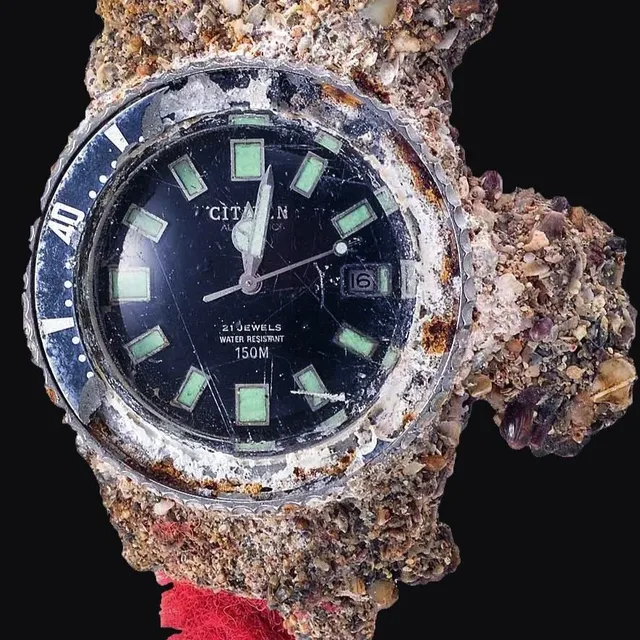
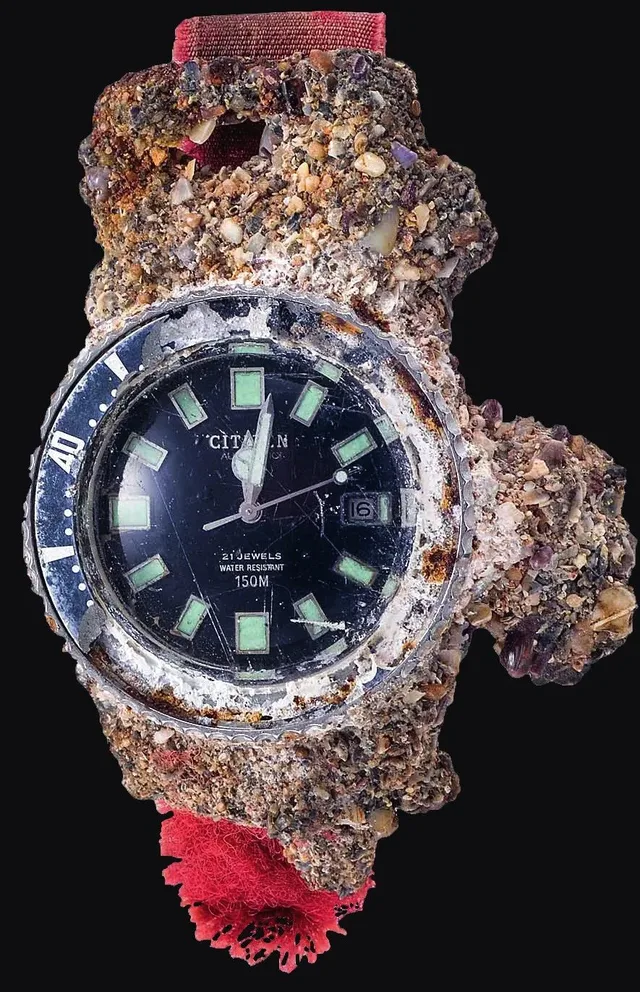
In 1983, a Challenge Diver from Citizen was found on an Australian beach. As a result of having been submerged in the Pacific Ocean for several years, the Japanese dive watch was almost completely covered in barnacles, but started ticking again immediately when recovered. That story inspired Citizen to launch the new Promaster Mechanical Diver in 2022, and also gave it its nickname, Fujitsubo — Japanese for barnacle.
Historically more interesting, however, is perhaps the fact that around the same time, with the introduction of the Professional Diver 1300m in 1982, Citizen had not only introduced its first titanium dive watch, but also laid the groundwork for what would become one of the most uniquely designed collections of dive watches in the industry. The Aqualand from 1985, for example, introduced the depth meter with its characteristic electronic sensor placed at 9 o’clock. After the launch of the Promaster range in 1989, Citizen redefined the look of the dive watch again with the Promaster 1000m Automatic (the “Autozilla” and also the “Eco-Zilla”), followed by the even more extreme 1000m Eco-Drive Professional from 2016, a watch that was attached to a submersible and sent well beyond its 1000-meter depth rating. In more recent years, the Promaster “Orca” from 2006 showed again that a functional dive watch could look both modern and unique at the same time. In short, a contemporary dive watch from Citizen usually meant a combination of a modern design with Eco-Drive technology and a case made of titanium, a material that debuted in the watch industry with Citizen’s X8 Titanium Chronometer in 1970.
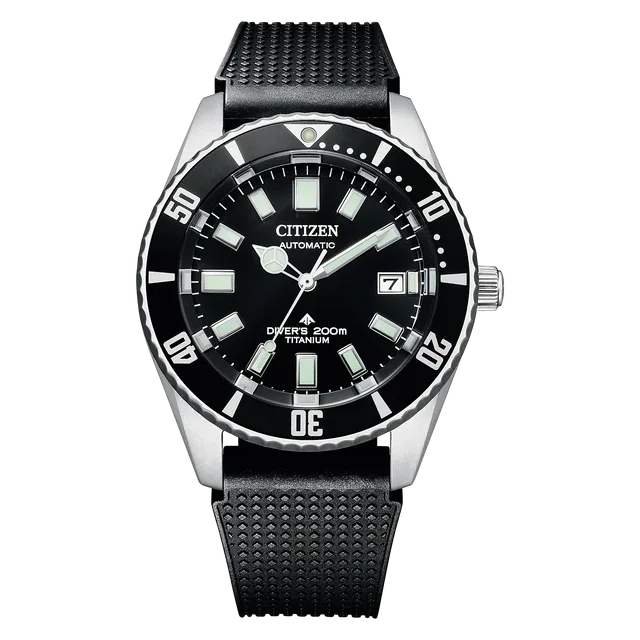
As a result of this strategy, all those looking for a more traditionally designed diver with a mechanical movement usually had to opt for the “Fugu” with its crown at 8 o’clock, a model that was first released in 1993 and, too, became a rather legendary tool watch. With the Promaster Mechanical Diver 200m Fujitsubo (Ref. NB6021-17E with black dial, NB6021-68L with blue dial), however, Citizen not only revived its perhaps most restrained mechanical dive watch design of the last 50 years, the Japanese brand also offers one of its most modern mechanical movements from Miyota (Cal. 9051), and a Super Titanium case — the brand’s proprietary space-age material is five times more scratch resistant and 40 percent lighter than stainless steel.
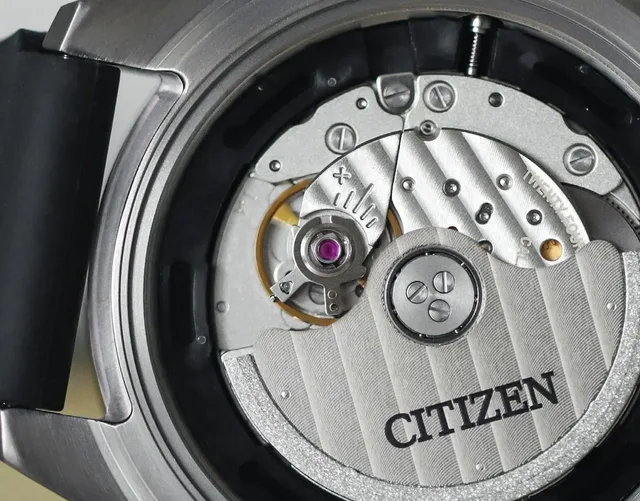
Inside the case, Citizen’s new Cal. 9051 movement (regulated to a daily accuracy of -10 to +20 seconds) uses anti-magnetic materials for the balance spring and surrounding components to boost the magnetic resistance of the watch. According to Citizen, the movement maintains its performance “even when placed 1 centimeter from a device emitting a magnetic field of 16,000 A/m.” It is also resistant to magnetic fields from everyday devices, including smartphones, and can even be used aboard ships with magnetic compasses. Last but not least, the new Promaster is also an ISO compliant divers’ watch up to 200 meters (and assumingly even more barnacle-proof than its predecessor).
Same Same, but Different
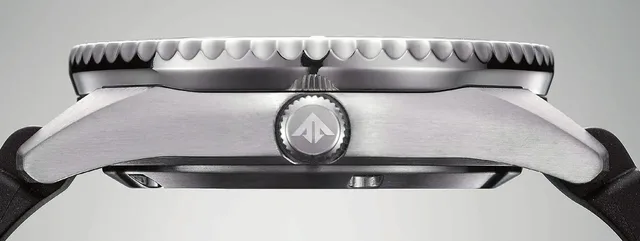
Needless to say, Citizen most likely didn’t plan to redefine the look of a dive watch back in the ‘60s and ’70s when it had launched the original version of this watch. Instead, it combined a relatively simple case at one point with a Mercedes hand, large indexes and a black bezel insert. While being a faithful reproduction of the vintage predecessors, the new version comes with slightly larger numerals on the aluminum bezel insert, a slightly thinner (12.3-mm) case with an increased water resistance of 200 meters instead of 150. On the black rubber strap, the watch weighs just 70 grams, thanks to the brand’s proprietary alloy that has undergone surface hardening. The bezel is polished, while the case itself is brushed.
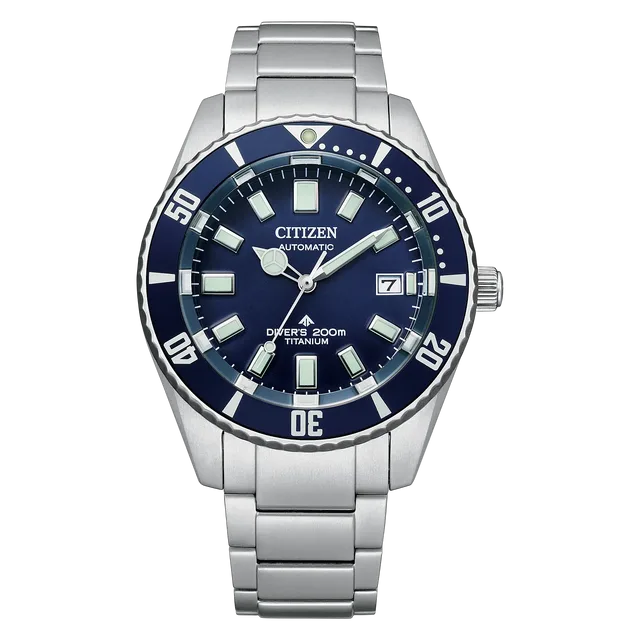
Visually, the Fujitsubo may appear simple and almost generic to most, but a second look quickly reveals some interesting details, like the angled lugs or the polished bezel. The sapphire crystal has a flat-cut top and a domed underside, and the sides are beveled to provide a thick, retro look. Those elements combined make it definitely one of those watches that both deserves and rewards a second look; and the thick embossed indexes, lollipop second hand and the skeletonized Mercedes hand work surprisingly well together. The slightly protruding strap, however, while being functional and comfortable (and surprisingly long), somehow doesn’t feel like a perfect visual match in this case. Instead, a slightly more traditional choice, like a Tropic-style strap, or even a textured NATO strap, might have offered more contrast to the otherwise restrained look of the watch. On the other hand, if the strap is the only thing worth criticizing, Citizen obviously has done a pretty good job with the new Fujitsubo. In the U.S., Citizen offers the NB6021-17E for $795, making it the least expensive option for those looking to add the Cal. 9051 to their collection.
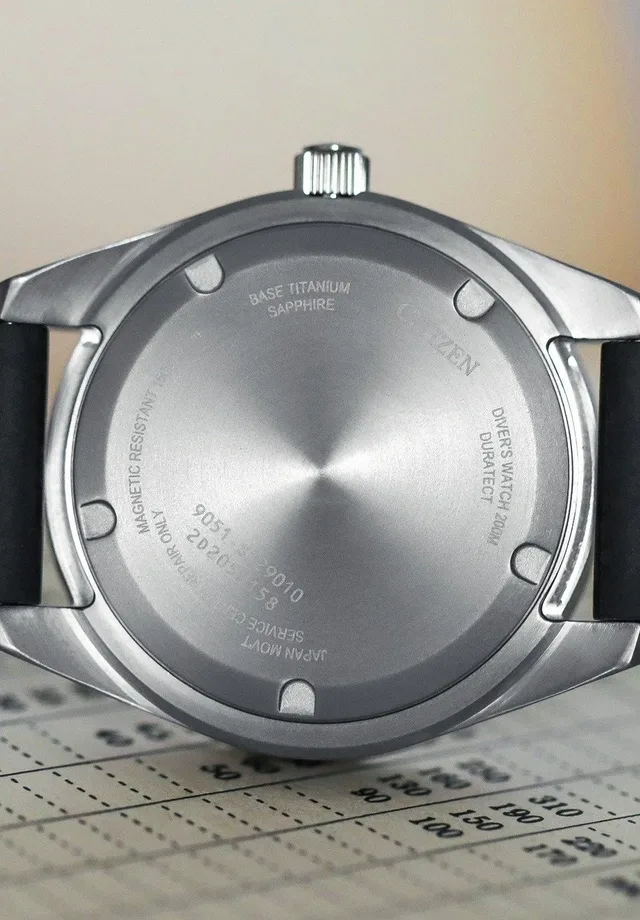
Both the caseback and buckle are executed comparatively simply; the plastic movement holder was to be expected in this price range (and helps to keep the weight of the watch down). In short, thanks to its titanium case and history, the Fujitsubo is one of the most compelling mechanical divers at this price point, considering the design, form and specs, but it might require a second look to discover and truly appreciate a watch that would, 50 years later, be an even greater pity, were it lost in the Pacific Ocean today.
This article is from the WatchTime Archives and was originally published in the March / April 2023 Issue. To subscribe to WatchTime Magazine, click here.
And to learn more, visit Citizen, here.