Ad
Ad
Ad
Ad
Ad
Ad
Reading time 4 min.

Introducing the Omega Constellation Observatory

With the Constellation Observatory collection, Omega introduces the first two-hand wristwatches to achieve Master Chronometer certification. It is enabled by a newly developed acoustic testing method at its Laboratoire de Précision.
Omega Constellation Observatory, ref. 140.13.39.21.01.001, dial title
© Omega

At the forefront of its long-standing pursuit of chronometric precision, Omega unveils the Constellation Observatory collection, marking a technical milestone in modern watchmaking. For the first time, a two-hand watch displaying only hours and minutes has achieved Master Chronometer certification, made possible by a new acoustic testing methodology developed at the brand’s Laboratoire de Précision and certified by METAS. The result is a collection that bridges Omega’s historical role in chronometer trials with a new era of measurement technology.
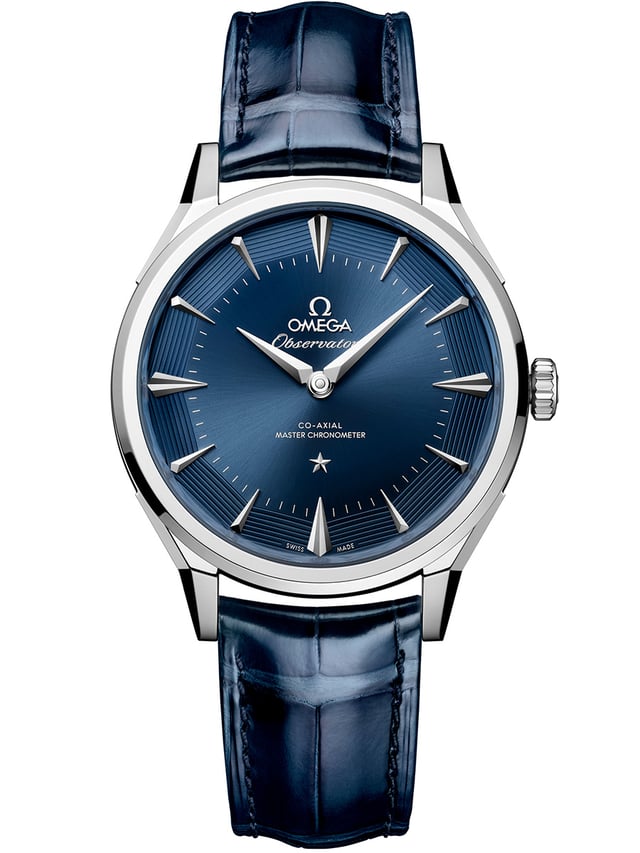
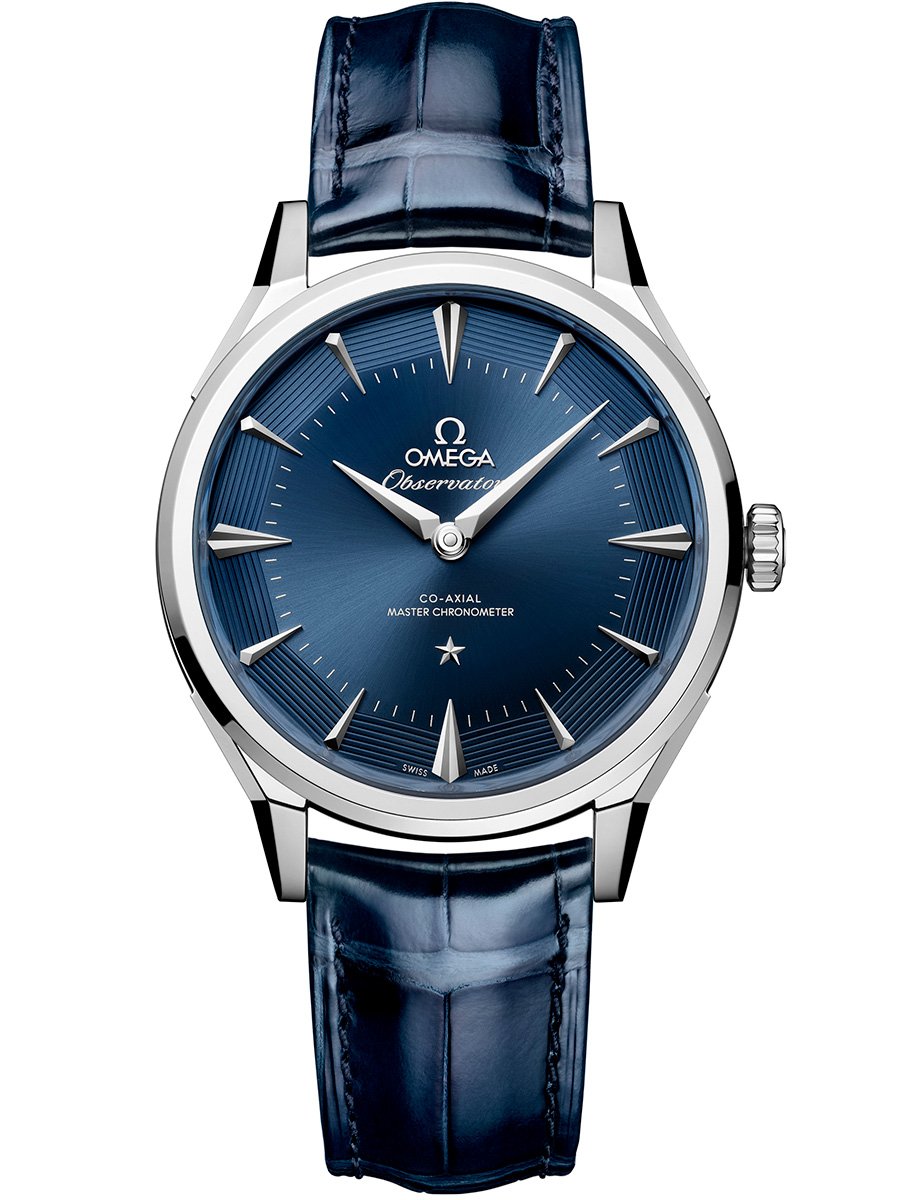
Omega Constellation Observatory, ref. 140.13.39.21.03.001, front

Constellation Observatoryin O-megasteel, ref. 140.13.39.21.03.001, $10,900+ applicable taxes 

© Omega 

Since the introduction of the Constellation in 1952, Omega has consistently linked the line to certified precision. From early observatory trials to the industrialization of chronometer-certified wristwatches, the Constellation has served as a platform for the brand's technical advancement. The new Observatory collection extends this lineage, revisiting defining design elements— such as the pie-pan dial, the Constellation star at 6 o’clock, and the observatory medallion on the case back, while integrating contemporary testing protocols.
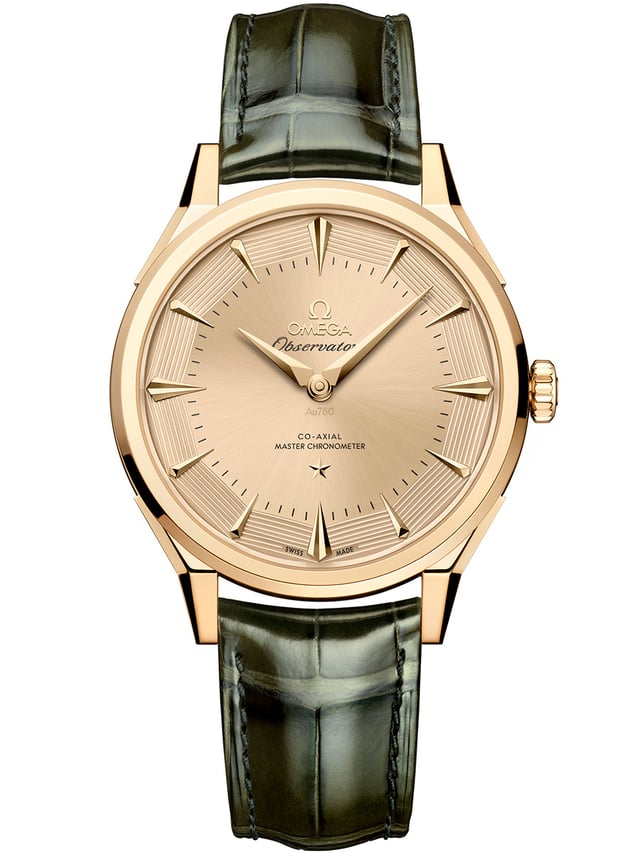
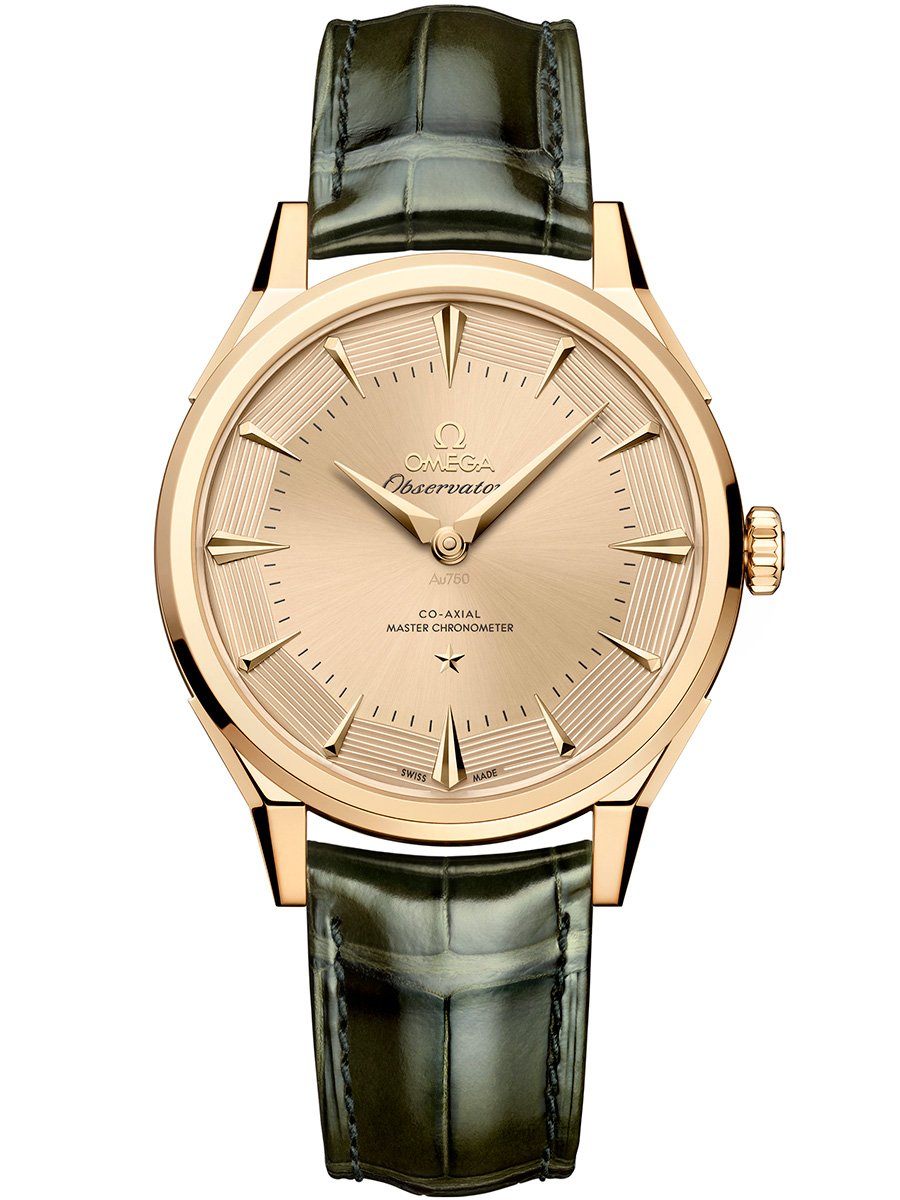
Omega Constellation Observatory, ref. 140.53.39.21.99.001, front

Constellation Observatory in Moonshine Gold, ref. 140.53.39.21.99.001, $37,900 + applicable taxes 

© Omega

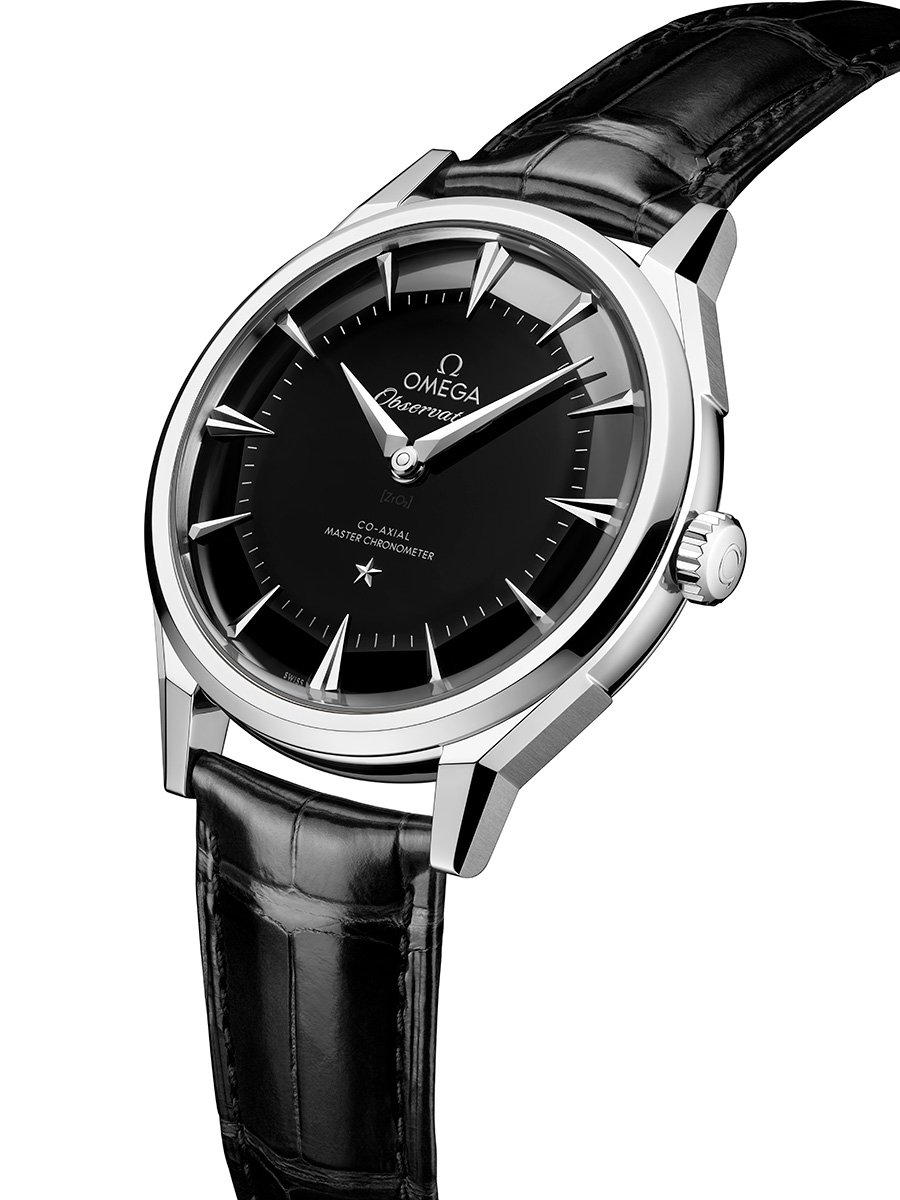
The 39.4mm cases combine these heritage cues with a wide array of proprietary materials developed by Omega over decades. The collection brings together exclusive alloys including 18K Sedna Gold, Moonshine Gold, Canopus Gold, platinum, and O-megasteel, each engineered in-house to meet specific aesthetic and performance criteria. The O-megasteel range includes a black ceramic pie-pan dial, a technically demanding execution that preserves the sharp geometry of the original 1950s design. Additional references feature stamped and faceted dials in a range of colors, maintaining the interplay of light that has long defined the Constellation aesthetic. This breadth of materials underscores the brand’s vertically integrated approach, not only in movement production but also in metallurgy.

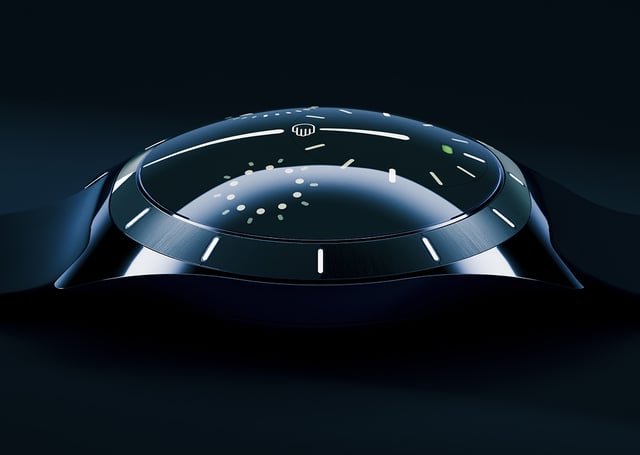
Omega Constellation Observatory, ref. 140.13.39.21.01.001, side

Constellation Observatory in O-megasteel, ref. 140.13.39.21.01.001, $10,900 + applicable taxes 

© Omega

Central to the launch is the Laboratoire de Précision, an independently accredited testing facility established by Omega and certified by METAS. Traditionally, chronometer testing relied on visual tracking of a seconds hand, capturing only intermittent data points. The newly developed “Dual Metric Technology” replaces this method with continuous acoustic measurement, recording the sound signature of each oscillation— tick and tack— throughout a 25-day testing cycle. This approach allows the precise analysis of rate stability across positions, temperatures, and environmental conditions without the need for a seconds display. By capturing continuous data rather than isolated readings, the system identifies not only deviations in performance but also their exact timing and cause. The Constellation Observatory thus becomes the first watch to undergo full Chronometer and Master Chronometer certification without a seconds hand.
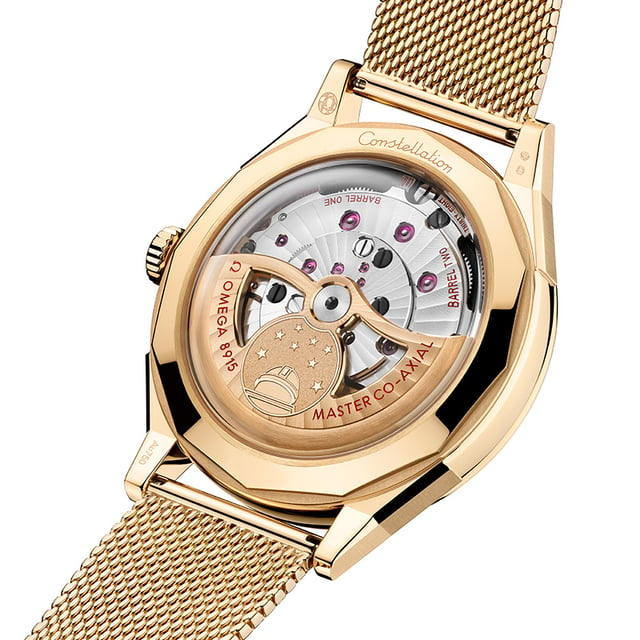
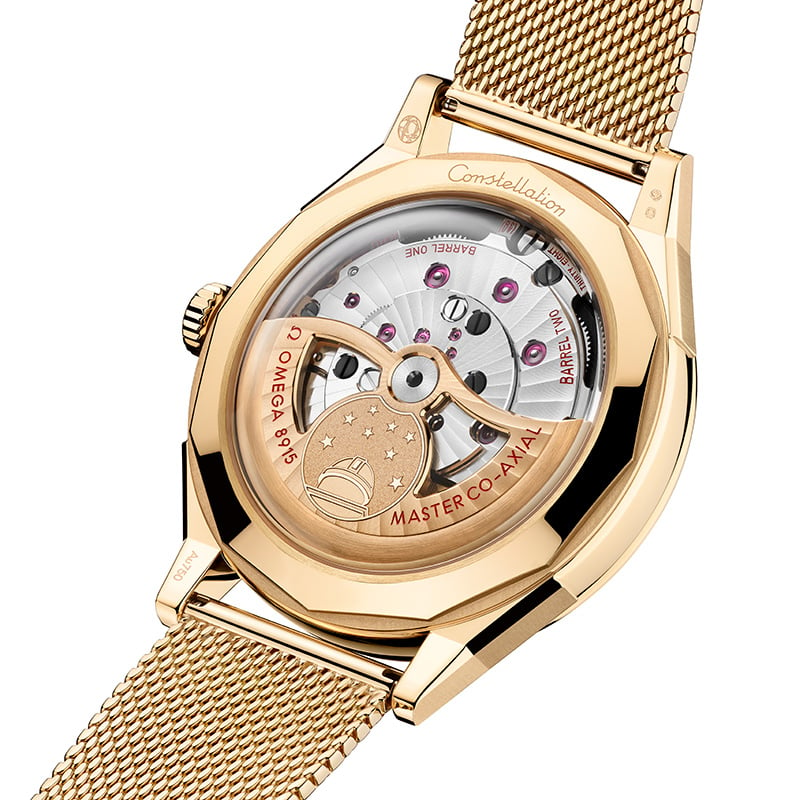
“Until now, precision certification has required a seconds hand. The development of a new acoustic testing methodology has made that requirement obsolete. It is this breakthrough that has enabled us to present the Constellation Observatory, the first two-hand watch to achieve Master Chronometer certification.” 

Raynald Aeschlimann, President and CEO of Omega
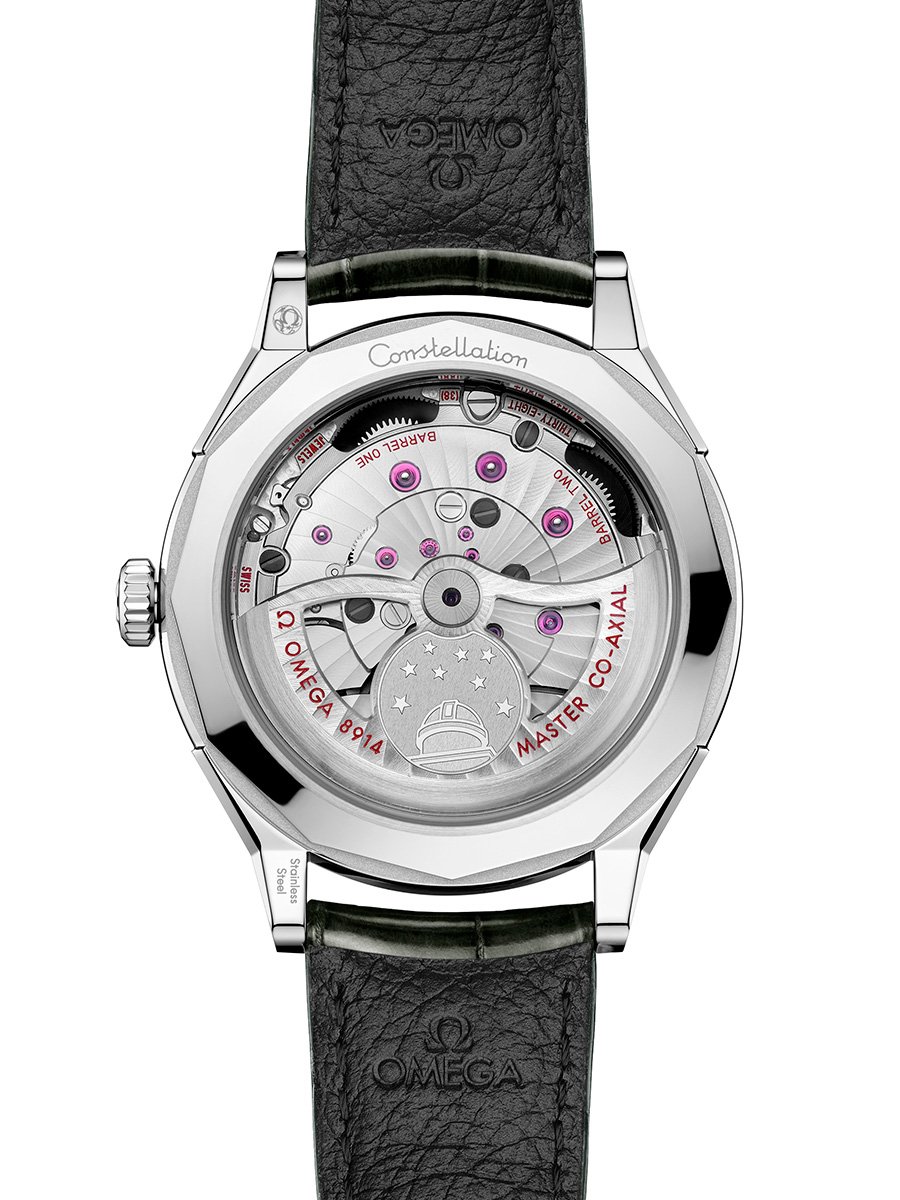
Omega Constellation Observatory, ref. 140.50.39.21.99.001, case back
Caliber 8915 Luxe  © Omega

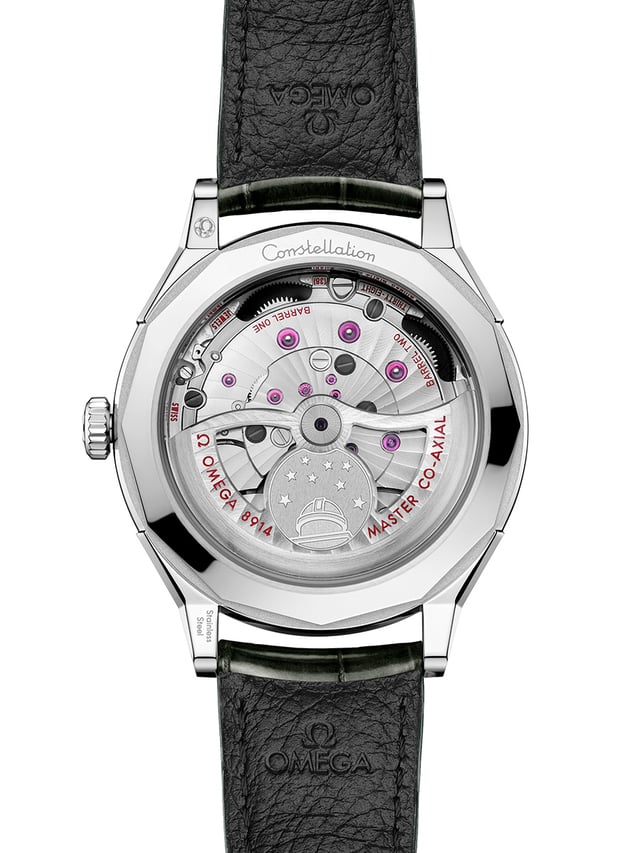
The collection is powered by two new movements, the Co-Axial Master Chronometer Calibers 8914 and 8915. Both are based on a skeletonized rotor architecture and incorporate refined finishing, including Geneva waves in arabesque and applied observatory medallions on the rotor. The calibers continue Omega’s use of the Co-Axial escapement, introduced at the turn of the millennium to reduce friction and improve long-term precision, alongside anti-magnetic components that have become a hallmark of the brand’s modern movements. Caliber 8915 is reserved for precious metal executions, including Grand Luxe and Luxe variants, where the movement itself incorporates Sedna or Moonshine Gold elements. Caliber 8914, finished in rhodium plating, powers the O-megasteel references while maintaining identical technical specifications and certification standards.

Omega Constellation Observatory, ref. 140.13.39.21.02.001, caseback
Caliber 8914 © Omega
The Constellation Observatory collection is priced between $10,900 and $59,100 without taxes, depending on the material.

To learn more, visit Omega, here.

Omega Omega Constellation Master Chronometer manufacture movement Steel Watches Gold Watches Platinum Watches

Latest Articles

Ulysse Nardin Reimagines the Freak X for Its Next Chapter - Marking 25 years of the Freak
Celebrating both its 180th anniversary and the 25th anniversary of the Freak, Ulysse Nardin unveils a completely reengineered Freak X. Smaller, more refined, and equipped with an all-new manufacture caliber, the latest generation brings one of watchmaking's most unconventional icons closer to everyday wear.
4 minutes
Jun 17, 2026
Hublot's Big Bang Summer Editions Get Ceramic Colors Right - Enough to make even skeptics smile
With matte ceramic in compellingly precise colors, a pair of 42mm Big Bang Unico watches headline Hublot's vibrant summer releases.
3 minutes
Jun 17, 2026
Oris Introduces the Hölstein Edition 2026 - The community favorite gets a dressier look
For the seventh installment of its annual Hölstein Edition series, Oris turns to the recently introduced Artelier collection. Powered by the in-house Calibre 401, the new model combines understated elegance with the playful details that have become a hallmark of these collector-focused releases.
4 minutes
Jun 16, 2026

You might also be interested in

Omega Enters the Game with the Seamaster Diver 300M Chronograph “007 First Light” - Digital becomes reality
Omega’s latest James Bond watch ties into the upcoming 007 First Light video game, combining the Seamaster Diver 300M’s signature design with a black ceramic-heavy aesthetic and the Co-Axial Master Chronometer Caliber 9900.
4 minutes
May 21, 2026
The Longines Legend Diver 59 Marries Vintage Character With Modern Capability - Retro aesthetics meet COSC-certified modern performance
Inspired by the brand’s original 1959 Super-Compressor diver, the new Longines Legend Diver 59 combines retro aesthetics with COSC-certified modern performance and a new Milanese mesh bracelet.
4 minutes
May 18, 2026
To the Summit without Oxygen: A Spotlight on the Montblanc 1858 Geosphere 0 Oxygen
Montblanc is emphasizing the meaning of its brand name to a greater degree and creating innovative watches connected to alpinism. The company recently collaborated with extreme mountaineer Reinhold Messner to create a watch with no oxygen inside its case.
9 minutes
May 25, 2026
Ad
Ad
Ad
Ad
Ad