Watch Date Displays Explained: Windows, Pointers, and More
Seven ways to show the date
From a technical standpoint, the date requires additional components within the movement, but nothing approaching the complexity of a chronograph or minute repeater. That is why it is commonly grouped with functions such as the day of the week, power reserve, rotating bezel and moon phase as “small complications.” The date is also the simplest calendar function. For many wearers, it is genuinely useful. For others, a date window can interrupt the symmetry of a dial and compromise the design. That tension has led watchmakers to explore a surprising number of display formats. The date window remains the most familiar, but it is far from the only solution.
From a technical standpoint, the date requires additional components within the movement, but nothing approaching the complexity of a chronograph or minute repeater. That is why it is commonly grouped with functions such as the day of the week, power reserve, rotating bezel, and moon phase as one of the “small complications.” The date is also the simplest calendar function. For many wearers, it is genuinely useful. For others, a date window can interrupt the symmetry of a dial and compromise the design. That tension has led watchmakers to explore a surprising number of display formats. The date window remains the most familiar, but it is far from the only solution.
The Different Types of Date Display
The Date Window

Rolex invented the so-called Cyclops lens for better readability of the date. The Land-Dweller, introduced in 2025, also comes with this date magnifier.
RolexFun fact: when wristwatches began to gain wider acceptance during and just after World War I, chronographs were actually more common than watches with date displays. At first, the date simply was not considered an essential function. Even so, wristwatches with both window dates and pointer dates appeared as early as around 1915. In those early years, the pointer date was at least as common as the date window.
That began to change in the 1940s, when both formats became much more widespread. Then came the Rolex Datejust in 1945. With its automatic movement, water-resistant case, and date window at 3 o’clock, it quickly became a blueprint for the practical everyday watch. Rolex also popularized the date magnifier that would later be copied by countless other brands. According to legend, founder Hans Wilsdorf got the idea after a drop of water landed on his watch crystal in the bathroom and enlarged the date beneath it. In 1953, Rolex introduced the Cyclops lens that would become one of its signature features.
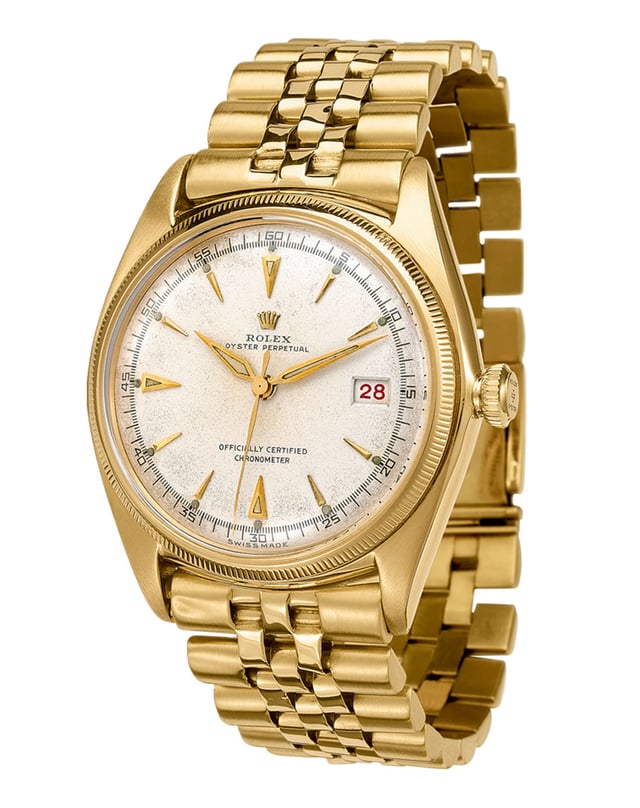
Rolex Golden Datejust, 1945
RolexToday, the date window is firmly established as the standard. For decades, brands largely treated it as a given. Over the past 20 years, however, designers have paid much closer attention to how it affects the balance of the dial. One common problem appears when a relatively small movement is used inside a large case. Because the date disk is sized to the caliber, the aperture can end up sitting noticeably too far toward the center of the dial. The date display at 3 o’clock creates several compromises: designers can remove the numeral entirely, cut into it, or increase the diameter of the watch enough to make room for both the date window and the hour marker.
Dial color has become another important consideration. As watchmakers have embraced a much broader palette, matching the date disk to the dial has increasingly come to signal careful design. A color-matched disk usually integrates far more cleanly than the traditional black-on-white date display.
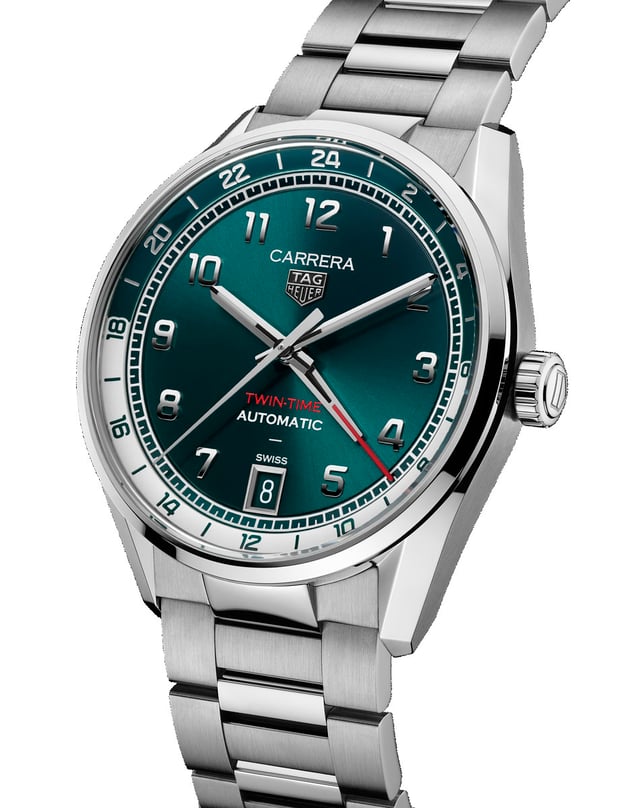
TAG Heuer Carrera Date Twin-Time
TAG HeuerThe Pointer Date
The pointer date was once considered a full-fledged alternative to the date window. Today, it is far less common, but that rarity is part of its appeal. A central date hand in particular gives a watch an unmistakably vintage character. One of the best-known examples is the Oris Big Crown Pointer Date, which has made the complication a defining part of its retro-inspired design.
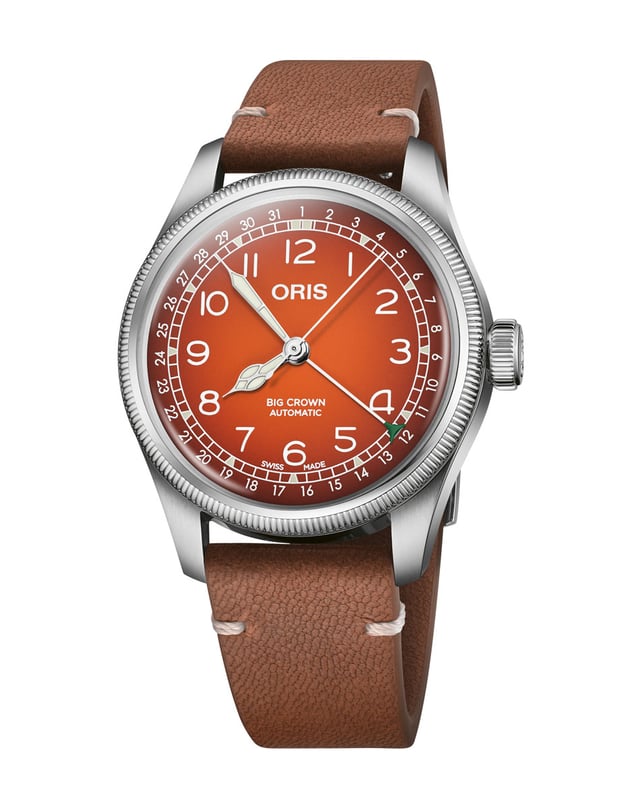
Oris x Cervo Volante Big Crown Pointer Date
OrisA date displayed on a subdial can be more discreet, though it generally requires a bit more effort to read. This approach is often used when the dial also needs to accommodate other functions. On the Patek Philippe Calatrava Pilot Travel Time Ref. 5524G-010, introduced in 2025, for example, the date subdial at 6 o’clock is relatively large, while only every third numeral is printed to keep the display clear and legible.
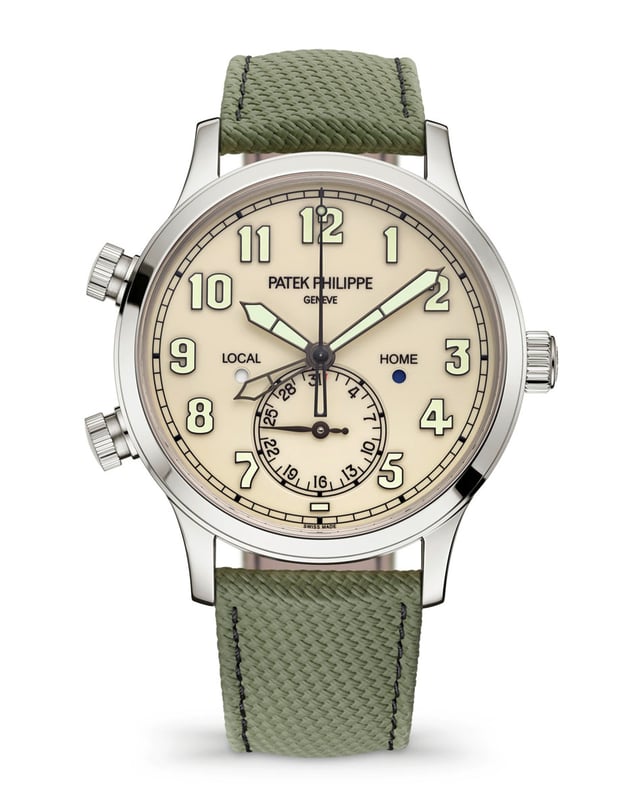
Patek Philippe Pilot Travel Time Ref. 5524G-010
Patek PhilippeHow Does a Watch’s Date Mechanism Work?
From a technical standpoint, a conventional date window can be more complex to execute than a pointer date. Both systems ultimately derive their motion from the movement’s going train. The challenge is transferring that motion from the relatively compact mechanism at the center of the caliber to a date display positioned much farther out toward the edge.
That becomes particularly demanding with a date disk. The mechanism has to advance the disk by exactly one position while maintaining precise alignment in the aperture. Friction and the added mass of the disk also require more energy than a simple pointer-date mechanism. As a result, a well-executed window date demands considerable precision in both manufacturing and assembly. Components must be produced to tight tolerances, and the mechanism has to deliver a clean, reliable date change without placing unnecessary demands on the movement.
The Large Date
For pure legibility, few solutions can match the large date. Wristwatches with separate displays for the tens and units digits appeared as early as the 1930s and 1940s, including examples from Girard-Perregaux. But the complication truly came into its own with the A. Lange & Söhne Lange 1. Its outsized date became one of the watch’s defining features.
The balanced architecture, central dividing bar, and combination of a units disk with a cross-shaped tens element remain a benchmark for the complication. Since the late 1990s, however, other manufacturers have developed their own technical and aesthetic solutions. In Lange’s construction, the tens and units displays sit at slightly different heights, with the difference concealed by the central divider. Other systems place both numerals on the same plane.
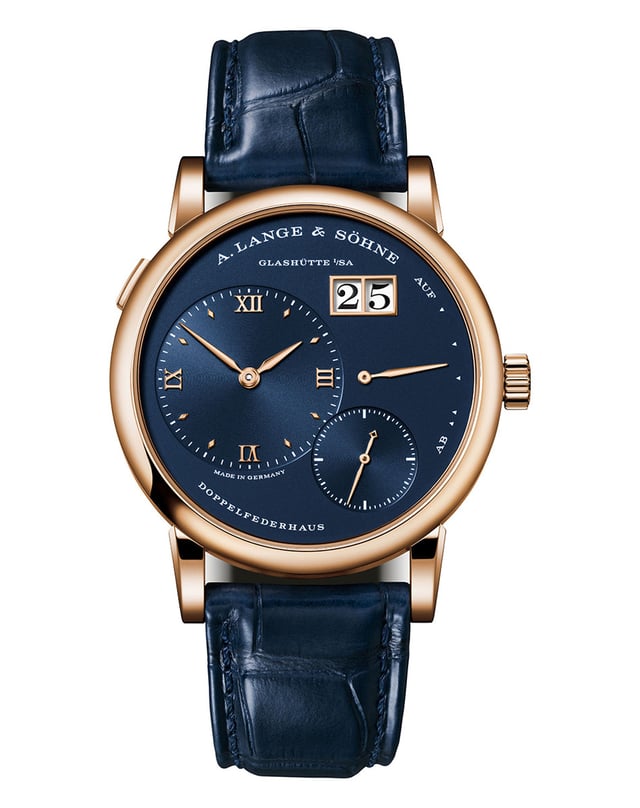
A. Lange & Söhne Lange 1 Ref. 191.063, Limited Edition in Red Gold
A. Lange & SöhneGlashütte Original’s Panorama Date is one of the best-known examples. It uses two concentric date disks positioned on the same level, eliminating both the height difference and the visible overlap that can occur with other constructions. The mechanism appears, among other models, in the new Senator Panorama Date Moon Phase with its “Frosted Copper” dial.
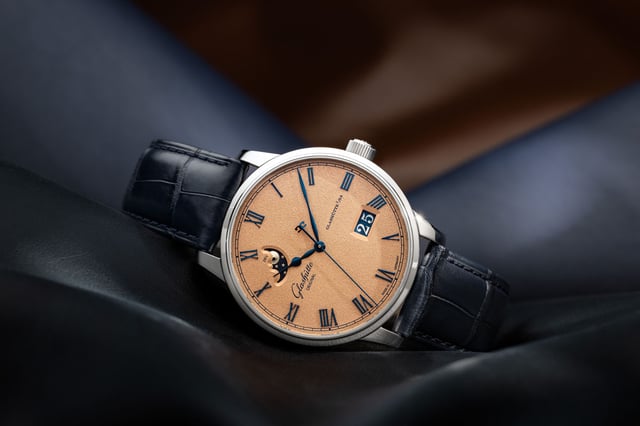
Glashütte Original Senator Excellence Panorama Date Moon Phase with Frosted Copper Dial
Glashütte OriginalThe large date therefore offers more than improved readability. Done well, it becomes a distinctive design element in its own right and a technically sophisticated complication that can help define the visual identity of an entire watch.
The Double date
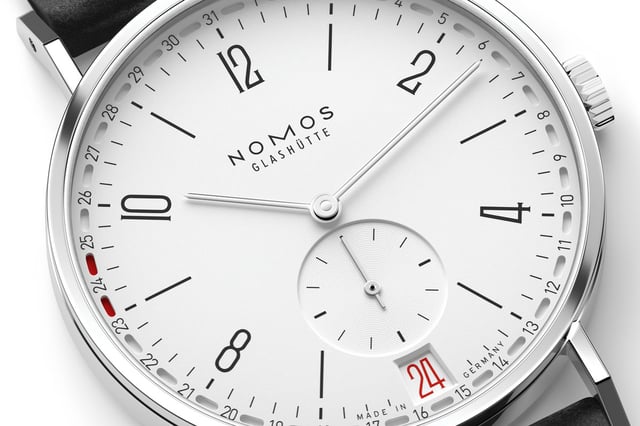
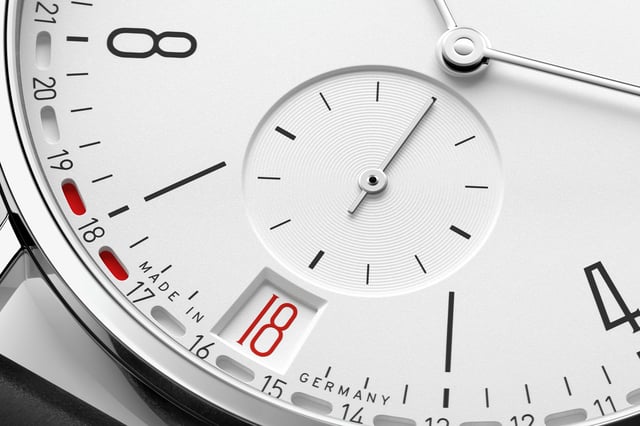
Nomos Glashütte: Tangente 2date
Nomos GlashütteA few years ago, Nomos Glashütte introduced an unusual take on the date display, essentially a pointer date without the pointer. As on a traditional central pointer date, the numbers 1 through 31 run around the outer edge of the dial. Instead of a hand indicating the date, however, two colored apertures frame the correct numeral, activated by a rotating disk beneath the dial.
In 2024, Nomos paired this system with a conventional date window at 6 o’clock in the Tangente 2date, available with either a white or blue dial. Is showing the date twice strictly necessary? Probably not. But visually, the concept works remarkably well. The display is powered by the manufacture caliber DUW 4601.
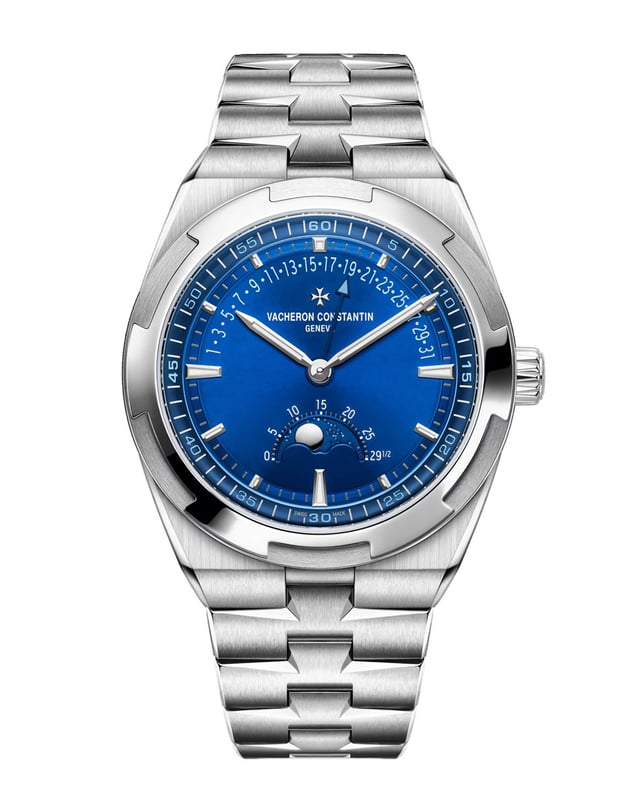
Vacheron Constantin Overseas Moon Phase Retrograde Date Display
Vacheron ConstantinThe Retrograde Date
With a retrograde date, a hand moves progressively from 1 to 31, then snaps back to 1 after reaching the end of the scale. Vacheron Constantin has used this type of display for years, and it remains part of the brand’s visual vocabulary. One current example is the Overseas Moon Phase Retrograde Date with its vivid blue dial.
Roger Dubuis takes the idea a step further on the Excalibur Bi-Retrograde Calendar introduced in 2025. A retrograde date display at 3 o’clock is mirrored by a matching retrograde day-of-the-week display at 9 o’clock, creating a highly symmetrical layout.
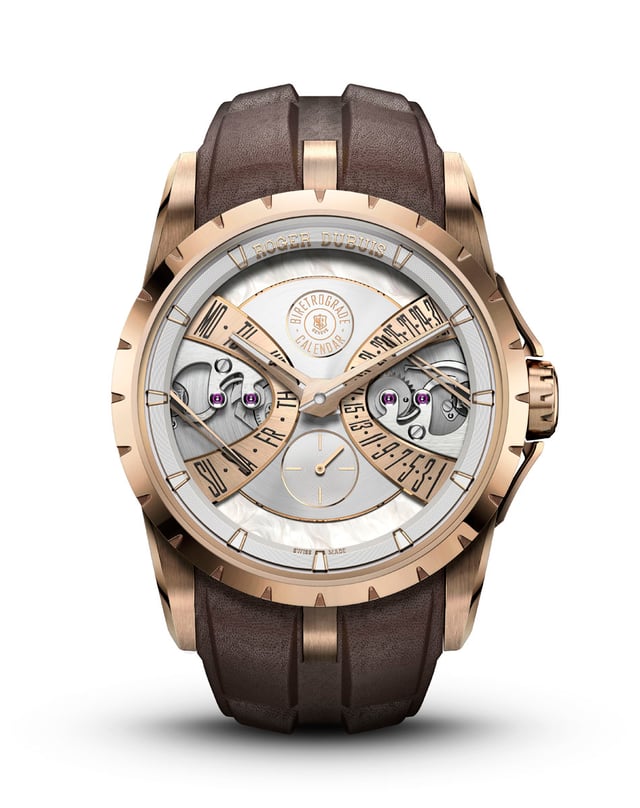
Roger Dubuis Excalibur Biretrograde Calendar
Roger Dubuis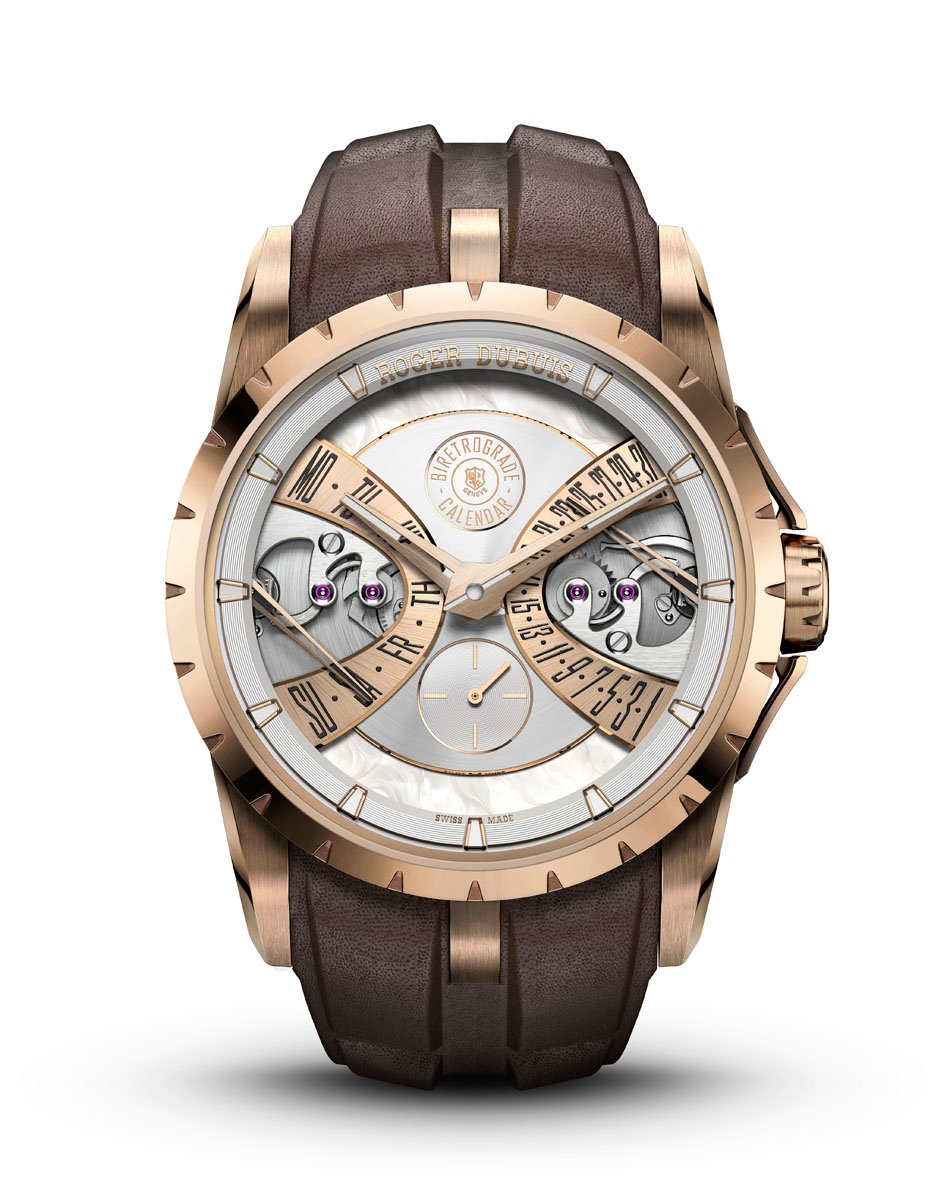
Jean Marcel’s Dual-Scale Date
Jean Marcel gives the Optimum Automatic a distinctive date display of its own. Instead of a conventional aperture, it uses a large window with a dual scale.
The Enlarged Date Window
Another variation is the enlarged date window, a format often seen on pilot’s watches, including models from IWC. Instead of showing only the current date, the aperture also reveals the previous and following numerals. That comes with one obvious quirk. On April 30, for example, the display may still show 31 as the next number even though the month ends at 30. To prevent confusion, an arrow or other marker typically identifies the actual date.
The extended aperture can also serve a purely visual purpose. On the Bell & Ross BR-X3, for example, it balances the power-reserve display on the opposite side of the dial. With its three positions indicating approximately three, two, or one day of remaining power reserve, the indicator occupies a broad rectangular frame. The elongated date display mirrors that shape more effectively than a conventional date window could.

Bell & Ross BR-X3 Black Titanium
Bell & Ross