Speed Instrument: A Close-Up on the Angelus Instrument de Vitesse “Silverstone”
The subtly sporty Instrument de Vitesse brings Angelus home to its mid-century roots
Nobody nowadays wears a chronograph for timing things. It’s their history, mechanics and, of course, the captivatingly technical jumble of scales, hands, subdials and pushers that makes watch enthusiasts of all stripes cuckoo for chronos. All that stopwatch functionality instantly marks them as special and distinct from a simple, time-only watch.
So why would somebody want a chronograph that doesn’t look like one? The Angelus La Fabrique Instrument de Vitesse is here to make a case for why you might.
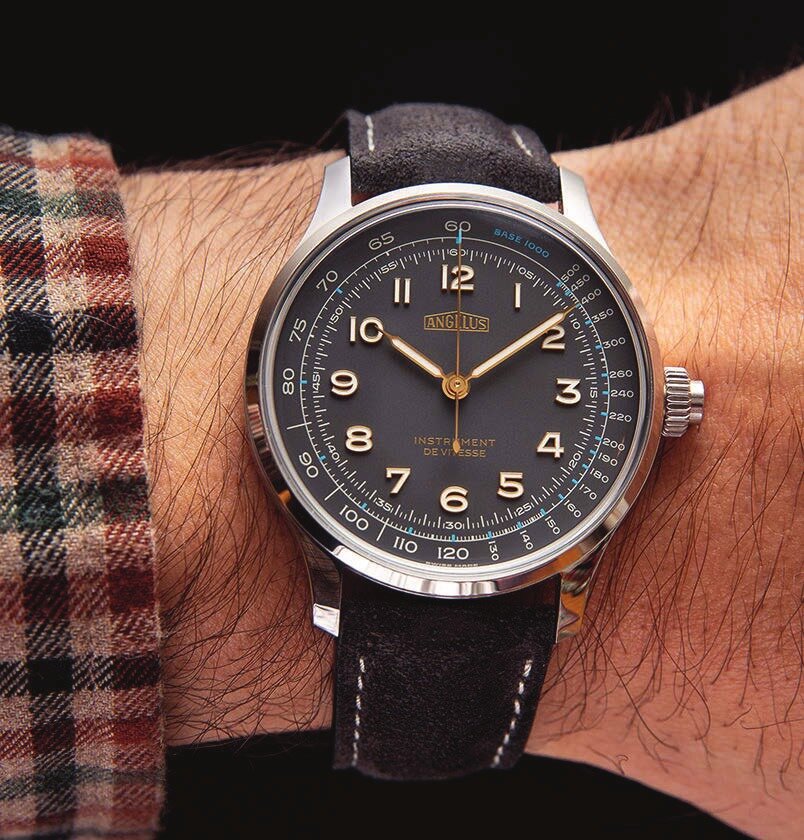
Watch collectors today have seen a zillion chronographs, and many are familiar with those that Angelus produced in the 20th century. The Instrument de Vitesse is rather unlike most of them. It defies expectations by doing away with the most distinguishing features of chronographs and offering a surprisingly minimalist interpretation of the complication.
What makes the Angelus Instrument de Vitesse notable, however, isn’t only its pared-back functionality and style. It’s also an unexpected release from the brand, one that many enthusiasts will embrace: a return to the restrained, classical styling of its heritage. Wearing a new iteration of this unconventional chronograph afforded a chance to ponder its wearability and details, as well as what it means for the brand’s trajectory.
The Angelus Archives
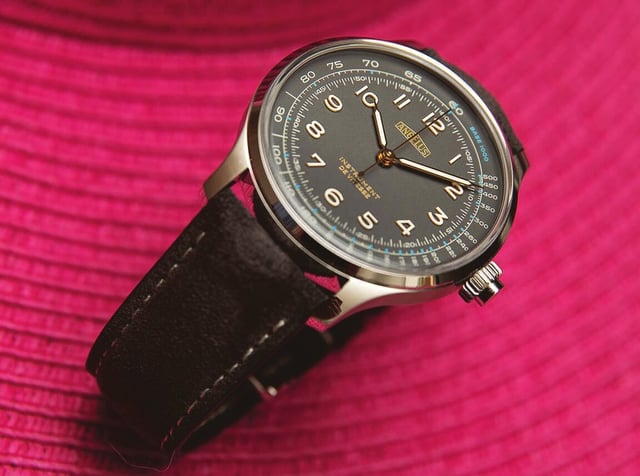
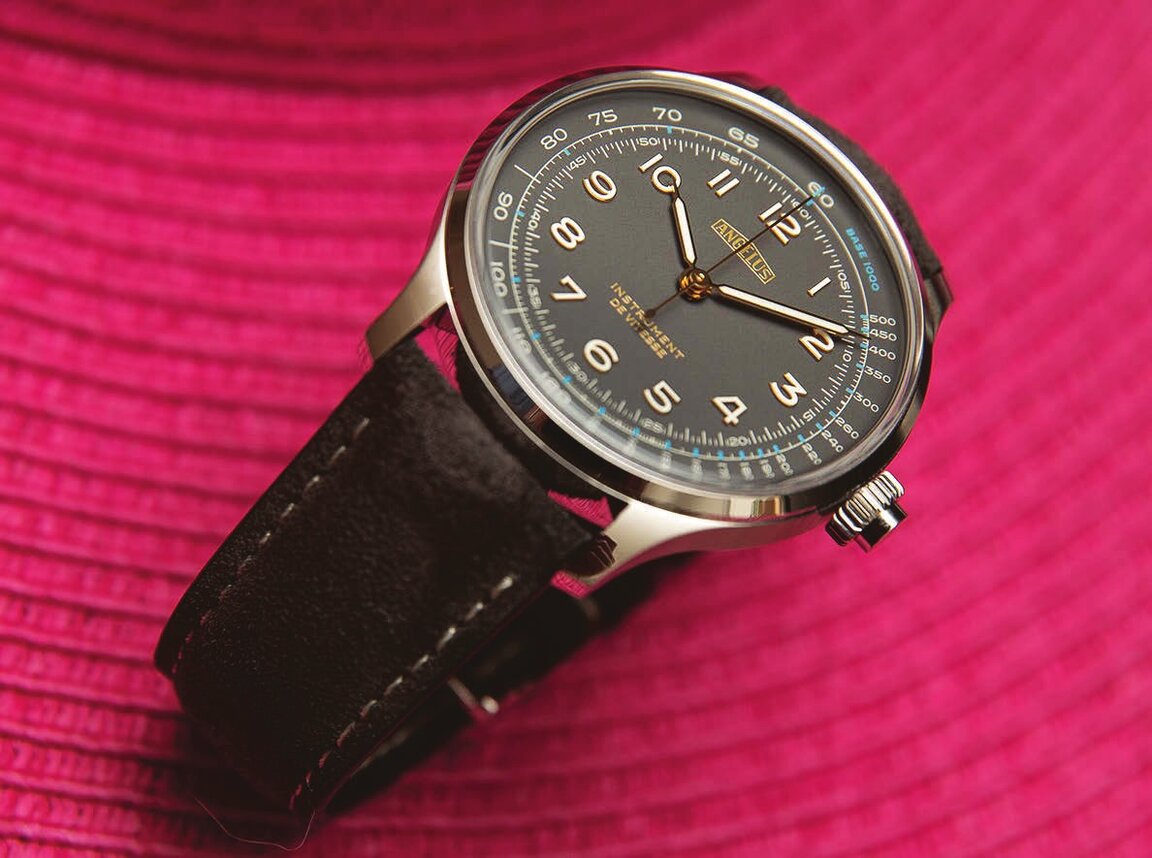
If you’re familiar with vintage Angelus, a couple of things about the Instrument de Vitesse may stand out to you. First might be that it isn’t exactly based on any particular past model. But you may also note that, unlike recent Angelus watches, its looks ring familiar in the sense that they channel the vibe of watches from the brand’s heyday.
That heyday was arguably the mid-20th century, when Angelus was among several brands such as Breitling, Heuer, Universal Genève and Gallet that notably specialized in chronographs. Before luminescent material in the form of radium was introduced to watches around the First World War, the brand had also been known for complex chiming functionality that served the same purpose: telling time in the dark. Today, vintage collectors best remember Angelus for a model known as the Chronodato, which combined chronograph and calendar functions.
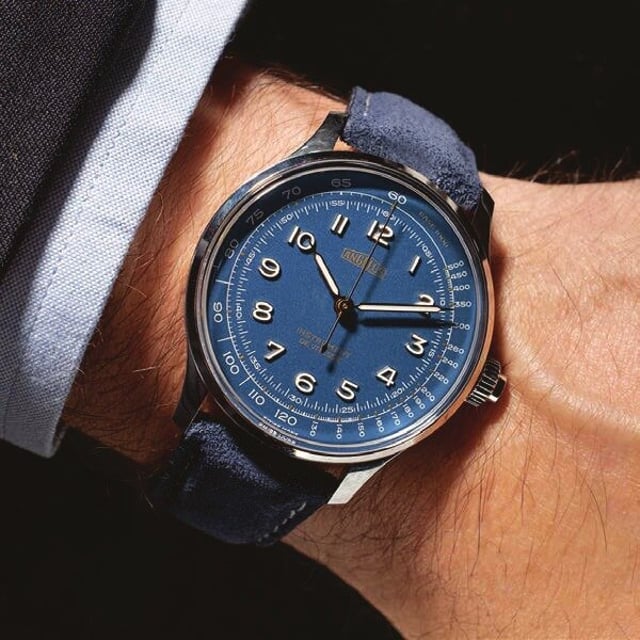
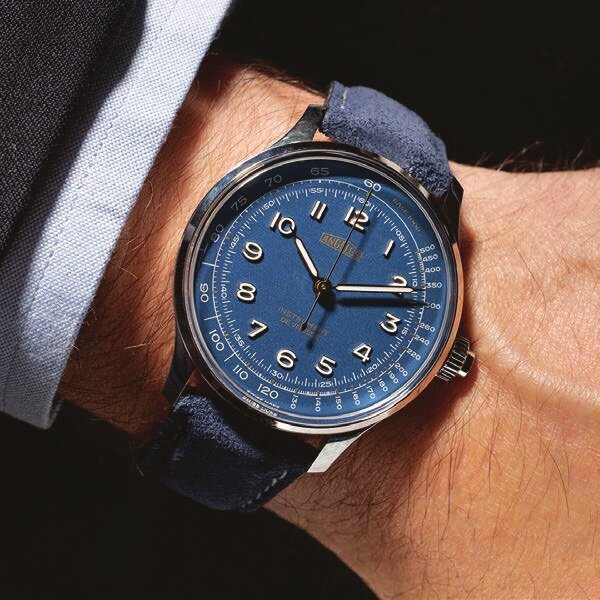
Angelus chronographs including the Chronodato came in different forms, but you might note certain elements of the Instrument de Vitesse that draw on the brand’s most recognizable vintage models. The indices’ Arabic numeral font is one, but its overall classical styling recalls that so-called Golden Age of watchmaking. More germane, however, is that it seems to not only feel stylistically in tune with Angelus’s celebrated past but also with its historical dedication to chronographs.
The Neo-vintage Pivot
Referencing or straight-up recreating vintage designs is all but standard practice in today’s watch industry. So it wouldn’t seem notable for Angelus to take this approach — unless you’ve been following the modern brand. That’s because it represents a complete reversal from the type of product it’s been making in the 21st century.
A quartz crisis fatality, Angelus’s name was dormant until being resurrected in 2015 by movement maker La Joux-Perret, which also owns the brand Arnold & Son (all now collectively under the Citizen Group umbrella). Since then, Angelus has been positioned as the sporty, contemporary answer to Arnold & Son’s more classical personality. We’re talking about tourbillons, complications, skeletonization, bright colors, bold sizes, carbon fiber … you get the picture.
Watches from the revived Angelus were nothing like those the brand was once known for. They didn’t even produce anything like a traditional watch — you know, with a solid dial — until 2022 with the Chronodate, which was still on the hyper-modern, aggressively sporty end of the spectrum. Finally, it was the Chronographe Médical x Massena Lab that, in 2023, introduced a new collection called La Fabrique and an all-in retro style.
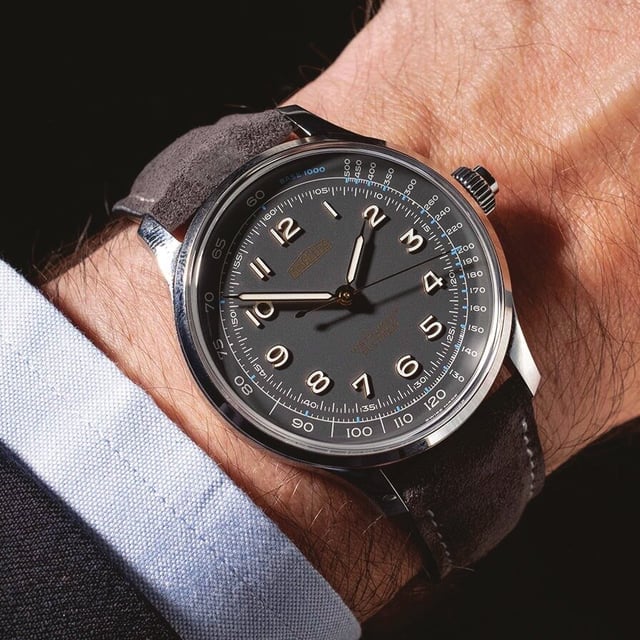
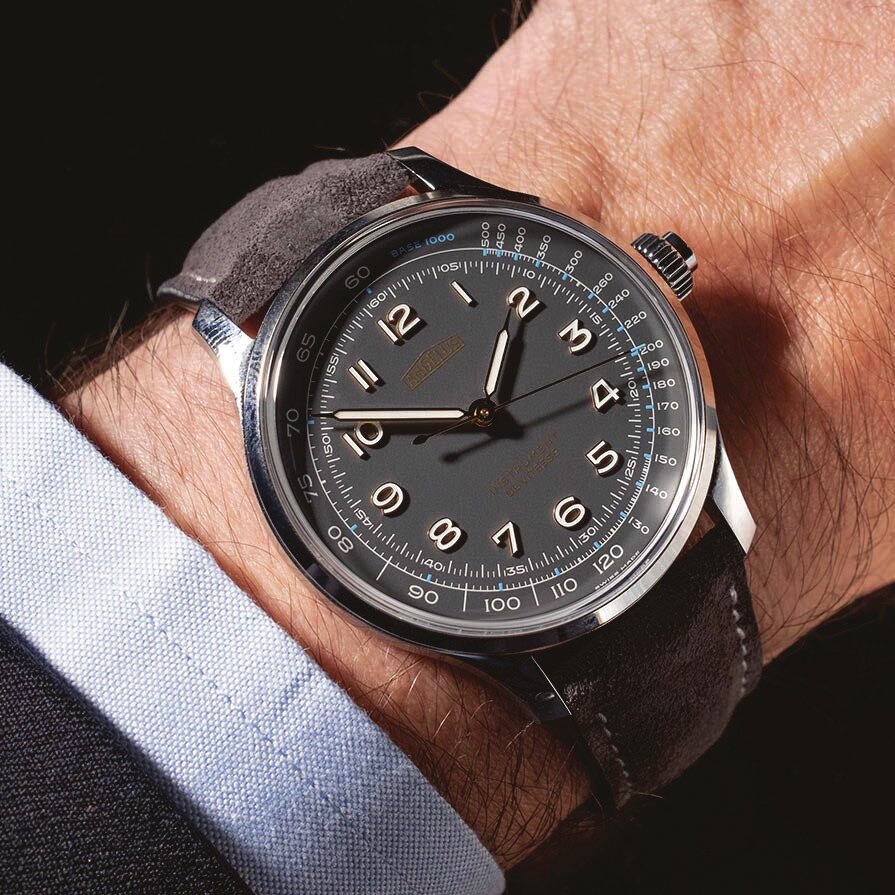
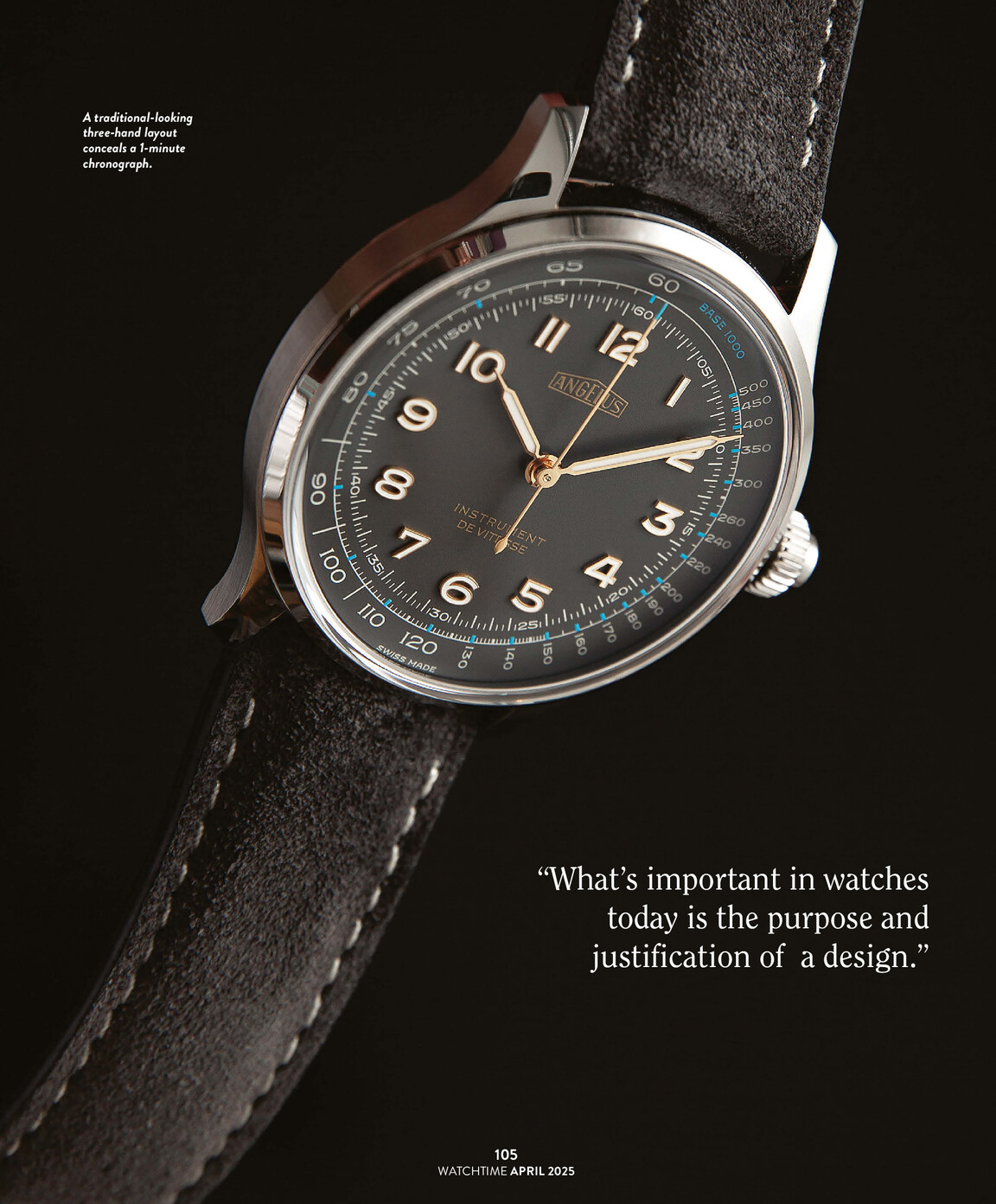
The La Fabrique is among three current collections, and in 2024, the brand began to build it out. It released the first Instrument de Vitesse models at Watches & Wonders with black and cream dial variants followed by two more models at WatchTime New York. One was blue, and the other is the subject of this review with a gray dial featuring gilt elements and pops of vibrant blue.
Where’s the Chrono?
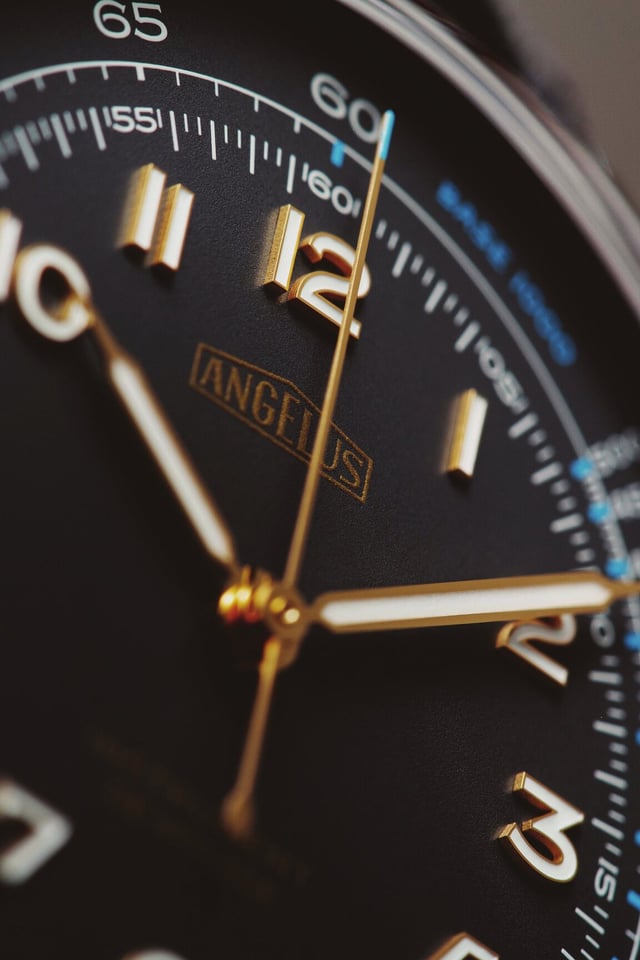
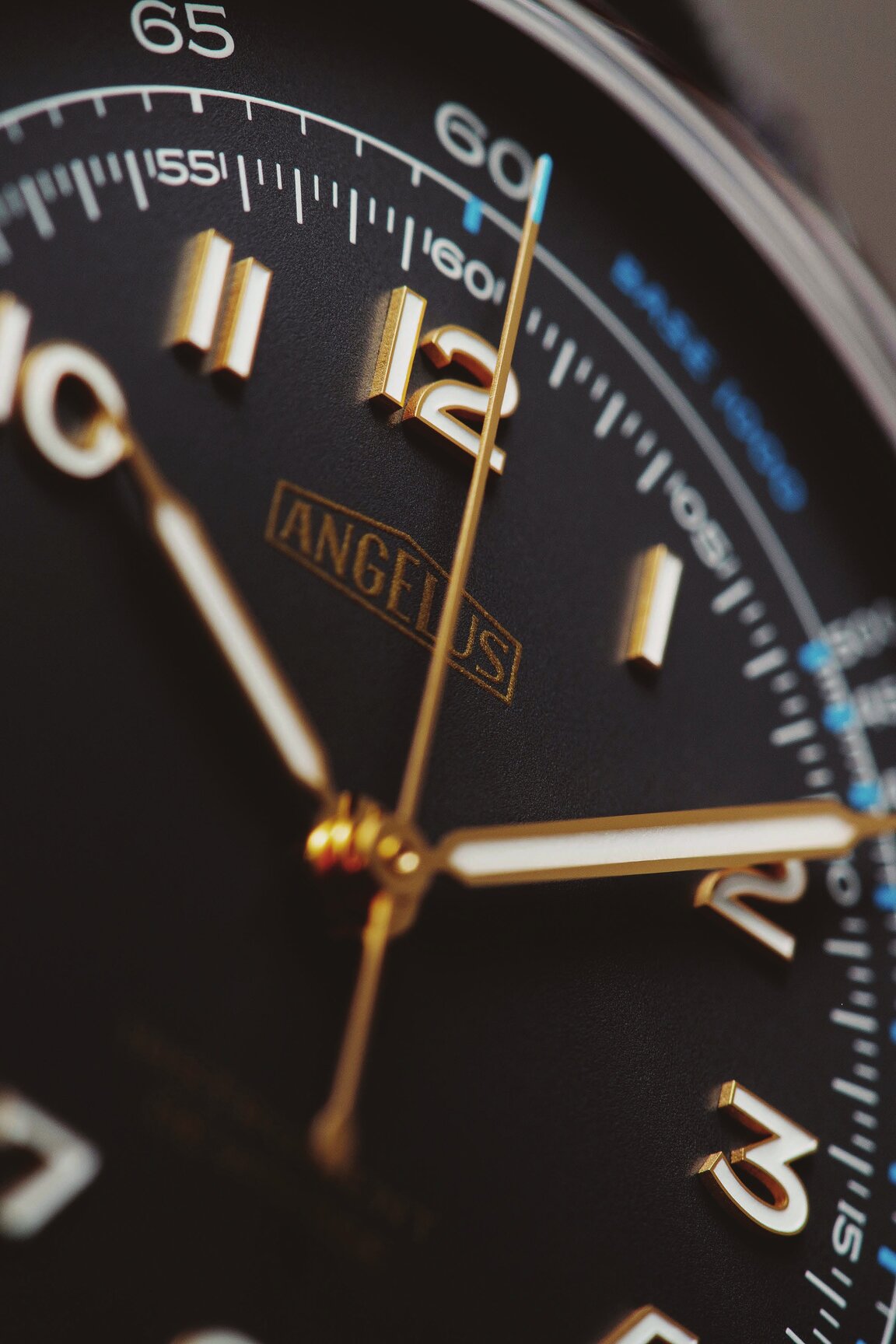
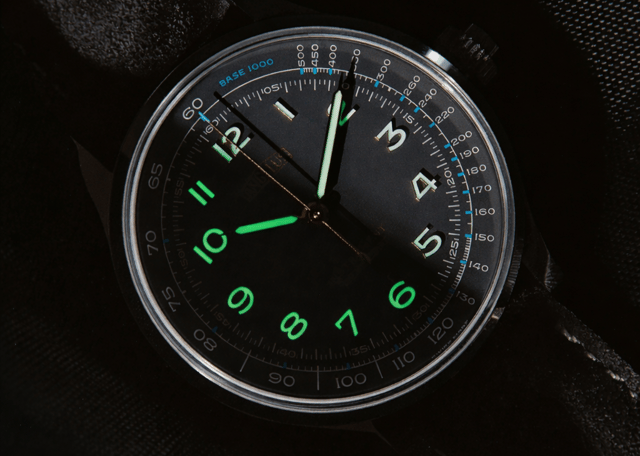
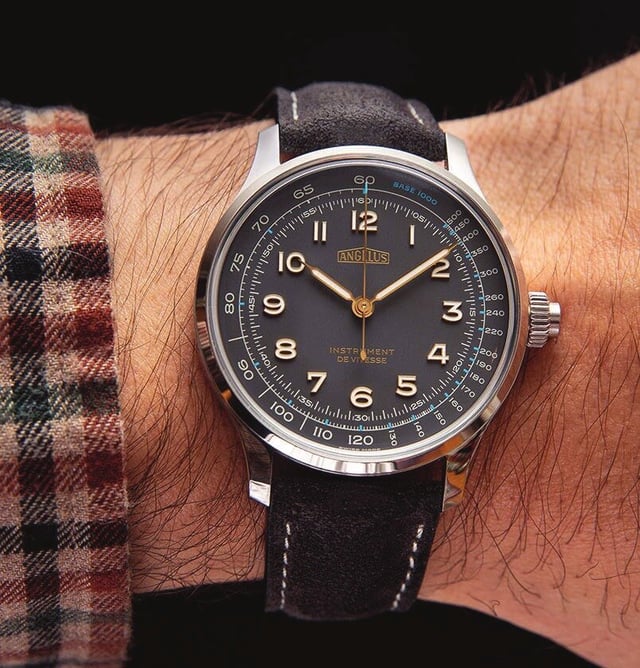
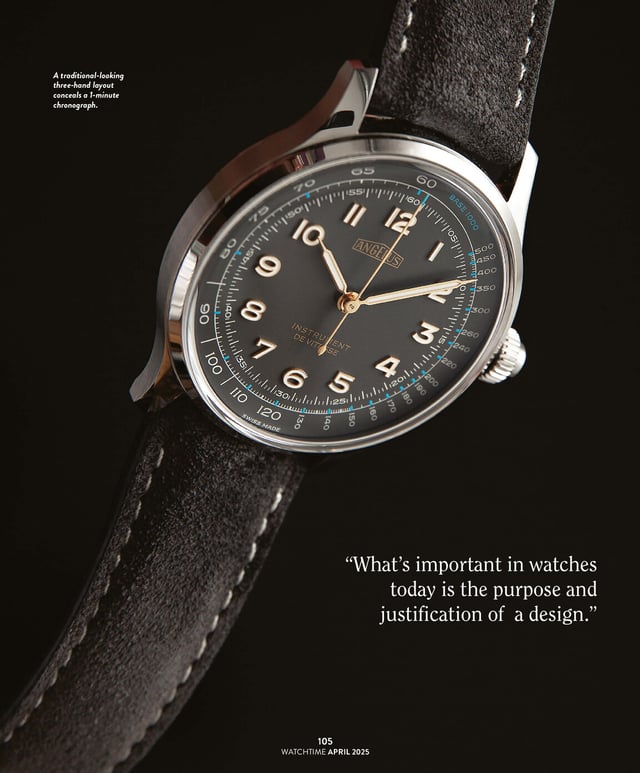
Another way to understand the Instrument de Vitesse is as an exercise in minimalism. This is about as simplified as a chronograph can get: Visually, no subdials or pushers immediately indicate that there’s any functionality beyond three-hand time telling. The tachymeter scale around the dial’s edge is the first clue and then, of course, there’s that central seconds hand standing at attention at 12 o’clock, motionless until called into action.
Functionally, too, it’s pared back. You can only read the time’s hours and minutes, no date window clutters its face, and you can only use the chronograph to time up to 60 seconds. Moreover, this is a monopusher, meaning the use of a single button to start, stop and reset the chronograph.
With its tachymeter scale, colorfully sporty highlights and a name meaning “speed instrument,” the Instrument de Vitesse plants a flag as a pure motorsport watch. It’s solely and expressly for measuring the average speed of a fast-moving object — and not much else.
Engine of Speed
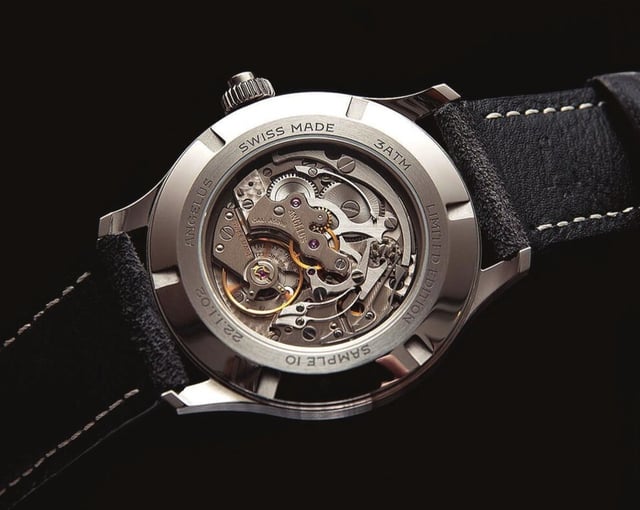
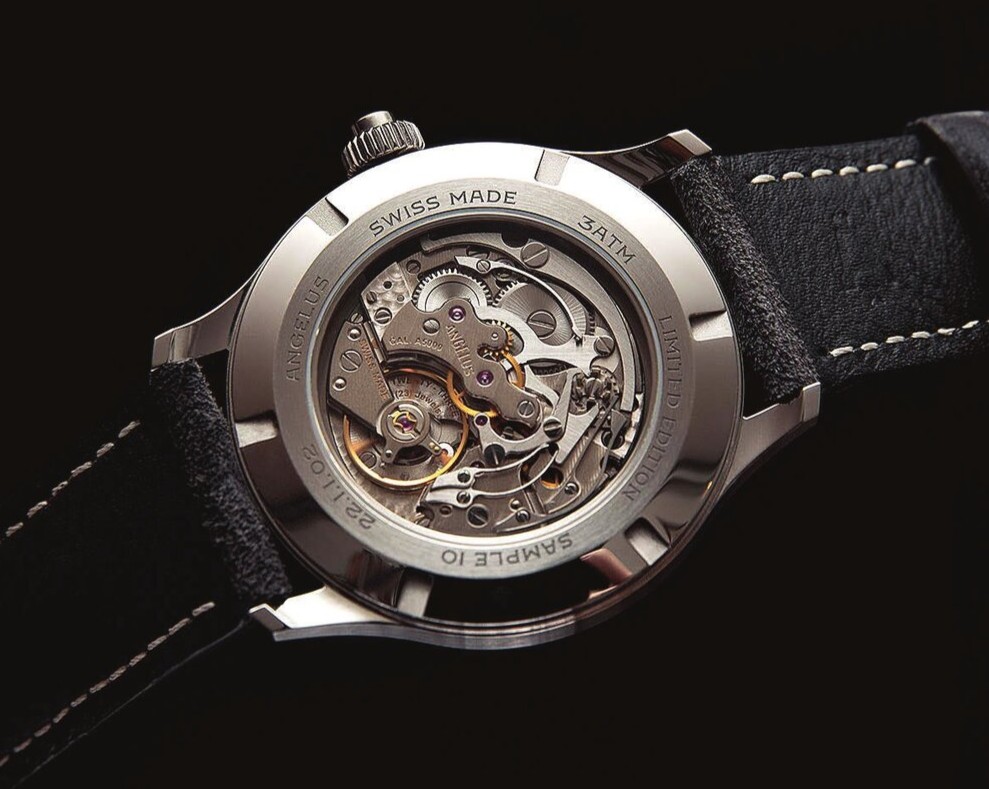
The A5000 movement inside the Instrument de Vitesse may be an additional attraction for collectors drawn to the watch’s overall concept and the brand’s history. The Angelus A5000, as it’s known in this form, is based on the La Joux-Perret 5000-4 monopusher chronograph.
The A5000 features reduced functionality, a 42-hour power reserve, a 3-Hz frequency, manual winding, Geneva stripes, perlage and polished chamfers. Its origins trace back to a monopusher chronograph developed in 1998 by Techniques Horlogères Appliquées (THA), founded by F.P. Journe and Denis Flageollet.
Though the connection may be indirect, that lineage gives the movement additional historical resonance. While modern collectors might wish for a longer power reserve, the A5000 remains a solid movement with smooth action and refined finishing.
Wrist Time
Tested here is the gray-dial model called “Silverstone,” but it also comes in blue “Indianapolis,” black “Ebene” and cream “Ivoire.” Its colors and tachymeter scale lend it sportiness, but its presence remains just shy of formal.
At 39 mm in diameter and 9.2 mm thick, it wears easily and comfortably. The thin bezel allows the dial to dominate visually, giving it more presence than its dimensions suggest. Brushed case sides complement polished elements, and the matte dial enhances legibility, aided by well-lumed applied indices.
With vintage vibes, a restrained diameter, an unusual concept and a historically connected movement, the Instrument de Vitesse marks a meaningful shift for modern Angelus. If the La Fabrique collection is any indication, the brand’s renewed dialogue with its mid-century roots is only just beginning.
SPECS - Angelus La Fabrique Instrument de Vitesse “Silverstone”
Manufacturer:
Angelus / La Joux-Perret, Boulevard des Éplatures 38, 2300 La Chaux-de-Fonds, Switzerland
Reference number:
0CHBS.G01A.V010S
Functions:
Hours, minutes, 60-second chronograph
Movement:
Angelus A5000 (La Joux-Perret 5000-4) manually wound; 42-hour power reserve
Case:
Polished and satin-finished stainless steel; sapphire crystal; water resistant to 30 m
Strap and clasp:
Suede strap with steel buckle
Dimensions:
Diameter = 39 mm; thickness = 9.2 mm
Variations:
White dial (Ref. 0CHBS.I01A.V010S)
Black dial (Ref. 0CHBS.B01A.V010S)
Blue dial (Ref. 0CHBS.U01A.V010S)
Gray dial (Ref. 0CHBS.G01A.V010S)
Price:
CHF 17,200
This article was originally published in the March / April 2025 Issue. To subscribe to the print edition of WatchTme Magazine, click here.