Small Complications: How the Moon Phase Works
A celestial cycle, translated into gears
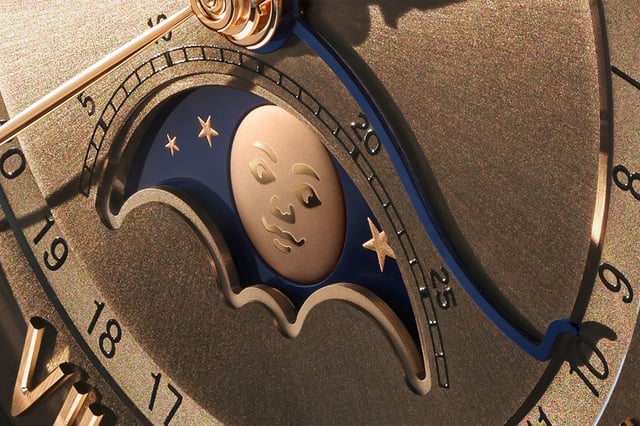
With a few exceptions, moon-phase displays are a familiar feature of complete calendars and also appear on many annual and perpetual calendars. They become a true standalone complication, however, when the moon phase is the primary additional function beyond the time and date. Much like a day-of-the-week display, a moon phase is rarely seen without a date indication.
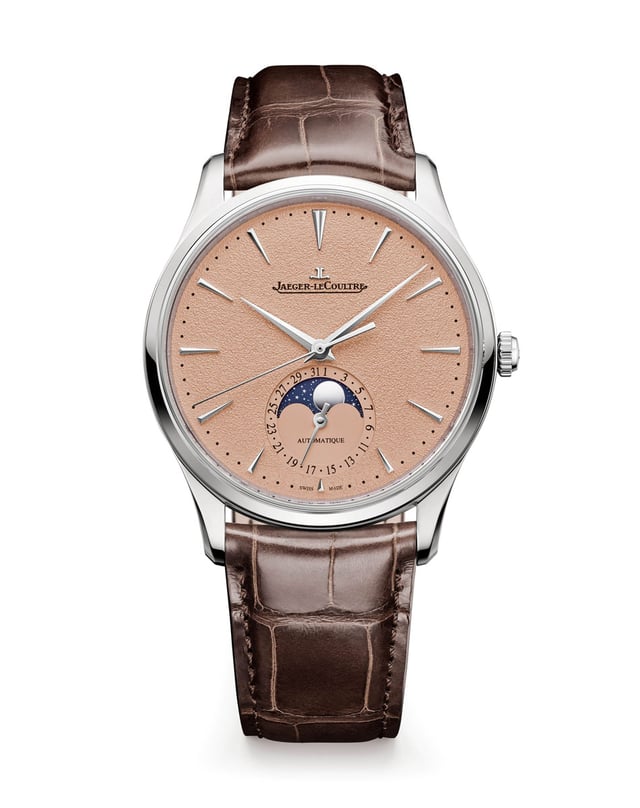
Jaeger-LeCoultre Master Ultra Thin Moon
Jaeger-LeCoultre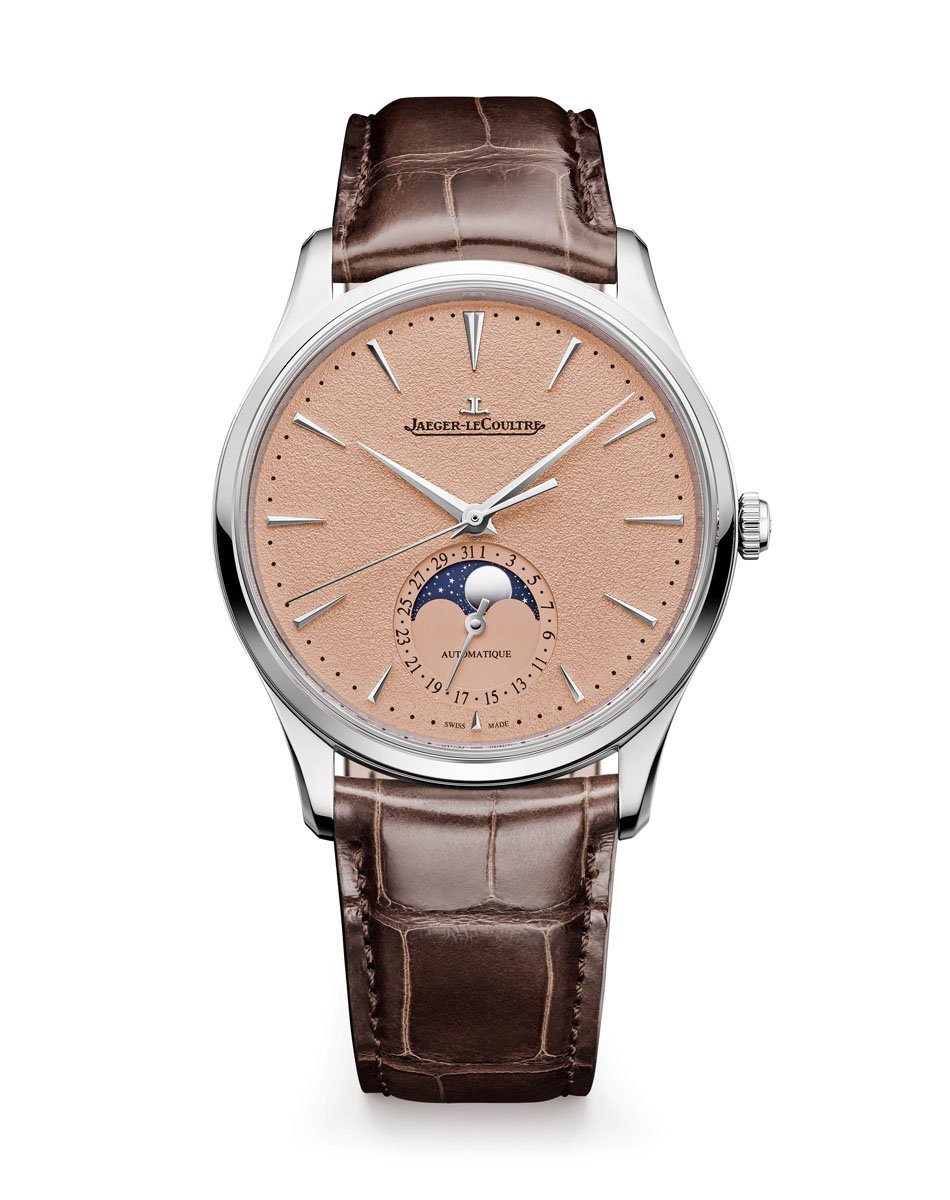
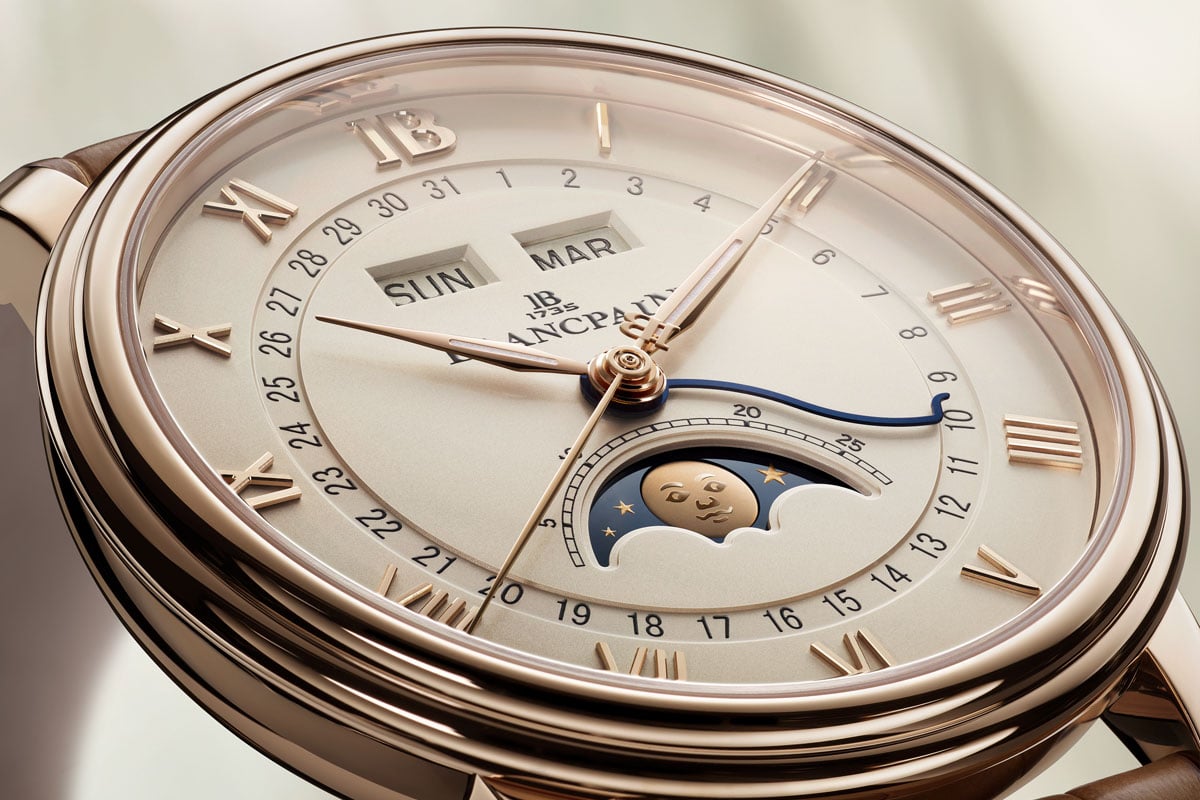
The complication played an important role in the mechanical-watch revival of the 1980s. Jean-Claude Biver helped bring it back into the spotlight with the first collection from the revived Blancpain. Since then, the moon phase has moved in and out of favor with changing tastes. When oversized cases and sports watches dominate, it tends to recede. When collectors gravitate toward smaller dimensions and more elegant designs, the moon phase returns. That is very much the case today, as seen in watches such as the Jaeger-LeCoultre Master Ultra Thin Moon.
Below, we explain how a moon-phase display works, what it can and cannot show and how the mechanism is set. We also look at current examples that illustrate the different ways brands approach this classic complication.
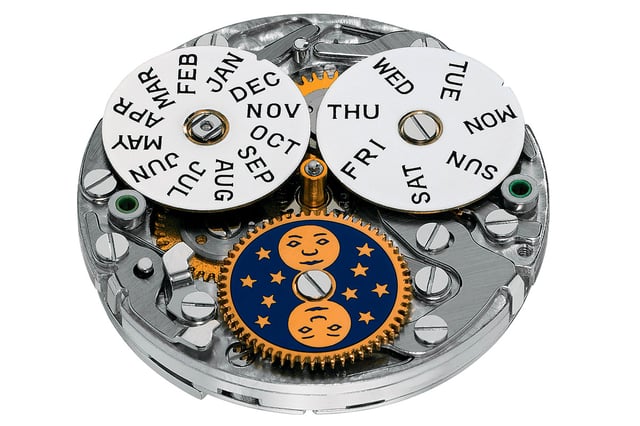
Caliber Frédéric Piguet 6395
Blancpain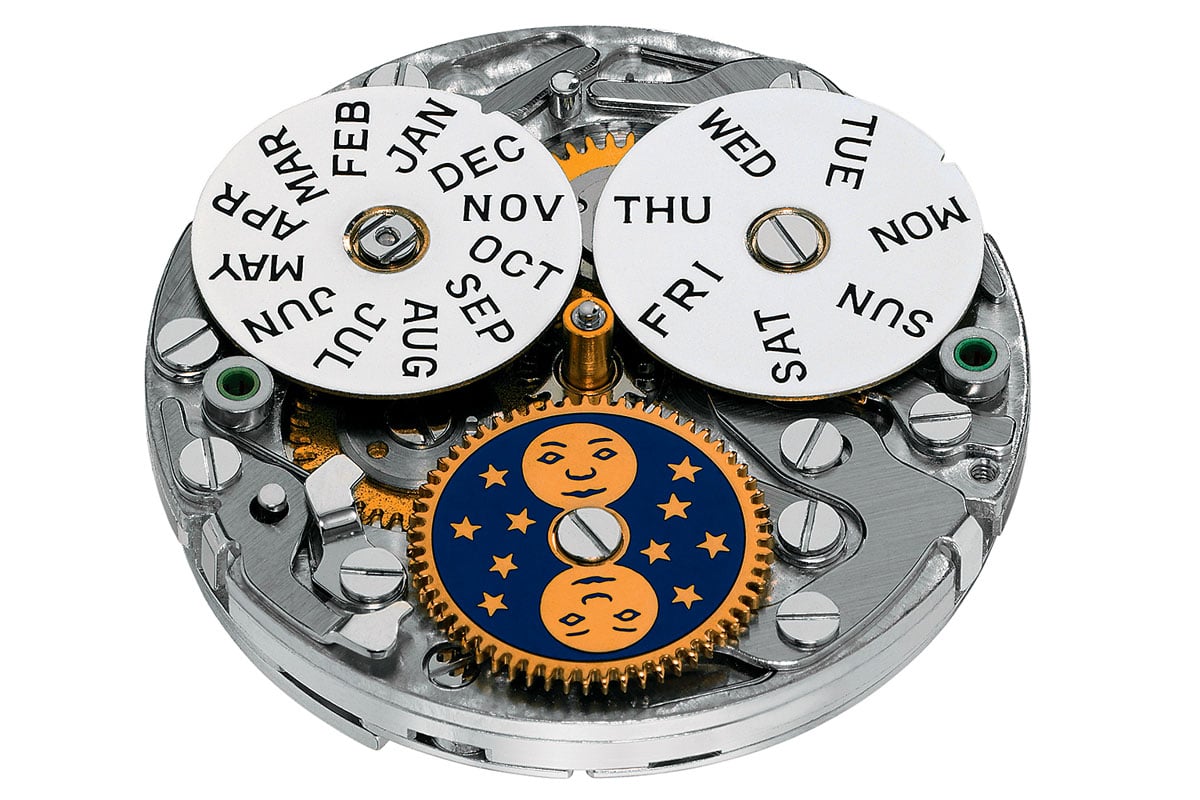
How the Moon Shapes Our Sense of Time
As Earth’s closest celestial neighbor, the moon has fascinated humans for millennia. It played an important role in the religions and mythologies of early cultures, but its influence is also very real in physical terms. The moon’s gravitational pull is responsible for the tides. Over geological time, it has also slowed Earth’s rotation and helped stabilize the planet’s axial tilt.
Long before mechanical watches existed, people used the moon’s regular cycle to measure time and organize calendars. The period from one full moon to the next formed the basis of the month in many early calendar systems. This cycle is known as a lunation, from the Latin luna, meaning moon.
More precisely, a lunation is the time required for the moon to return to the same position relative to the sun as seen from Earth. One lunation lasts approximately 29.531 days, or 29 days, 12 hours, 44 minutes and 2.9 seconds.
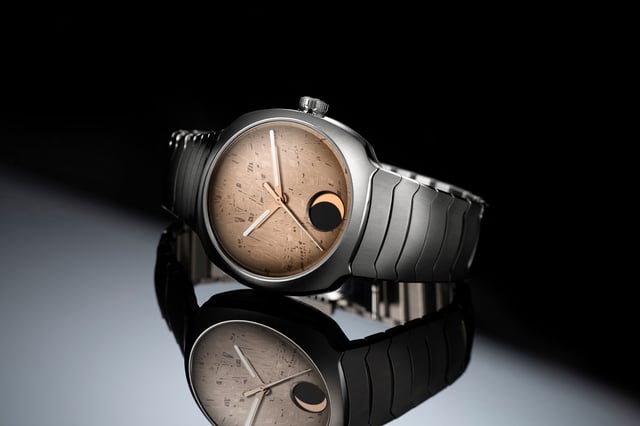
H. Moser & Cie Streamliner Perpetual Moon Concept Meteorite
H. Moser & Cie.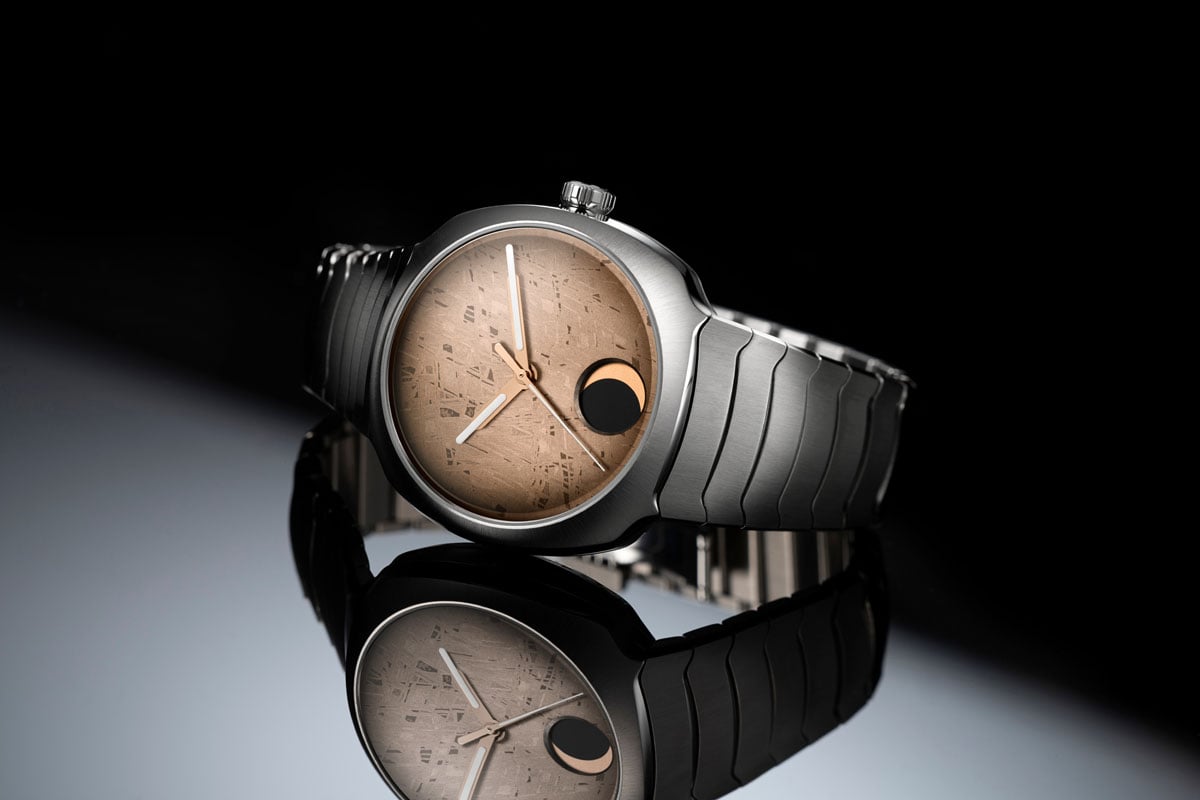
When Did Moon-Phase Watches First Appear?
Moon-phase displays can be traced back to wall clocks of the early 16th century. Much later, during the quartz crisis of the 1970s, mechanical watchmaking lost ground, and astronomical complications such as the moon phase faded with it. That changed when Blancpain successfully brought the moon-phase display back into focus. Other brands followed, and today the complication appears in watches across nearly every price category. What varies considerably is the level of precision.
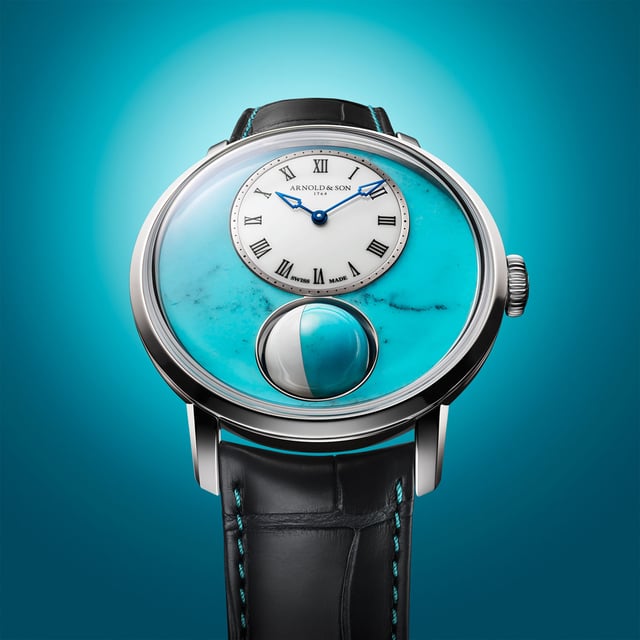
Arnold & Son Luna Magna Steel Turquoise
Arnold & Son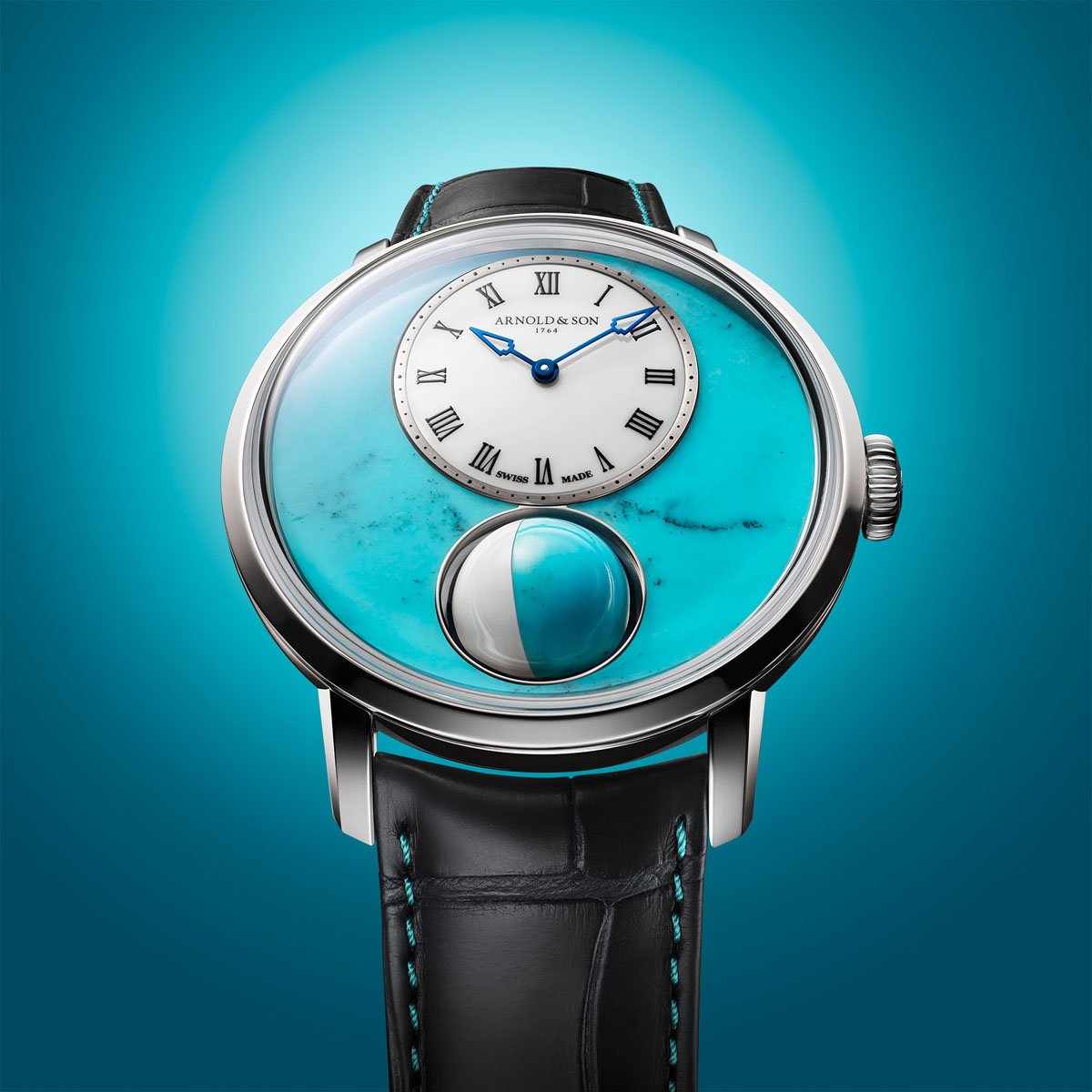
How Does a Moon-Phase Watch Work?
The astronomical lunar cycle lasts 29 days, 12 hours, 44 minutes and 2.9 seconds. A traditional moon-phase mechanism simplifies that figure to 29.5 days. Because half a day is difficult to translate directly into a mechanical gear train, the classic construction uses a 59-tooth wheel, enough for two 29.5-day lunar cycles.
The moon disk carries two opposing images of the moon, only one of which is visible through the dial at any given time. Once a day, usually around midnight, the mechanism advances the disk by one tooth. It is a simple and effective solution, but not a perfectly accurate one.
A conventional 59-tooth moon-phase display accumulates an error of roughly eight hours per year, or approximately one full day every three years. At that point, it needs to be corrected, typically through a dedicated corrector in the case.
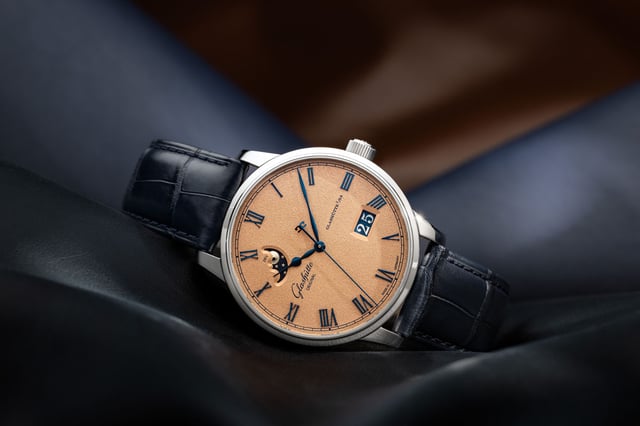
Glashütte Original Senator Excellence Panorama Date Moon Phase
Glashütte Original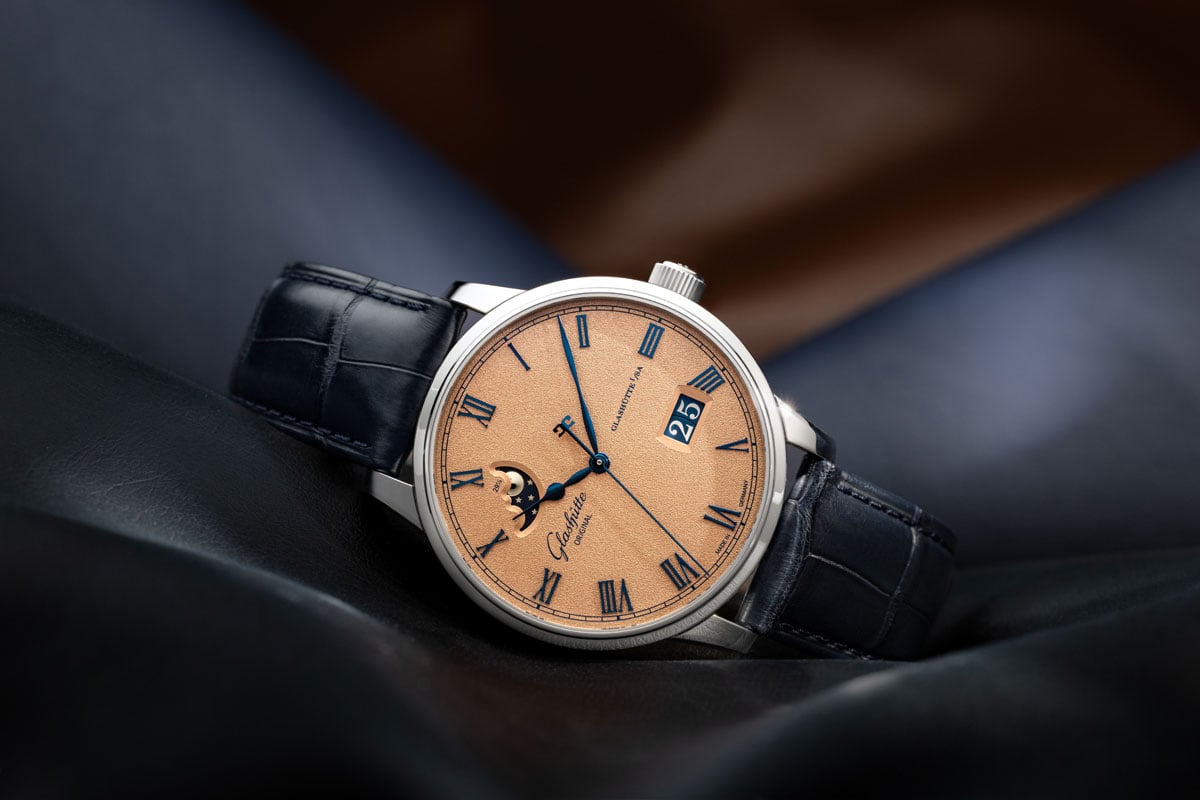
How Accurate Can a Moon-Phase Display Be?
More sophisticated constructions can dramatically improve that accuracy. MeisterSinger, for example, equips the Stratoscope single-hand watch with a high-precision moon-phase display. Its photorealistic moon also glows in the dark.
The IWC Portugieser Perpetual Calendar goes considerably further. Its moon-phase display deviates from the actual lunar cycle by just one day after 577.5 years, thanks to the automatic manufacture Caliber 52615. A. Lange & Söhne takes a more theatrical approach with the Richard Lange Perpetual Calendar “Terraluna.” Its orbital moon-phase display is positioned on the caseback and does more than show the waxing and waning moon. Three rotating disks illustrate the relative positions of the moon, Earth and sun. Earth sits at the center of the display and rotates counterclockwise once every 24 hours. The balance wheel represents the sun, establishing the daylight side of the miniature astronomical scene. The moon-phase indication itself requires a correction of just one day every 1,058 years.
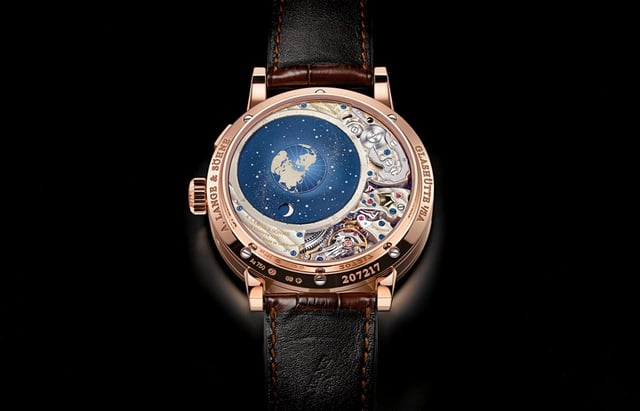
A. Lange & Söhne Richard Lange Perpetual Calendar "Terraluna"
A. Lange & Söhne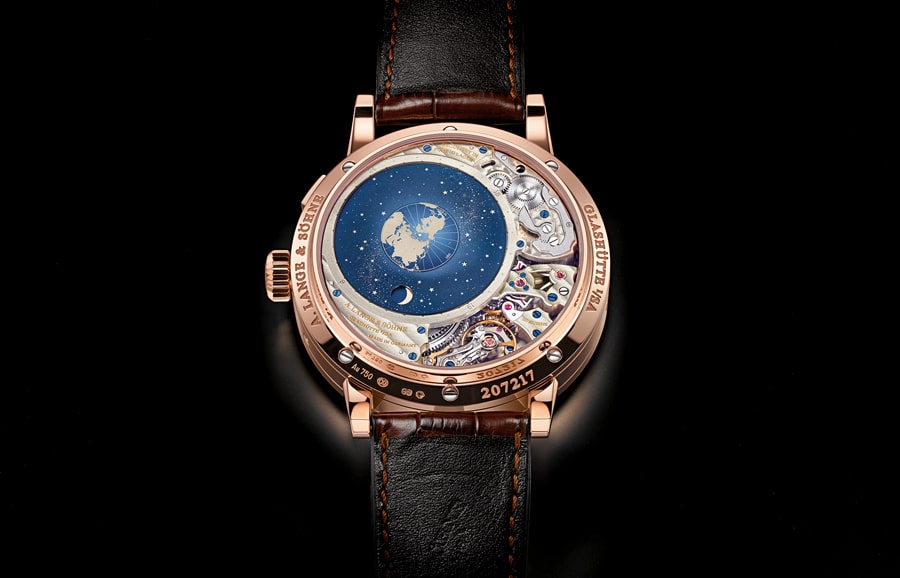
Swiss master watchmaker Andreas Strehler pushes precision even further. His moon-phase mechanism consists of only four components yet accumulates an error of just one day in approximately two million years. In the Sauterelle à Heure Mondiale, he combines that extraordinary moon-phase display with a world-time function.
The current record, however, belongs to IWC. Introduced in 2024, the Portugieser Eternal Calendar features a Double Moon display that theoretically deviates by just one day after 45,361,055 years. The achievement has been recognized by Guinness World Records as the most precise moon-phase wristwatch.
Does that degree of precision make any practical difference to the owner? Not really. But practicality is hardly the point. Part of the fascination of mechanical watchmaking lies in seeing just how far purely mechanical solutions can be pushed. In the case of a secular perpetual calendar designed to remain accurate beyond the usual limits of the Gregorian calendar, an ultra-precise moon-phase display feels entirely appropriate.
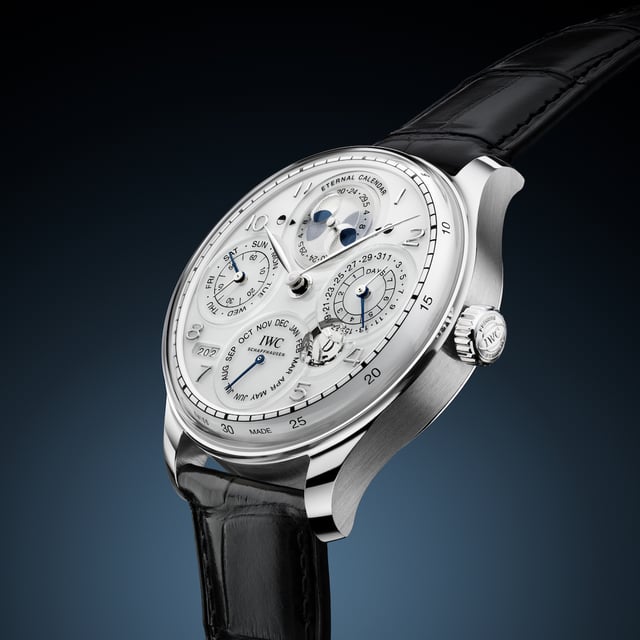
IWC Portugieser Perpetual Calendar
IWC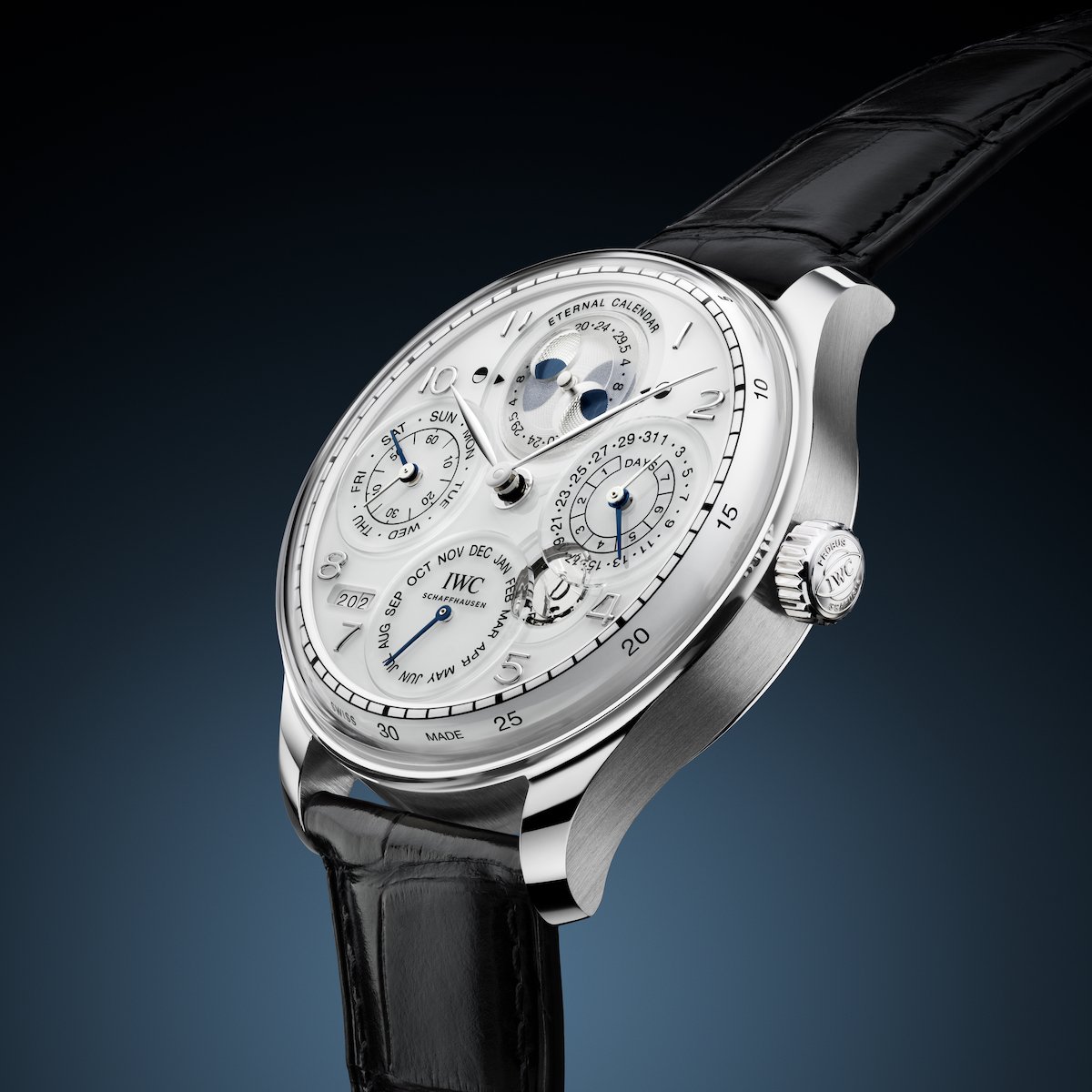
A Moon-Phase Display for Both Hemispheres
Watches that show the moon phases for both the Northern and Southern Hemispheres at the same time are relatively rare. One of the most distinctive examples is the Hermès Arceau L’Heure de la Lune, introduced in 2019. Instead of using a conventional moon-phase subdial, Hermès places two moon disks directly on the dial, one for each hemisphere. Above them sit two mobile counters: one for the time and the other for the date. As these upper disks slowly travel across the dial, they reveal different portions of the moons beneath them, including the crescent, half moon and full moon. The entire display completes one orbit every 59 days.
Powering the mechanism is the self-winding manufacture Caliber H1837. The original Arceau L’Heure de la Lune was limited to 100 pieces, and Hermès introduced new interpretations of the concept in 2025.
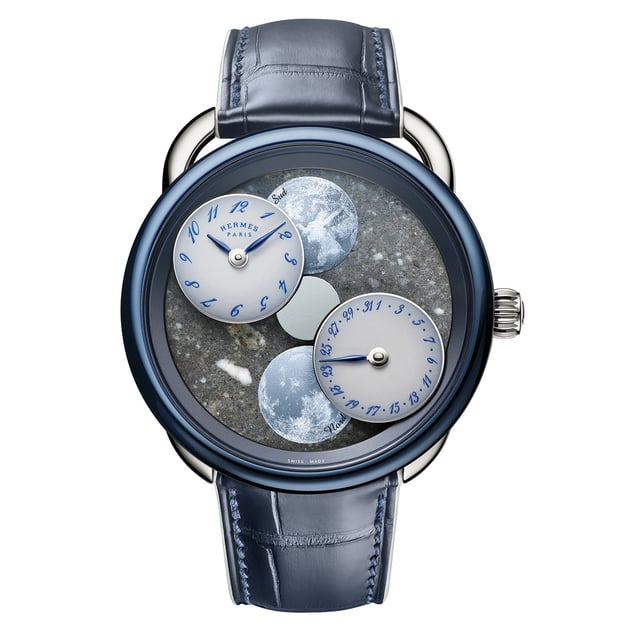
Hermès Arceau L'heure de la lune Blue Grey Moon
Hermès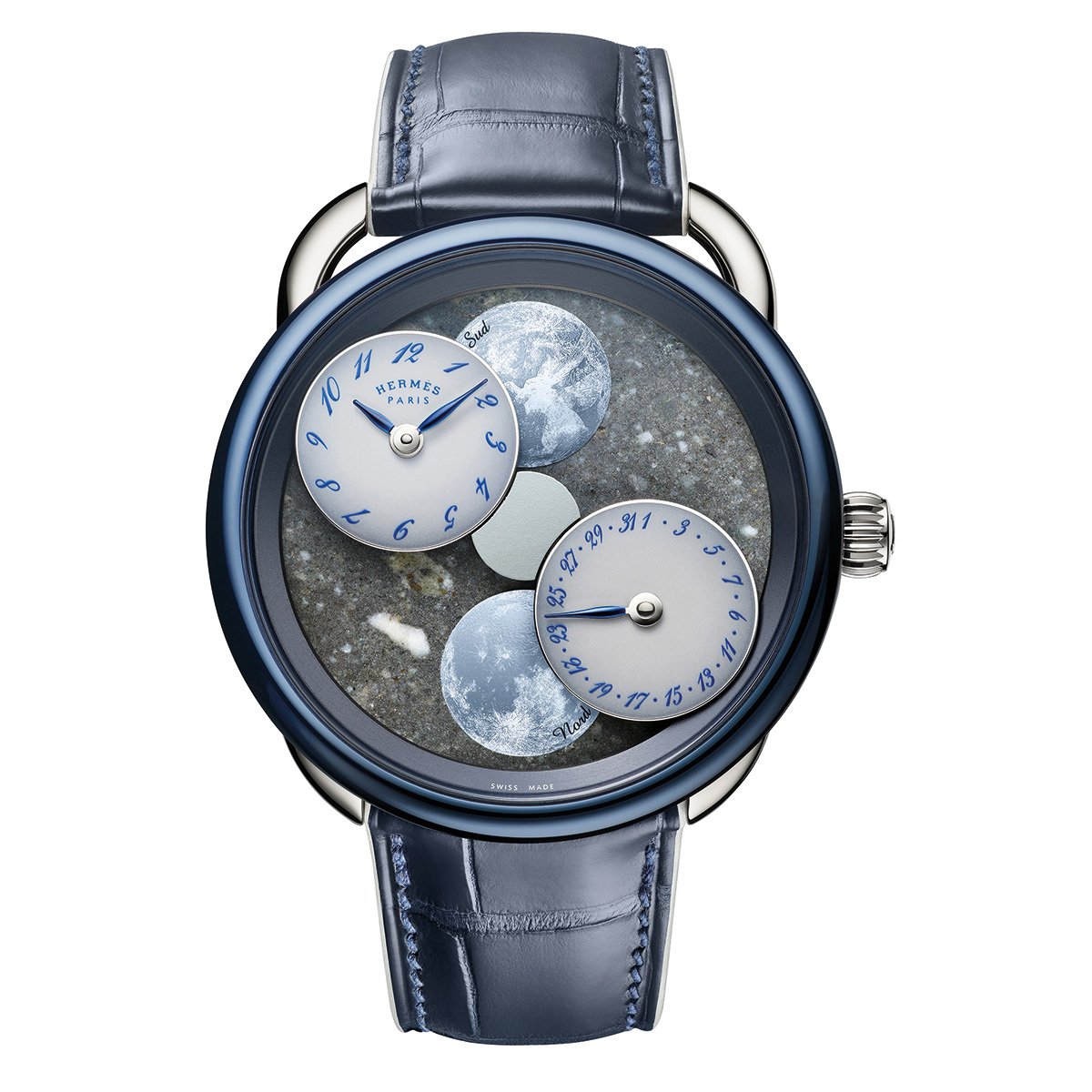
Seven Moon Phases at a Glance
TAG Heuer took a different approach with the Carrera Astronomer, introduced in 2025. Instead of showing only the current phase, the watch displays seven key stages of the lunar cycle from new moon to new moon. A double-ended hand moves across a rotating disk and indicates both the current moon phase and the moon’s age, meaning the amount of time that has passed since the previous new moon.
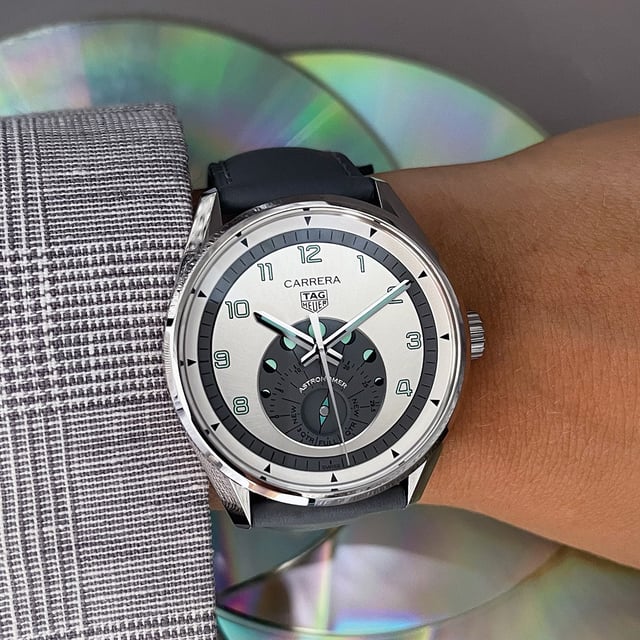
TAG Heuer Carrera Astronomer
WatchTime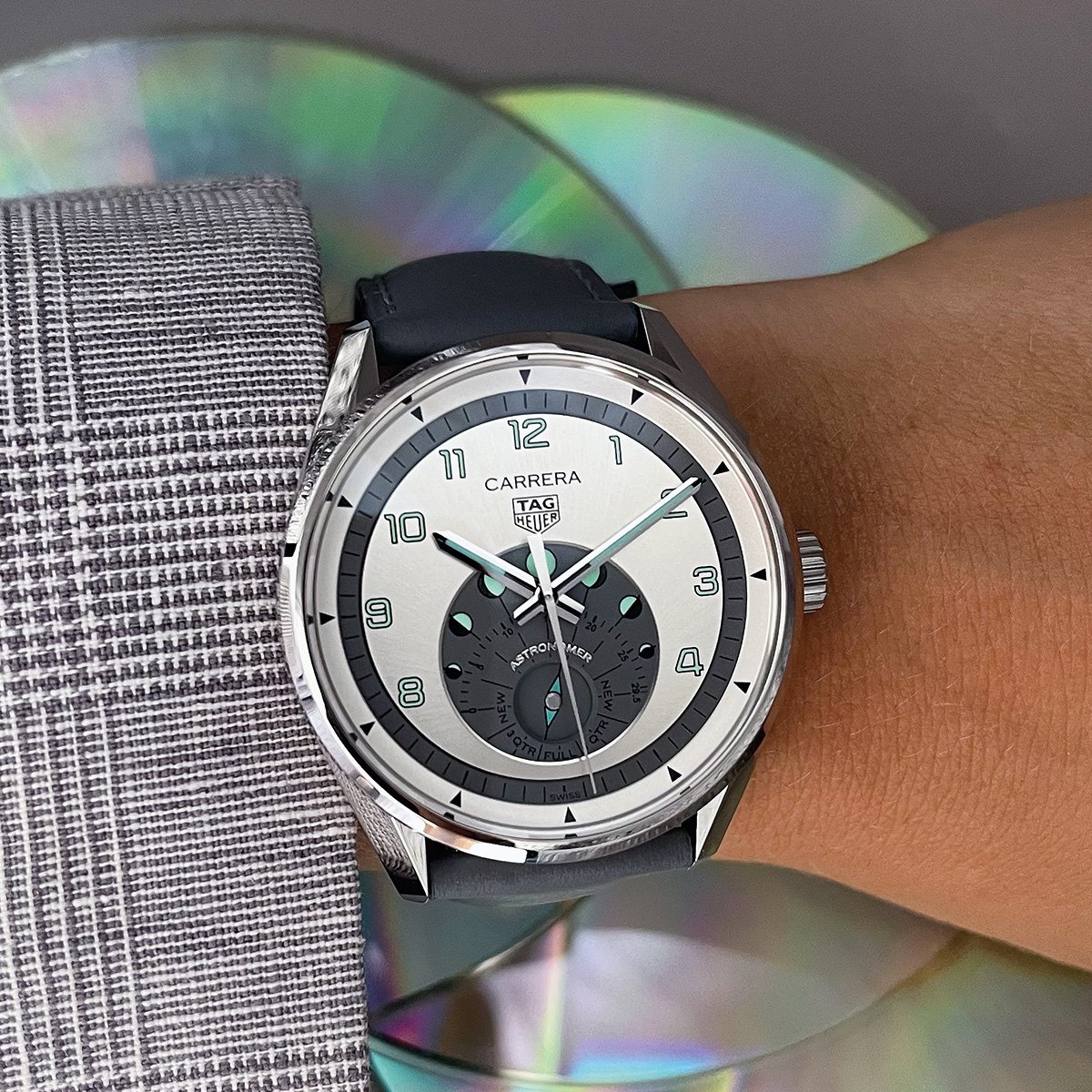
How to Set a Moon-Phase Display
Depending on the watch, the moon phase is adjusted either with a dedicated corrector or through the crown. The exact procedure varies by movement and manufacturer, so the watch’s operating instructions should always take precedence.
Before making any adjustment, check the instructions for the period during which the calendar mechanism must not be corrected. On many watches, operating a calendar or moon-phase corrector while the mechanism is already engaged can damage the movement.
Setting the Moon Phase with a Separate Pusher
First, press the pusher until a full moon appears in the display. Then determine the date of the most recent full moon. Count the number of days that have passed since that date and press the pusher the same number of times. The display should then correspond to the current lunar phase.
For example, if the previous full moon occurred on August 1 and the watch is being set on August 9, eight days have elapsed. Press the pusher eight times to bring the moon-phase display up to date.
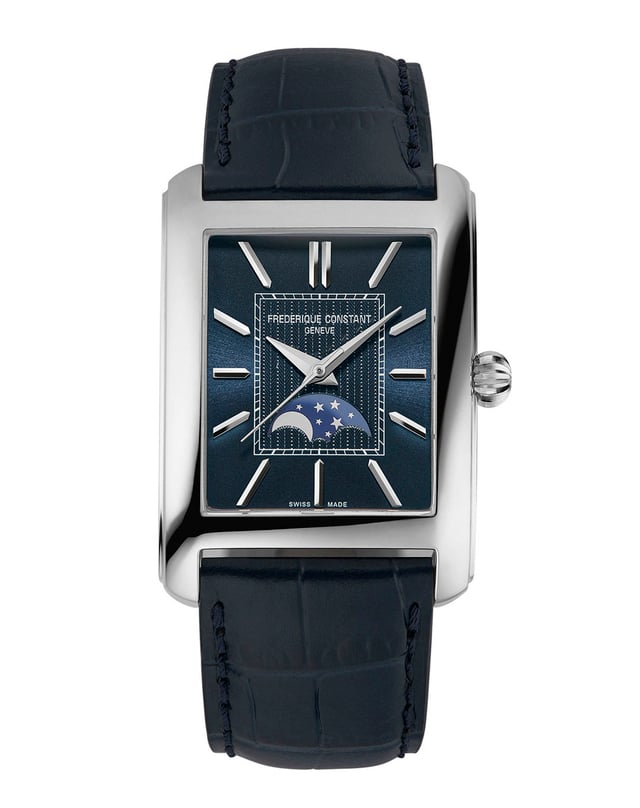
Frederique Constant Classics Carrée Moonphase
Frederique Constant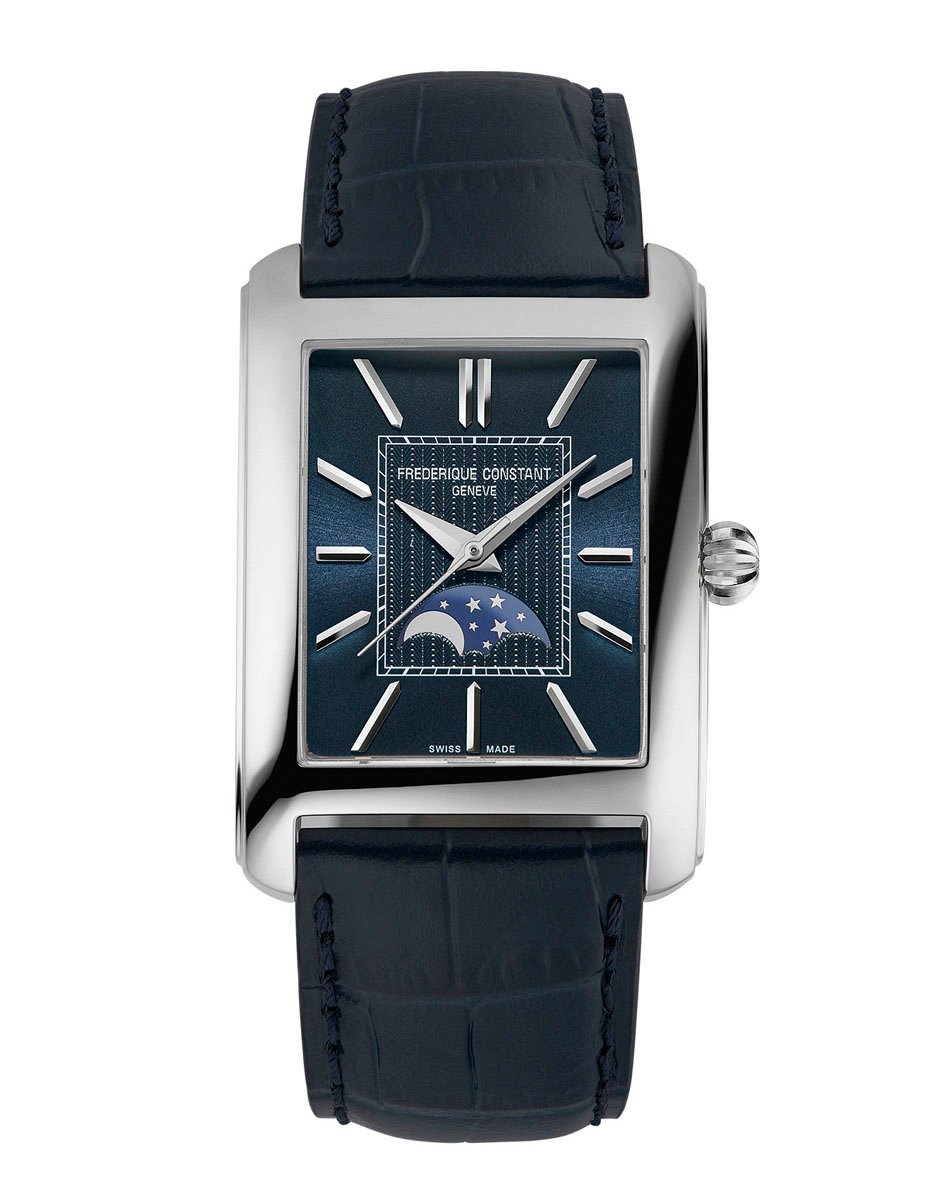
Setting the Moon Phase with the Crown
On watches that use the crown for adjustment, pull it out to the appropriate setting position. On many models, the first setting position controls the date and/or moon phase, although the exact arrangement varies by manufacturer. Turn the crown until the date corresponds to the most recent full moon. From there, advance the calendar to the current date. The moon-phase display should now be correctly synchronized.
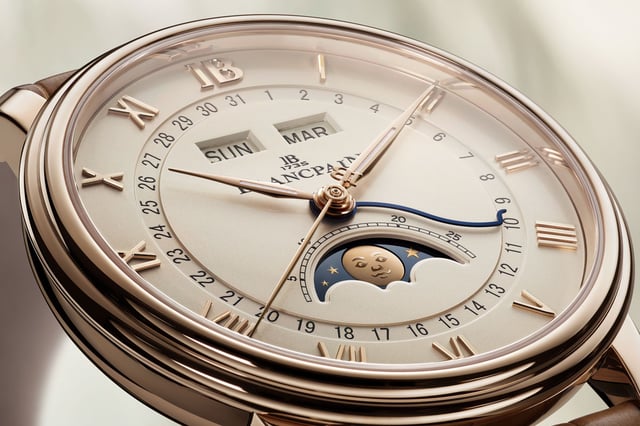
Blancpain Villeret Phase de lune 40 mm
Blancpain