Things Get Complicated: A Spotlight on Frederique Constant
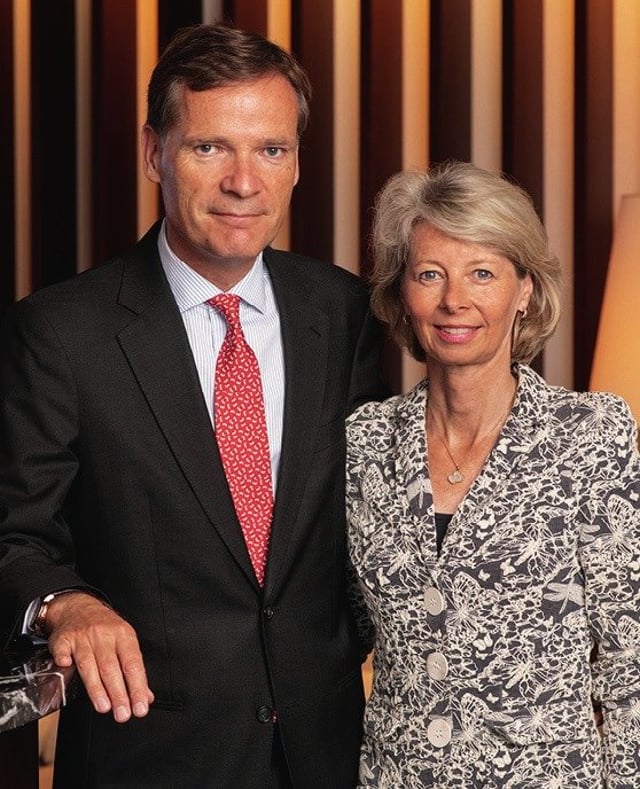
Some stories read like a fairy tale, and the rapid development of Frederique Constant fits in this category for sure. Founders Peter and Aletta Stas started designing the first watch collection in 1988, which launched in 1992 and got a warm welcome from the market. Highlighting traditional elements of watchmaking while offering a lot of value for money would become a hallmark of Frederique Constant, to which they have remained loyal ever since. In 1994, the first Heart Beat model was introduced. As the brand wanted to highlight the mechanical movements in its watches from the dial side, which was not at all that common then, without opting for a complete skeleton movement, it made an opening showcasing just the balance wheel. While gratefully copied by various other brands later, the Heart Beat models solidified Frederique Constant’s position in the industry.
Dream Big
The models also contribute to Peter and Aletta Stas’s dream of turning Frederique Constant into an actual manufacture. In 2004, just 22 years after they launched their first collection, the owners of Frederique Constant had the pleasure of introducing the first in-house Caliber FC-910. With a prominent place on the dial side for the balance wheel, it takes both the Heart Beat collection and Frederique Constant as a brand to the next level. An essential role in the development process of this new movement was Pim Koeslag, a student of the Watchmakers’ School of Amsterdam, who earned an internship at Patek Philippe after being voted ‘Best Student of the Year’ in 2002. At Patek Philippe, they were so pleased with his work during the internship that they offered him a position. Koeslag, keen for a challenge, politely declined and instead took Peter Stas up on the offer that he made during his class visit to Frederique Constant. There, Stas asked which of the students wanted to join him in his quest of becoming a true manufacture. With a positive nature in the spirit of Pippi Longstocking’s, “I have never tried that before, so I think I should definitely be able to do that," Kocslag joined Frederique Constant as its first full-time watchmaker when the total number of employees of the brand just reached 10.
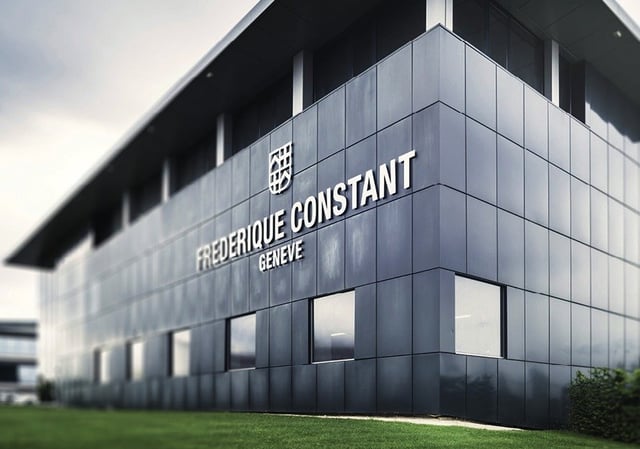
Frederique Constant has a knack for nurturing its own success. By fiercely investing in itself, focusing on research and development, and staying true to the design language it has made its own, Frederique Constant could quickly claim its place among the established Swiss brands. Opening its new Manufacture in Plan-les-Ouates in 2006, on the outskirts of Geneva, with as its neighbors Piaget, Harry Winston and Vacheron Constantin, was a milestone in this process. Little could these other brands have known that Frederique Constant would also join them in another way. Two years after opening the new manufacture, Frederique Constant surprised both collectors and the industry with the introduction of its very first tourbillon caliber.
Taking advantage of its new manufactures possibilities, including its precise CNC machines, Frederique Constant was able to develop quite a progressive tourbillon escape-ment. They focused on optimizing precision, which seems evident as this is the aim of a tourbillon escapement to begin with. In practice, things have deviated from this path as the renaissance of mechanical watchmaking has given the tourbil-lon a hero status, in which prestige and the revenues that come with it sometimes have gotten in the way of perfecting this intricate invention of Abraham-Louis Breguet.
Precision Is What Counts
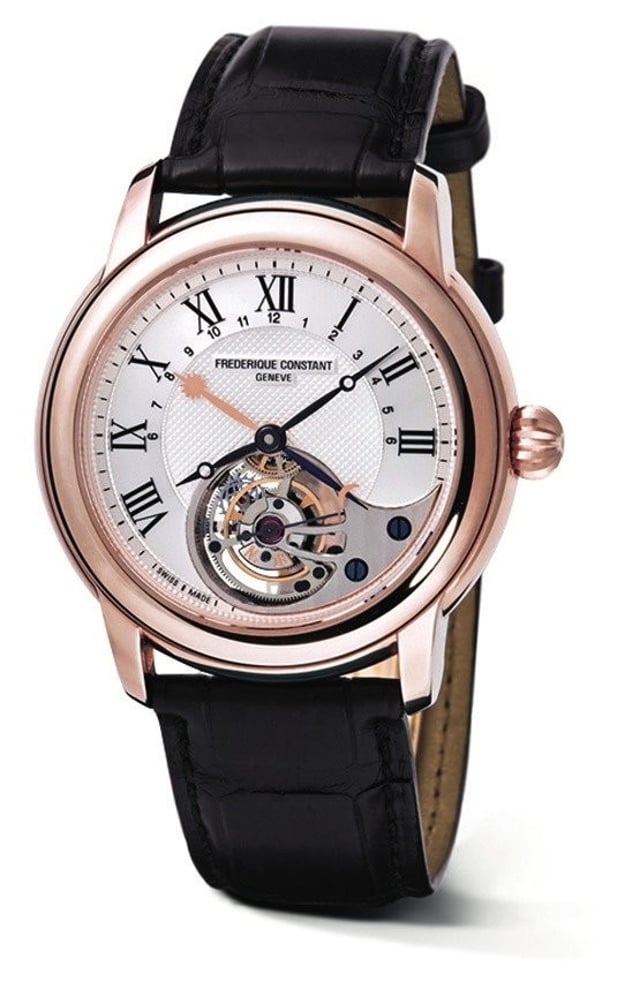
From the beginning, Frederique Constant set out to make a meaningful addition to the already existing tourbillons on the market. The tour-billon cage that they developed consists of 80 parts, working with tolerances of 1-2 micron (0.001 - 0.002 mm). A particular challenge was balancing the cage. This is quite important as it will affect either positively or negatively the accuracy of the tourbillon. As a perfect weight distribution is nearly impossible to achieve when producing the parts, Frederique Constant developed a clever way around this. With the socalled “Smart Screw” system placed on the outer edge of the tourbillon cage, Frederique Constant’s watchmakers can manually balance the construction by adding tiny metal rings secured by two screws on the main cage wheel. As in production, they create a slight overweight on the side of the cage opposite to the Smart Screw system, a perfect balance can be obtained for all the tourbillons. However, this perfection comes at a significant investment, as it typically takes a highly skilled watchmaker still around 8 hours to achieve this. Frederique Constant also embraced silicium (also called silicon) in its quest for optimum precision for its manufacture calibers, including its tourbillon. Where most brands opt for 3 Hz for their tourbillons, Frederique Constant went for 4 Hz, as the higher number of oscillations makes the movement less susceptible to gyration effects.
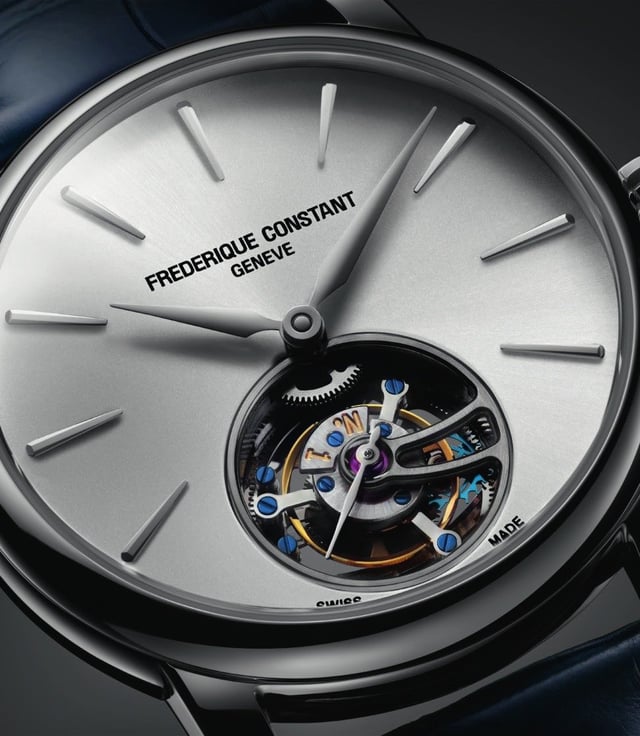
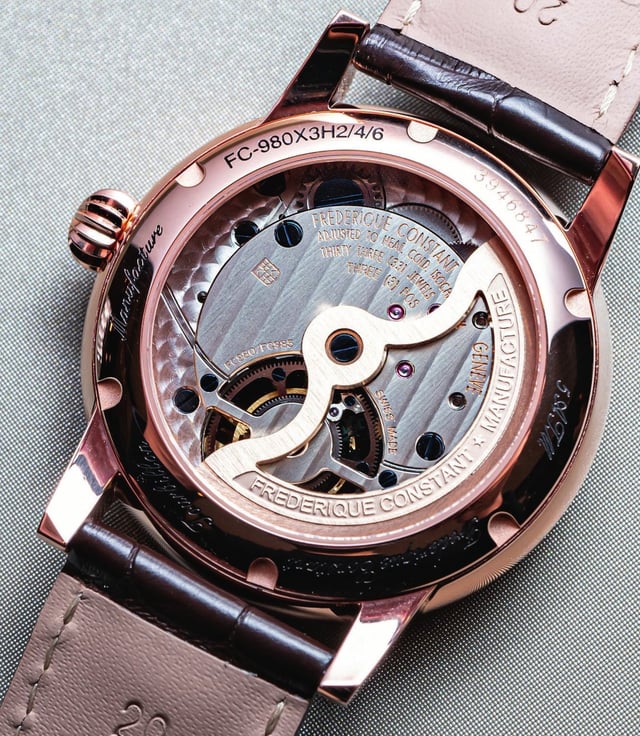
Regarding styling, Frederique Constant remained true to its core identity, with its first tourbillon taking cues from the High Beat collection. The watch is also fitted with a dual-sided hand, functioning as a day and night indicator. A display back also allows you to admire the back of the movement, where Frederique Constant has also developed an architecture of its own.
Perpetual Pleasure
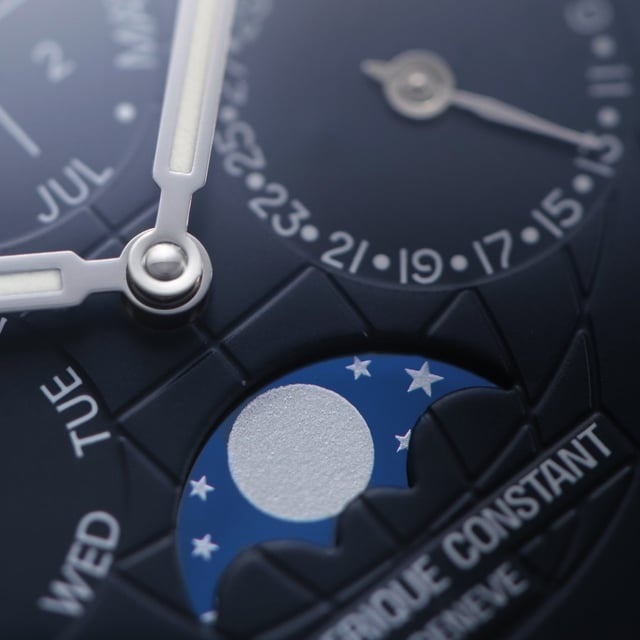
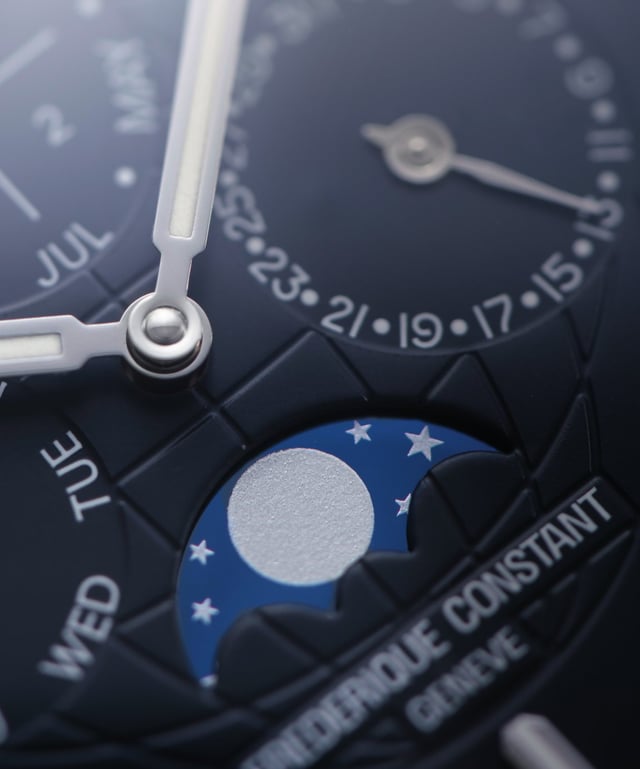
Another bastion of traditional, high-end watchmaking is the perpetual calendar. Capable of dealing with the rigors of the Gregorian calendar, with its leap years and 12 months of 28 to 31 days each, this functions thanks to quite a complex movement. This is also precisely the reason why it has always been a coveted type of watch, offered by high-end brands with equally high price tags. In 2016, Frederique Constant also entered this market with its Manufacture Perpetual Calendar. As the name indicates, the movement of this watch was also developed by Frederique Constant itself. It displays the day, date and month along with the phases of the moon and the leap years. Frederique Constant opted for a traditional layout with three subdials and a window for the phases of the moon, with above them the two hands that tell the time. Less traditional was the diameter of 42 mm, which gave the Manufacture Perpetual Calendar a contemporary character, and also perfectly fitted Caliber FC-775.
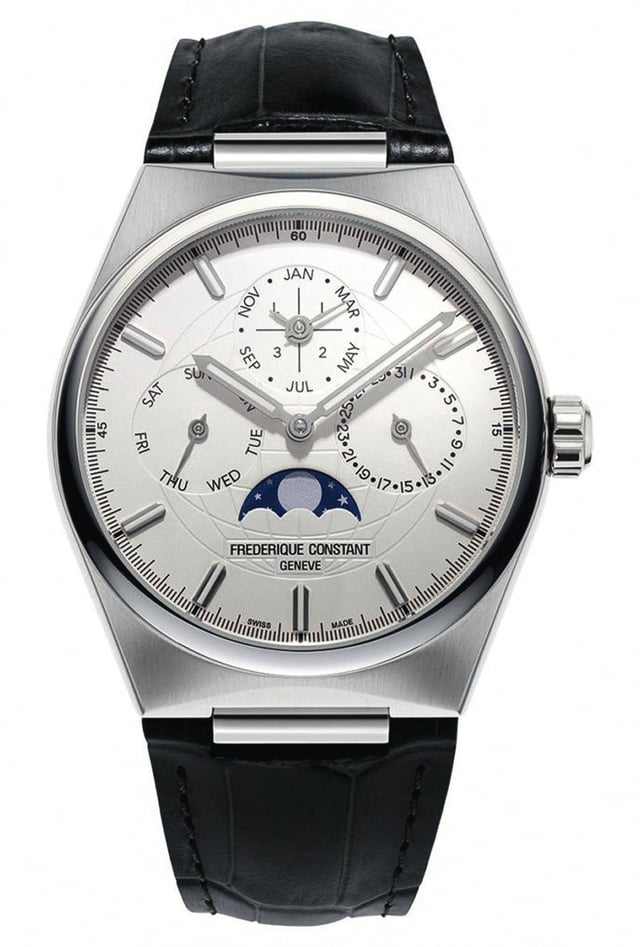
While creating such a watch was already enough for Frederique Constant to become the talk of the town at that year’s Baselworld, its price was met with disbelief. Perpetual calendars have always been a costly complication, in part due to their complexity but also because of their exclusivity. The least expensive versions were the watches that relied on a modular movement, with a base caliber usually provided by ETA/Valjoux on which a perpetual calendar module was fitted. The IWC Da Vinci Perpetual Calendar is a fine example of this. Frederique Constant followed mostly the same recipe, although the main difference is that the base movement is made in-house as well. Combined with a price tag of just over €8,000 at the time of introduction, Frederique Constant changed the game in this area of the market.
Things Get Really Complicated
In 2018, Frederique Constant celebrated its 30th anniversary. In that span of a mere three decades, it conquered its place among the watchmaking establishment, being widely recognized as an innovative manufacture. As it had made quite a name for itself with its relatively affordable and high-end tourbillons and perpetual calendars by then, the piece de resistance to celebrate its 30th anniversary would be combining them both in a single movement. While this article focuses on Frederique Constant’s tourbillons and perpetual calendars, it is good to realize that at the time, the brand had already developed 27 different calibers, including a world timer and a flyback chronograph. More than impressive numbers, and with the launch of its Manufacture Perpetual Calender Tourbillon, Frederique Constant also joined the very few manufactures that (can) offer such a watch with an in-house made movement.
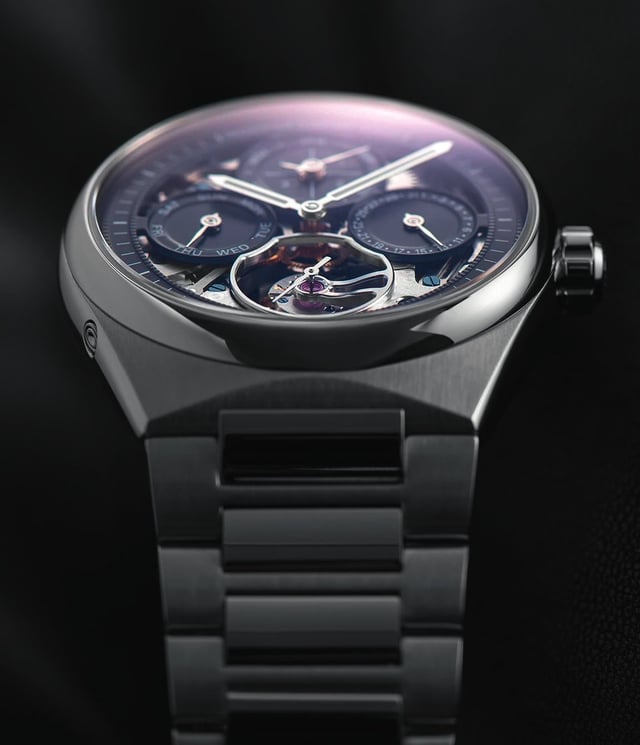
Even with this complex timepiece, Frederique Constant kept the price remarkably low, starting at €19,495 at the time of introduction. This wasn’t so much a teaser but in line with how Frederique Constant is marketing its collection. It also doesn’t shy away from taking uncommon routes for such complex watches to keep the prices at these points. The most crucial factor is case material, as Frederique Constant also offers its complex watches in stainless steel, with or without a gold plating. By doing so, it not only makes them more affordable but, extending from that, also changes the mindset towards these types of watches ever so slightly by bringing them into the realm that makes casual wear a more feasible option.
An Affordable Future Celebrating The Past
This becomes even more evident as the perpetual calendar and perpetual calendar tourbillon calibers found their way to the more sportive Highlife collection. Thanks to its quick-release system, these watches can be worn on a metal bracelet, an alligator leather strap, or even a rubber strap. While Frederique Constant became a part of Citizen in 2016, and Pim Koeslag was earlier this year confirmed as new majority shareholder and CEO of Christiaan van der Klaauw Watches, not much has changed in its strategy. It continues to offer complex movements in relatively affordable watches, underscored by its current collection.
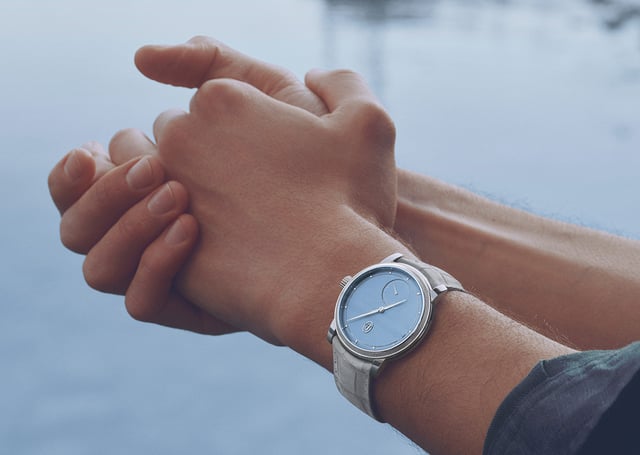
Where the perpetual calendar is readily available, the tourbillon and perpetual calendar tourbillon are offered in limited editions. During Watches & Wonders in Geneva earlier this year, Frederique Constant launched two new versions of its Classics Tourbillon Manufacture. Limited to 350 pieces each, this watch is available with either a blue or silver dial with a sunburst motif, housed in a 39-mm-large case made of stainless steel. With a less is-more approach to design, the focus on the dial side is on the tourbillon, clearly visible through an opening in the dial. Here you can even get a glimpse of the silicon escapement wheel and anchor, which underscores Frederique Constant’s efforts to develop a solid movement and not cut corners to keep the price as low as possible. Its ability to unite quality and affordability in such a way has been key to writing the success story that is Frederique Constant. In this process, the perpetual calendar, tourbillon, and perpetual calendar tourbillon mark especially how far it has come and serve as a great promise of where the brand will rise to next.
To learn more, visit Frederique Constant, here.
This article was originally published in the September/October 2023 print issue. To subscribe to WatchTime Magazine, click here.