Hands-On with the Robot Albatros
A Czech pilot’s watch with an eight-day power reserve
The course of history can sometimes limit your understanding and appreciation of things. With the Cold War following World War II, many things that happened behind the Iron Curtain did not become common knowledge. When it comes to things that happened in the Czech Republic, Robot takes pleasure and pride in highlighting what we might have overlooked through its watches. The Robot Albatros is such a timepiece, paying homage not to the bird of the same name, but rather to the legendary Aero L-39 jet trainer. Designed by Jan Vlček in the 1960s, the Aero L-39 was capable of light attack roles but served mostly as a jet trainer. The agile, robust, and easy-to-fly jet was a great success, with around 2,900 planes made and serving in more than 30 different air forces around the world, some of which still actively use the Aero L-39.
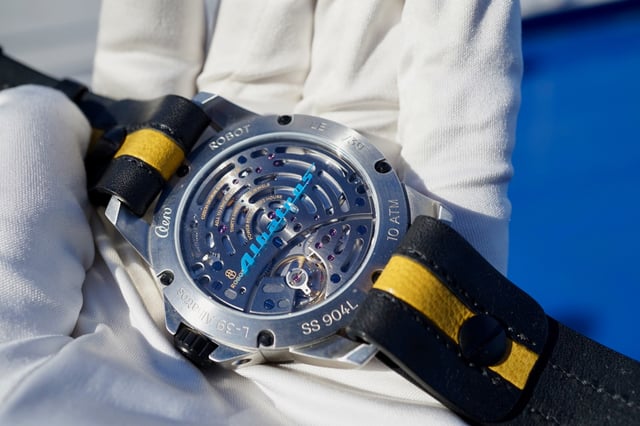
Both the architecture as well as the performance of the movement are above par for the Robot Albatros
Martin Green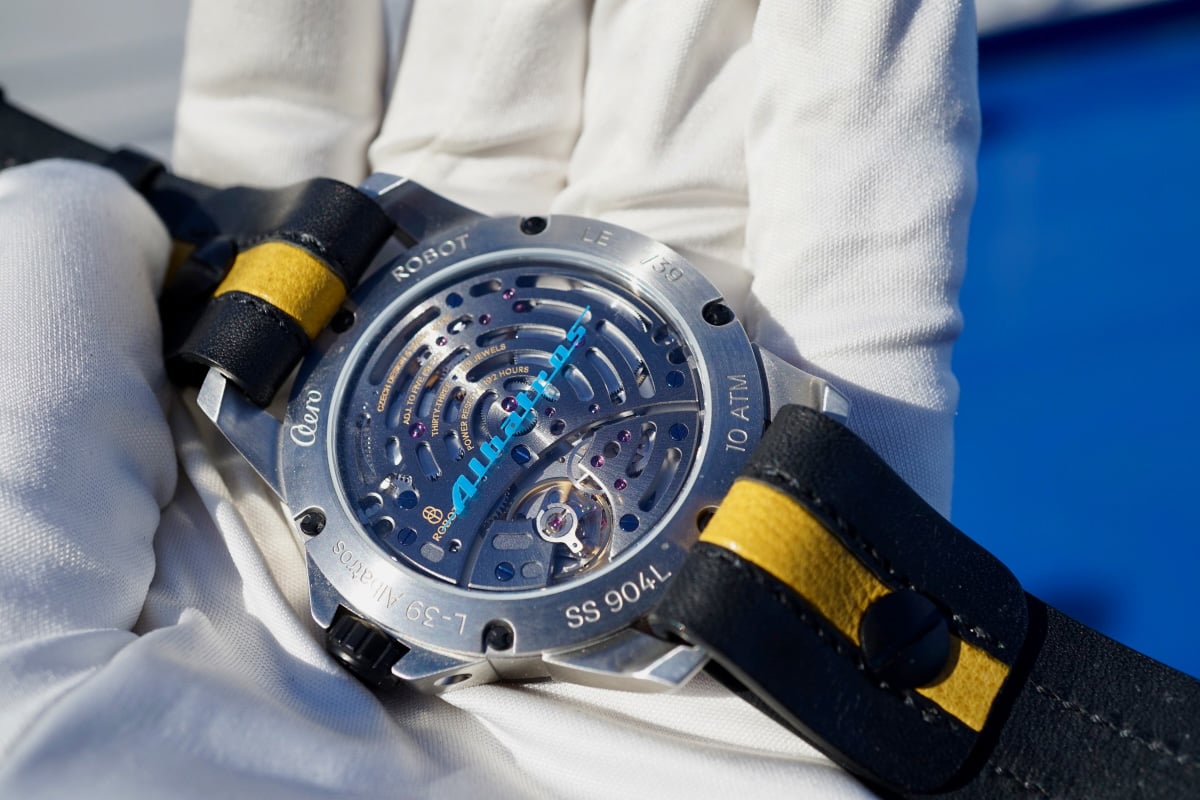
The characteristics of the Czech-made plane can also be found in the Robot Albatros. This starts with the caliber that powers it, for which Robot teamed up with renowned movement maker La Joux-Perret. The F1S0 is a robust powerhouse that combines beautiful movement architecture with a generous 192-hour, or eight-day, power reserve. The decorations are very pleasing to the eye, but while good-looking, the movement also clearly indicates that it is robust and precise. Winding the watch underscores this, with just the right amount of resistance, making it a pity that you only have to do it once every eight days.
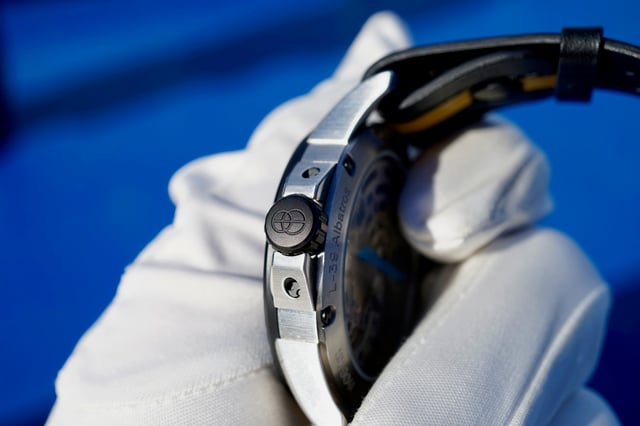
The case and crown of the Robot Albatros highlight the refinement of the pilot's watch
Martin Green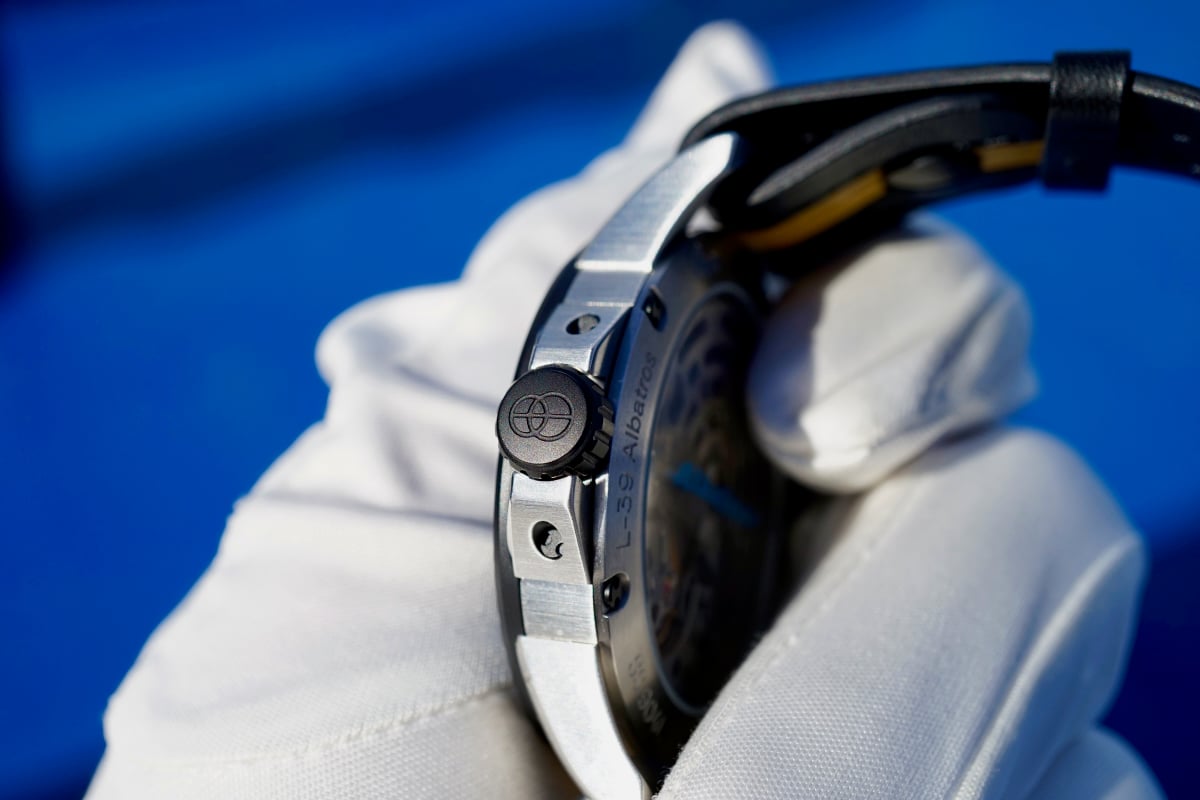
On paper, the Albatros looks generous, with a 44mm case diameter, but when you combine this with a height of 11.5mm, it retains much of the agility of the jet trainer it is named after. The case is also where you see that Robot takes creating watches like this very seriously, as 100 meters of water resistance is above par for what is, in essence, a pilot’s watch. Robot also opted for the more expensive 904L stainless steel, the alloy famously favored by Rolex. This is not only because 904L offers better corrosion resistance, but also because it takes on a brighter shine when polished. This is especially visible on the chamfered lugs, highlighting their shape.
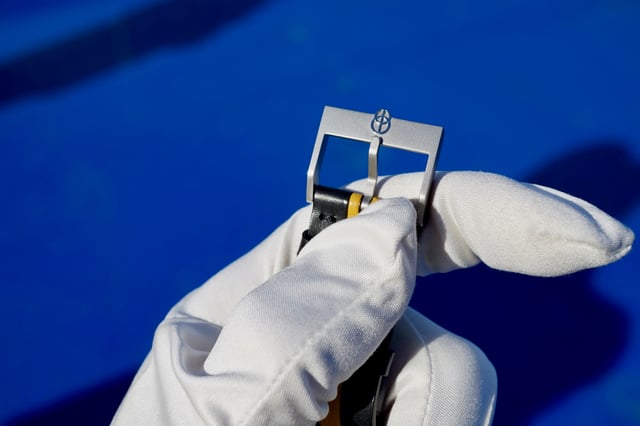
The Robot logo on the Albatros buckle
Martin Green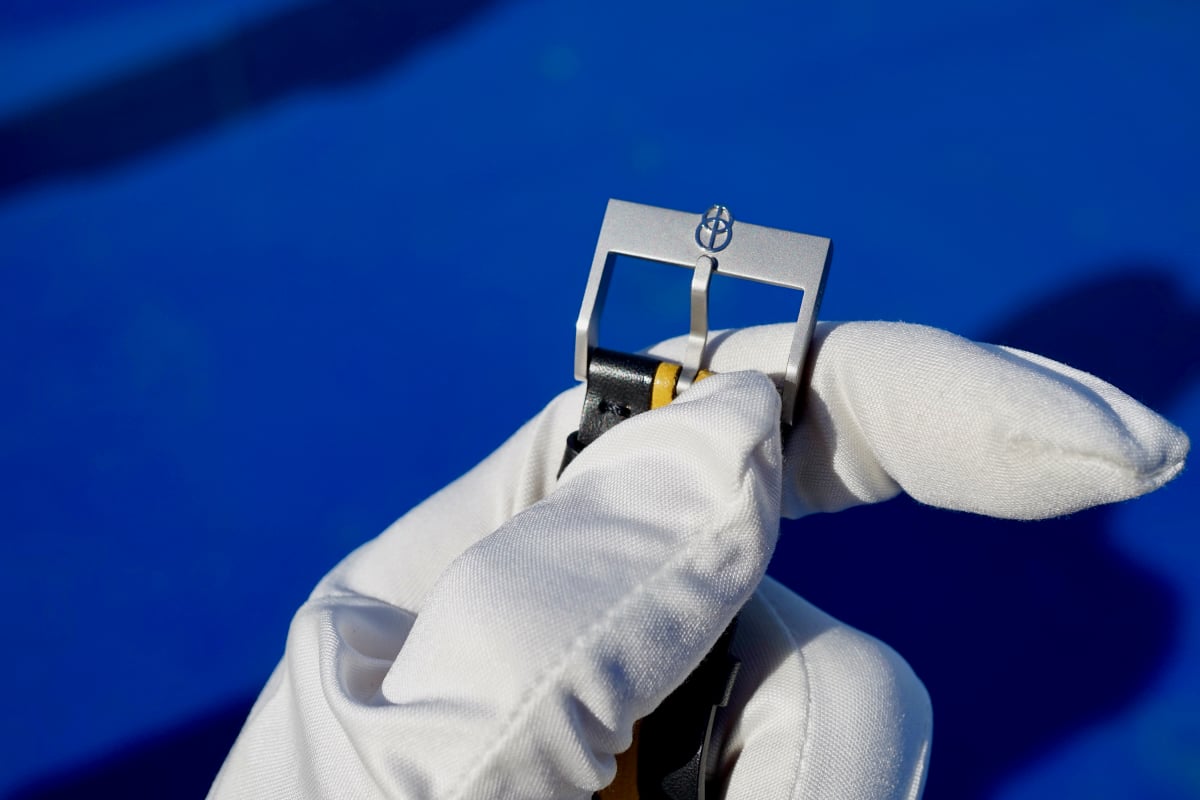
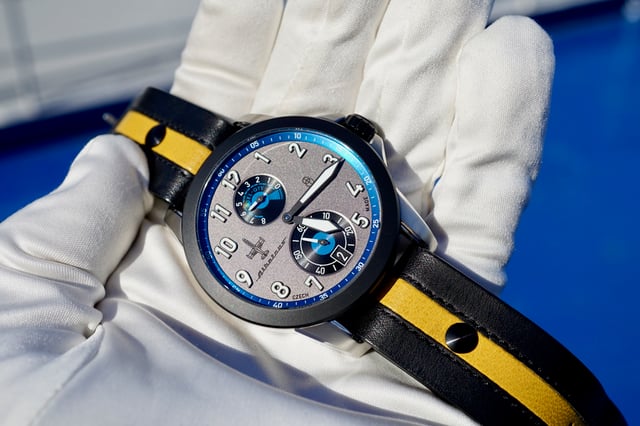
With the Albatros, the 904L stainless-steel case contrasts nicely with the matte black ceramic bezel, which gives the watch a military touch. The blue chapter rings add a dash of color that further supports legibility. The gray dial showcases the Robot emblem, as well as the outline of the Aero L-39 jet trainer.
The play of light is exceptional, and this is exactly what sets Robot apart from other brands, as its execution of details is often far beyond its price range. The sword hands are bold and easy to see, going perfectly with the Arabic numerals on the dial, both filled with Super-LumiNova. Two subdials grace the gray dial: the top one indicates the power reserve and resembles a fuel gauge, while the bottom shows the running seconds. It is there that the date window is also integrated in a very organic way.
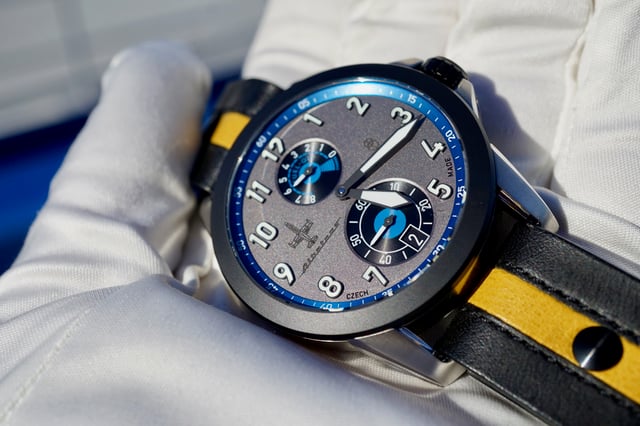
The dial of the Robot Albatros offers an attractive legibility
Martin Green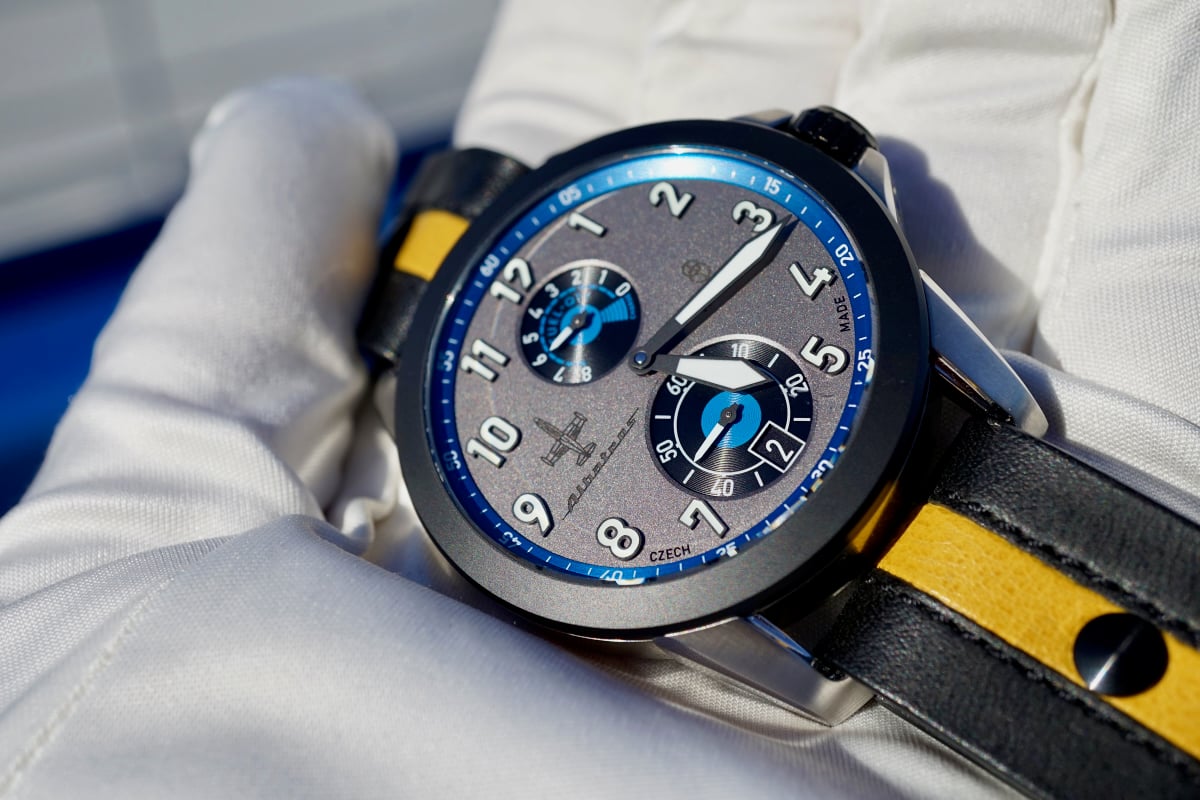
The strap on this particular watch is actually the leather version of the Albatros Silver, as the Albatros Blue normally comes with a well-made NATO strap sporting the three colors of the dial: black, blue, and gray.
The high-end movement, perfectly executed dial, 904L stainless-steel case, and great overall wearing comfort, combined with a pleasing design, make the $5,370 retail price, with VAT included, sound rather fair. It gives you an exclusive watch, made with care and dedication that shows in every detail, while highlighting an interesting part of military aviation history.