Sep 6, 2015
Reading time 6 min.
Vintage Eye for the Modern Guy, Part 4: Jaeger-LeCoultre Reverso
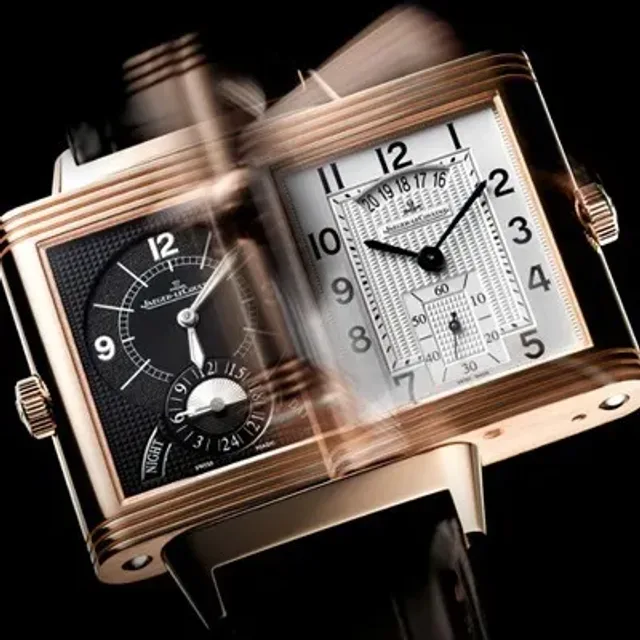
As we enter part 4 of our "Vintage Eye" series, we come to yet another classic and innovative watch, the Jaeger-LeCoultre Reverso. First designed in 1931 for British Army polo players stationed in India, the watch with the now-iconic pivoting case quickly earned its status as the original sports watch combining purposed functionality with exceptional wearability. Today, there are countless variations on the original piece — from moon-phases to tourbillons, from dual-dialed cases to diamond-studded dials — but all of them remain faithful to the original vision of the watch: consumer-catered tailoring, and unmistakable style. Plainly put, the JLC Reverso has not only become a hallmark for the Jaeger-LeCoultre brand, but has acquired a "cool factor" that has enabled it to retain a strong following (disregarding a slight falloff during the Quartz Crisis) for more than 80 years.
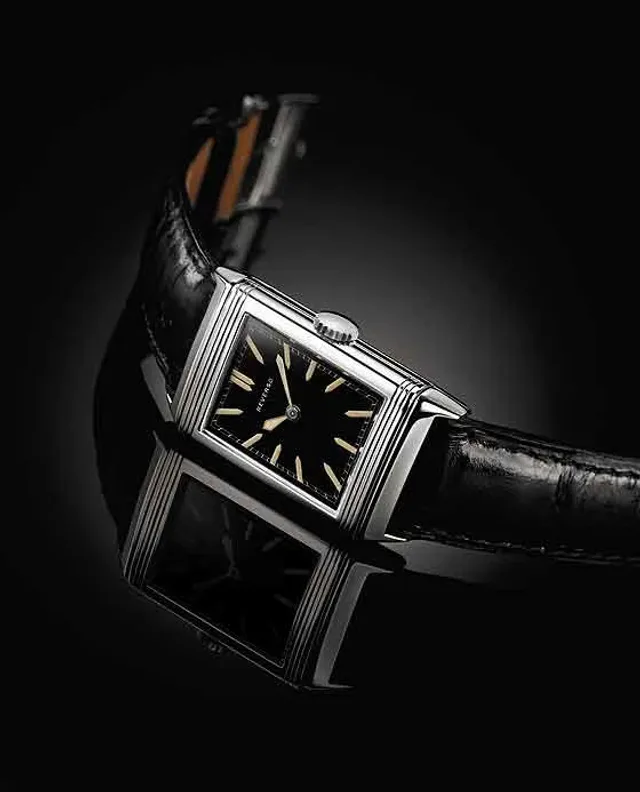
JLC Reverso vintage 1931
PR
The first watch we’ll take a look at this week is the Reverso Classique (Ref. 2508412). This piece is available in 10 different stylings, with this particular version sporting a stainless steel case and a clean, white dial strapped up on matte black crocodile leather. The watch distinguishes itself with unique blue "baton" hour and minute hands (the classic Reverso has traditionally not included seconds hands), a similar colored minutes counter, and what I find to be the most significant detail, the black Arabic numerals. The numerals, along with the rest of the graphics on the dial, seem to have a “human” quality to them: slight imperfections give the watch the appearance that it has lived a previous life before it made its way to your wrist. This particular reference uses the Jaeger-LeCoultre Caliber 846/1, and maintains the classic Reverso proportions, 38.5 mm x 23.1 mm for length and width, respectively. You will be able to find the Classique for around $5,650.
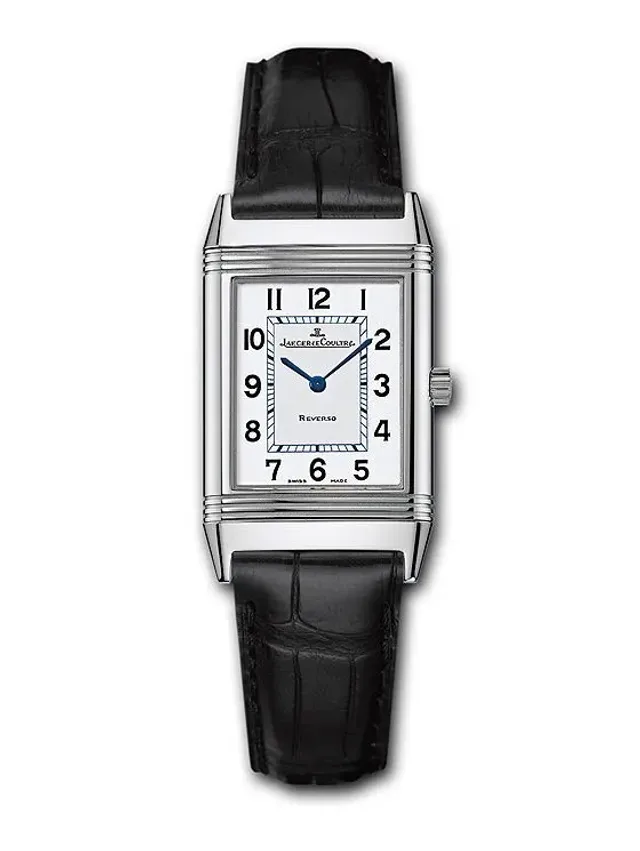
JLC Reverso Ref. 2508412
PR
Despite my preference for vintage, I like this watch a great deal. It is certainly not a full-on replica of the tan-and-black, semi-minimalist Reverso of 1931, but instead combines a healthy amount of heritage with contemporary coolness. If anything, this is the much-improved Reverso that René-Alfred Chauvot (the watch’s original designer) could have hoped to create. It has a fully functioning, reversible case that is able to pivot at more than just a single corner of the watch (one of the original version’s main flaws), it has a much more water-resistant case and shock-absorbing movement (which makes sense for what was envisioned, originally, as a sports watch), and the dial has been able to fuse simplicity with soul, which is a rare feat in itself.
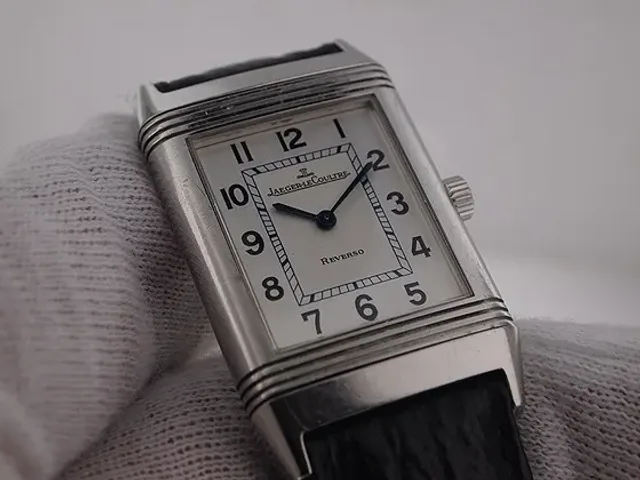
JLC Reverso in glove
PR
None of this is to imply that the watch does not pay sufficient tribute to earlier models in its lineage: the case is still practically the same design as it has always been (with JLC refraining from brushing the steel, as many brands have chosen to do with their modern pieces), the smaller minutes counter is the same design as older, complete-dial versions (in what I’m positive was purposeful to maintain the "Art Deco" aesthetic), and the crocodile leather strap is of a higher quality, which no one will argue against. Jaeger-LeCoultre did a good job with this watch, and should be proud of where their hallmark stands today.
The next watch we’ll look at is the Reverso Duo (Ref. 2718410, below). This watch was released in 1994 as part of a larger '90s push by JLC to develop more contemporarily designed pieces. Rather noticeably, this is quite a different watch than the Reverso Classique. With two different reversing dials, one white and one black, the Duo is able to transition quickly and simply from one time zone to another by means of a pusher above the crown. Both dials now include a round component at the six o’clock mark, and the piece is powered by a single movement, the Jaeger-LeCoultre Calibre 854/1.
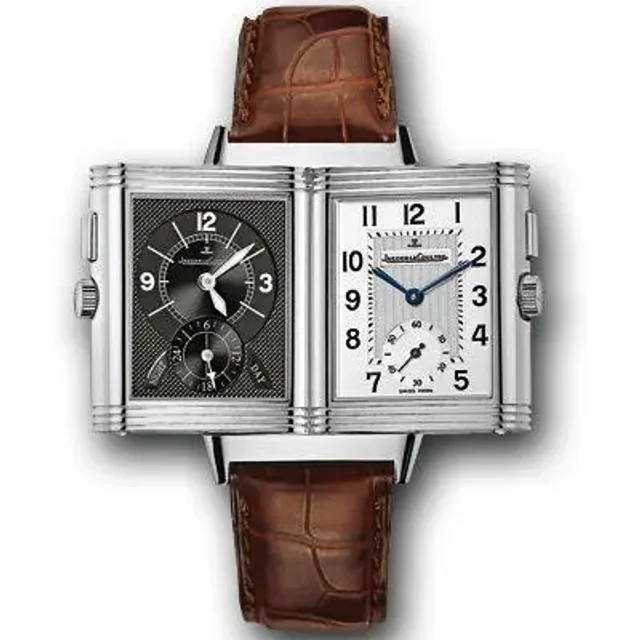
Jaeger-LeCoultre Reverso Ref. 2718410
PR
Outside of these technicalities, the two different dials bear very little resemblance to one another; the black dial takes advantage of circular accents (and even includes a 24-hour indicator at the bottom), "eventail" hands, and fewer Arabic numerals for the hour markers. The white dial uses two-toned square accents (outside its seconds counter), sticks with the blue "baton" hands for the hour and minute, and uses many more numerals for the hours, adding to what I find to be a more classical look. The Duo is listed significantly higher than the Classique, at $9,150.
One of the greatest aspects of the original Reverso, outside of the flipping case and cool backstory, was the level of customization customers could add to their watches via caseback engravings. The Duo takes that same spirit of the Reverso and Jaeger-LeCoultre and transforms it into a memorable contemporary piece. The white dial and stainless-steel case pays homage to past Reversos, focusing on the numerals, "Art Deco" styling, and hands, while the black developed a more modern take, with its triple-toned, partly textured dial, circular accents, and sword-like "eventail" hands. The watch, in my opinion, represents very well what the brand, and the watch, strives to be in the modern day — with a 24-hour indicator or a seconds counter, with a white or black dial, with circle or square subdials —a timepiece that everyone who appreciates something unique and out-of-the-ordinary will enjoy.
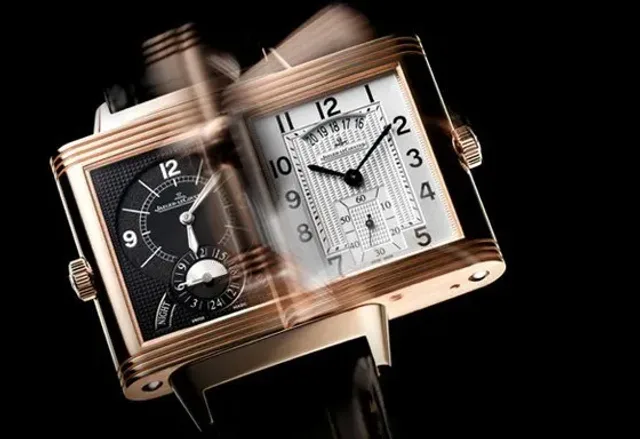
Jaeger-LeCoultre Reverso Ref. 2718410 - two dials
PR
As you can probably tell, I really like the Reverso collection overall. I feel it is one of the few examples of modern watches that have been able to honor what it used to be decades ago, while continually breaking new ground in the present. It still hand winds when it could have fully transitioned to a quartz or mechanical automatic movement, it has kept basically to its original 1931 proportions, and even with both of these "limitations," it continues to improve in its design through better movements, more versatile reversing cases, and modern manufacturing techniques. With all of that said, I still don't wear either of these myself. Both pieces are relatively "long" (to be expected of rectangular watches), and I know I have neither the courage nor large enough wrists to pull it off. But who knows? Perhaps I’ll try on one of the smaller ladies' model first and see if it grows on me.
Caleb Anderson is the Director of Outreach at the online vintage and antique watch boutique theoandharris.com. Since starting at Theo & Harris, he has garnered extensive knowledge on vintage watches, and spends much of his time sharing his opinions within the field. Currently located near New York City, he is a persistent student in all things historical, a writer on watches, and a casual runner.