A Spotlight: IWC’s Ceramic Revolution
How IWC battled challenging times with innovation, becoming the trailblazer of a new material in watchmaking
When looking at the history of IWC, you wouldn’t immediately suspect that one of the most glorious periods in its existence emerged from a time of crisis. Like many great Swiss brands, IWC was deeply affected by the quartz crisis. Always at the forefront of innovation, the brand from Schaffhausen participated in the development of the Beta 21 quartz movement, housing it in a gold hexagonal case and naming it the Da Vinci. While this was a particularly handsome watch—especially when compared to some of the other Beta 21-powered models—the name “Da Vinci” would later become most closely associated with the automatic perpetual calendar chronograph introduced in 1985.
This response to adversity was typical of IWC: meeting difficult times with innovation. The driving force behind this philosophy was Günter Blümlein (1943–2001). At the time, Blümlein was an executive at VDO Schindling AG, a German company best known for manufacturing speedometers, which had acquired IWC and Jaeger-LeCoultre in 1978. His mission was to put both brands back on solid footing, driven by an unshakable belief in the future of mechanical watchmaking.
Blümlein was supported at IWC by exceptional watchmakers such as Kurt Klaus and Richard Habring, the latter of whom developed a rattrapante module based on the Valjoux 7750 that would later power the legendary Doppelchronograph. But movement innovation was only part of the story. Material innovation proved equally decisive.
Alongside being one of the first brands to embrace titanium—most notably with the 1979 Titanium Chronograph developed in collaboration with F.A. Porsche—IWC also introduced ceramic to the watch world. While ceramic was already used in industries such as automotive engineering, aerospace, and medical technology, applying it to watch cases was entirely new territory.
The ceramic IWC initially worked with was zirconium oxide, a compound formed from zirconium, silicon, carbon, aluminum, nitrogen, and oxygen. It begins as a fine powder that is chemically colored before firing, though early color options were limited.
The manufacturing process was extremely demanding. After firing at high temperatures, the ceramic blanks required careful cooling to preserve their polycrystalline structure. Only then could they be machined and polished using diamond tools. At every stage, failure was a real possibility, but success yielded a case of exceptional hardness, scratch resistance, and distinctive beauty.
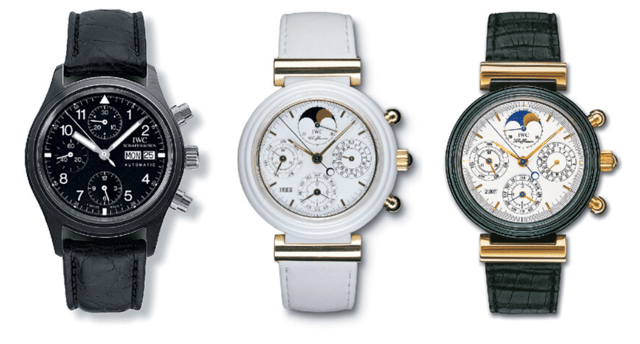
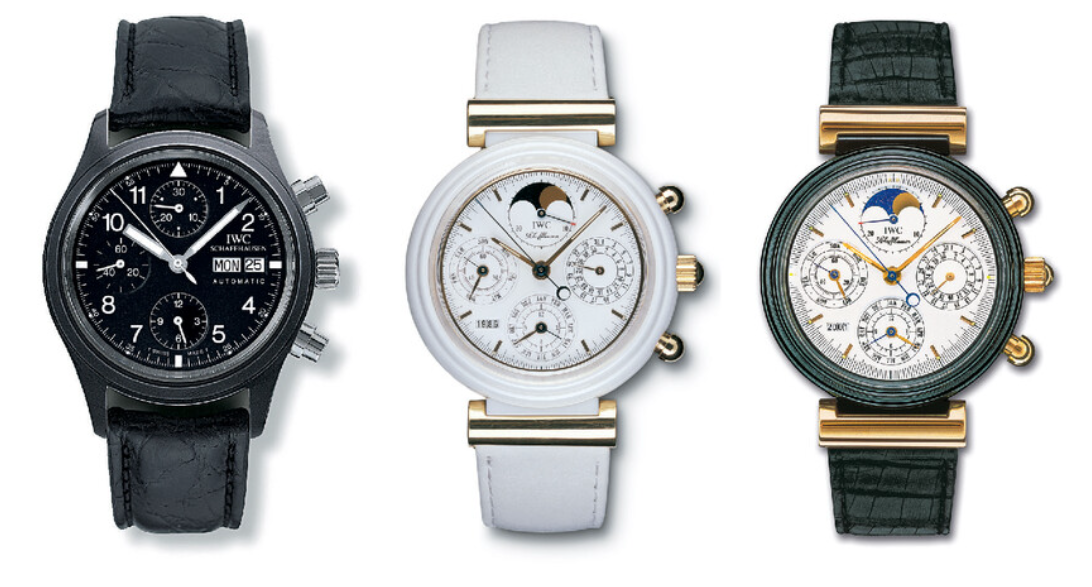
In 1986, IWC introduced the Da Vinci with a zirconium oxide ceramic case, just one year after launching the Da Vinci Perpetual Calendar Chronograph. This marked the beginning of a lasting relationship between IWC and ceramic. The material would soon become a defining element of the brand’s design language.
That relationship reached a turning point in 1994 with the introduction of the Fliegerchronograph Ref. 3705. Its matte black ceramic case blended seamlessly with the dial, while stainless-steel crown and pushers added contrast. The watch gave one of IWC’s most recognizable designs an entirely new presence.
Producing ceramic cases remained challenging. The blanks shrink during firing—though never uniformly—making precise tolerances difficult to achieve. Machining and finishing ceramic to IWC standards was labor-intensive, which explains why ceramic models commanded a significant premium over their stainless-steel counterparts. Color consistency was another hurdle, as pigments often burned off during firing, limiting early ceramic watches to dark tones.
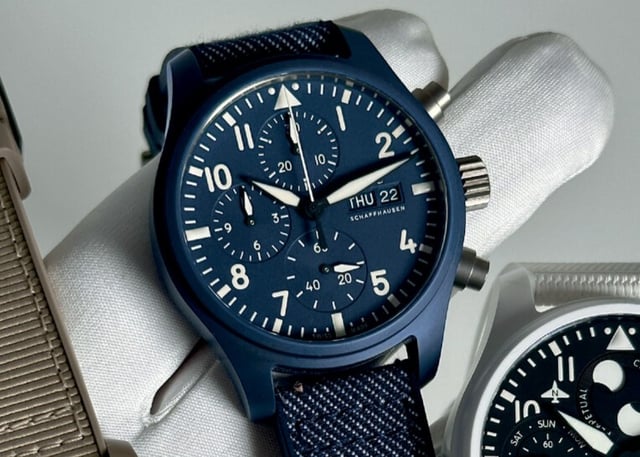
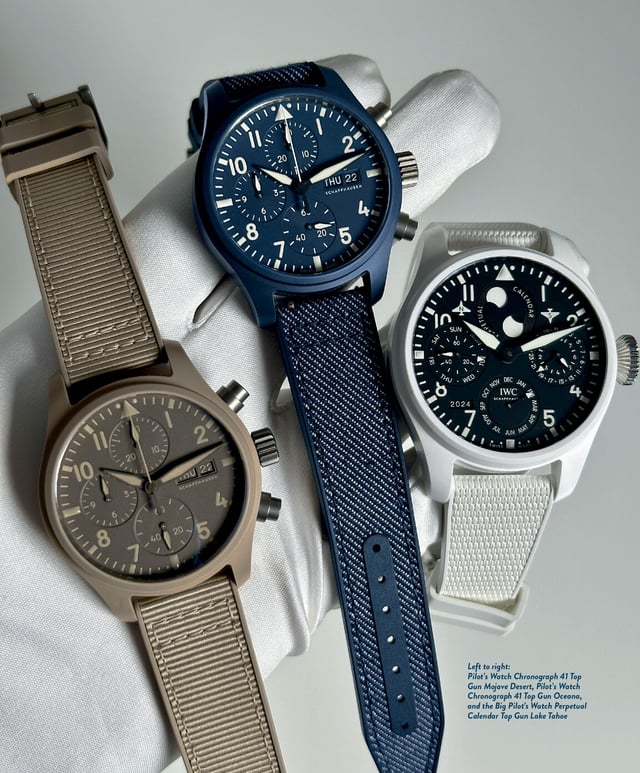
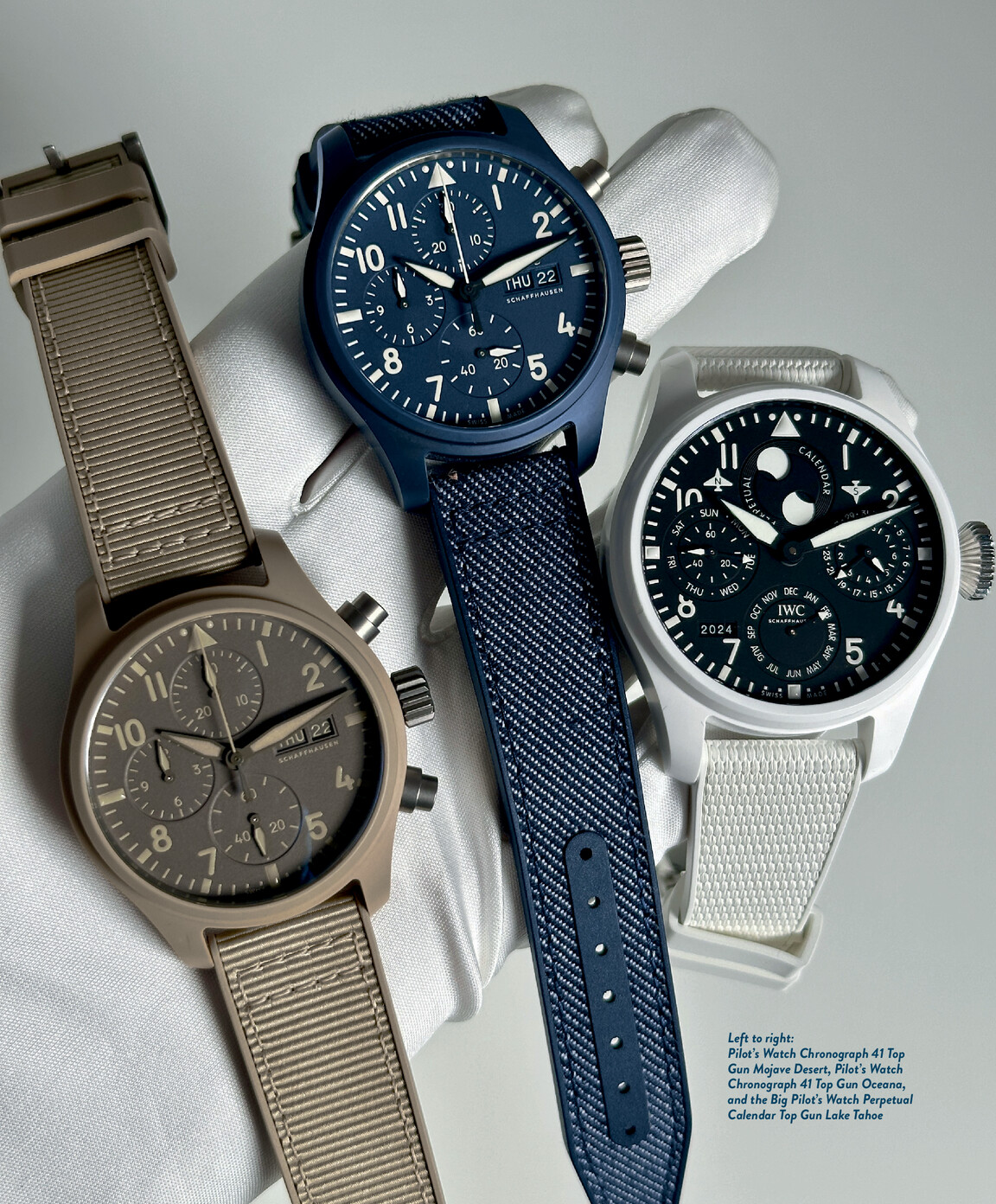
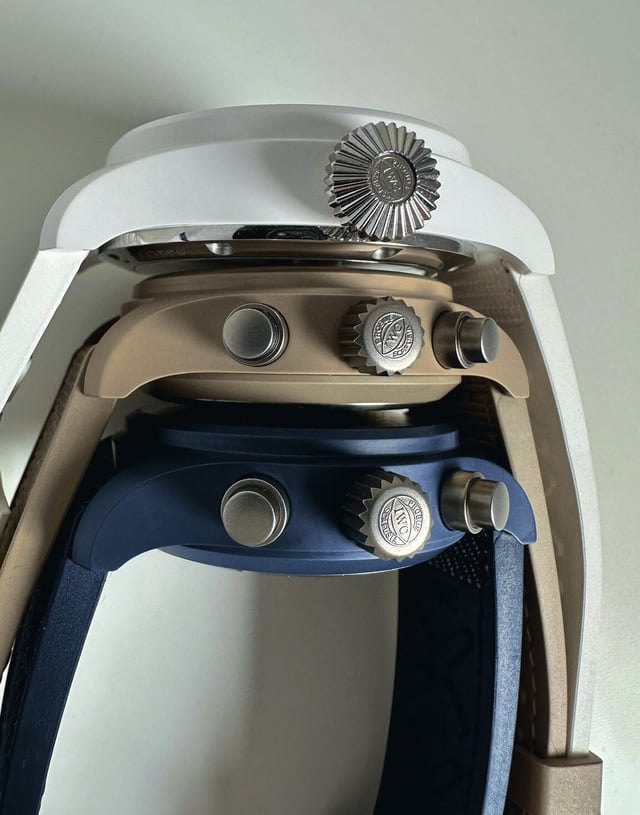
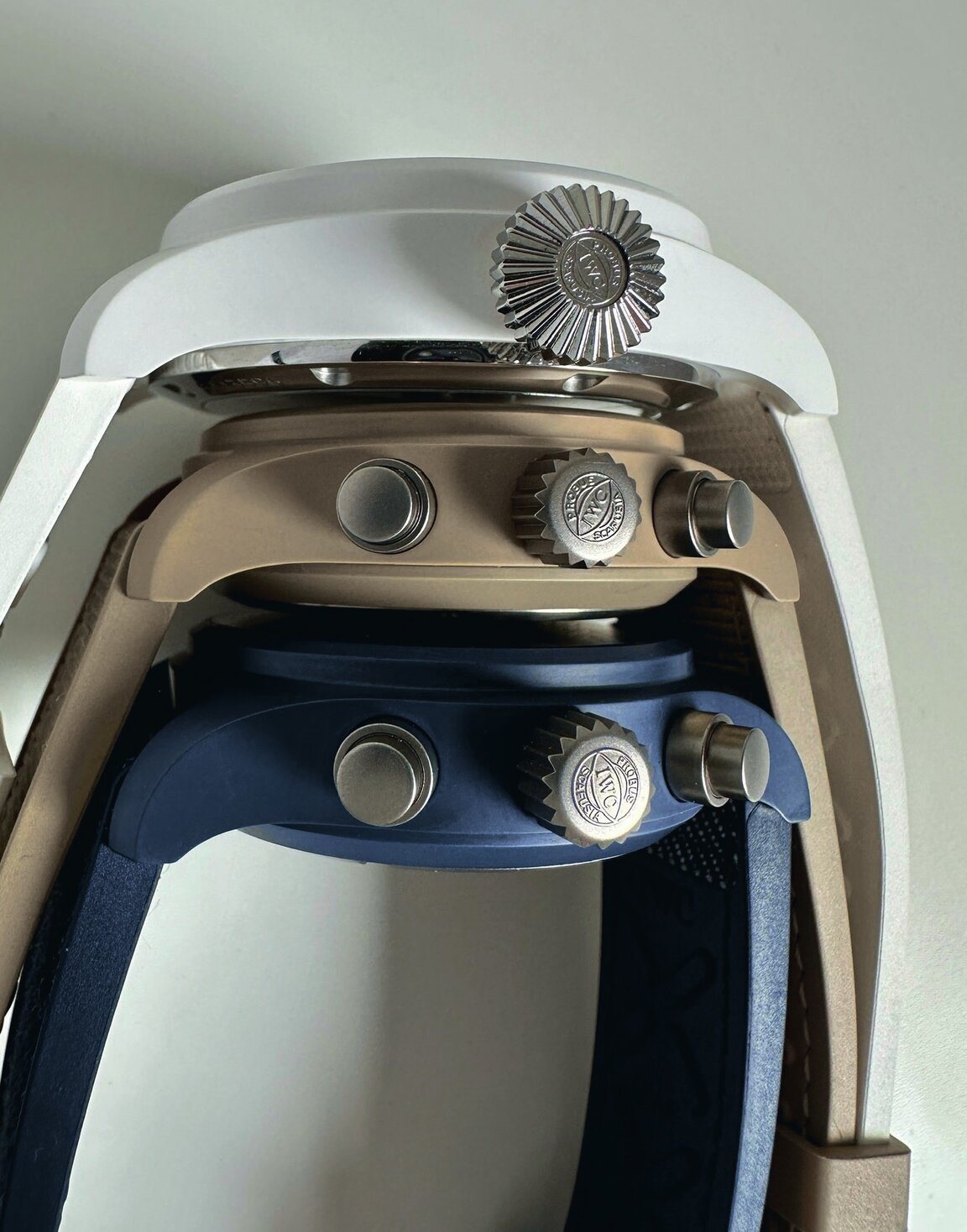
IWC eventually solved this problem, expanding the color spectrum of ceramic. The breakthrough came in 2017 with the Pilot’s Watch Chronograph 41 Top Gun Mojave Desert, featuring a sand-colored ceramic case. From there, IWC continued developing additional hues, including forest green and jeans blue.
Because ceramic shrinks significantly during firing, producing small components such as crowns and pushers remained problematic. To overcome this, IWC developed Ceratanium—a proprietary titanium-based alloy that transforms its surface into ceramic during heat treatment. Unlike traditional ceramic, it can be machined without shrinkage, making it suitable for even the smallest components.
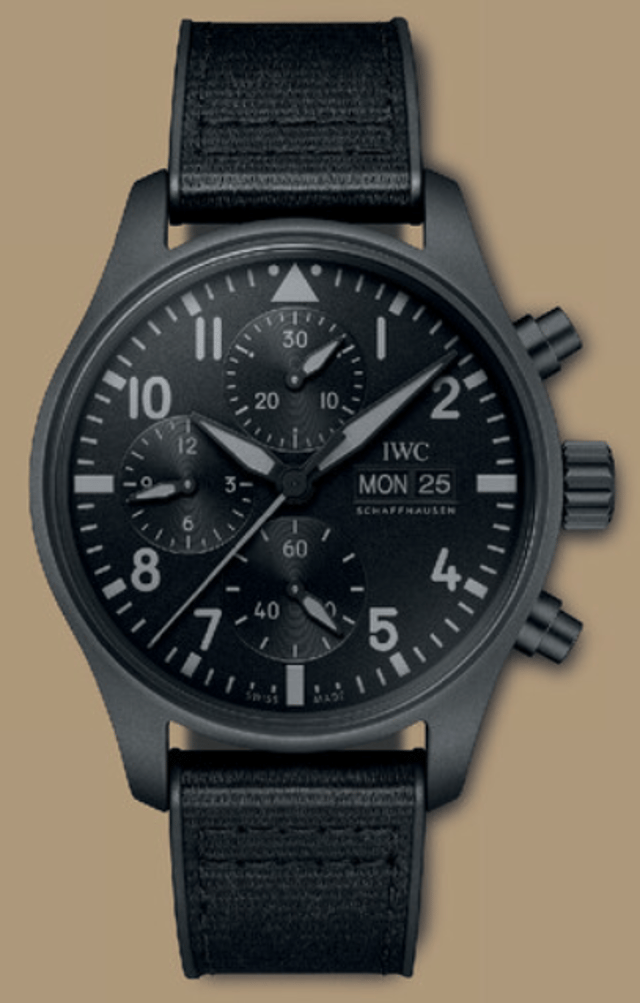
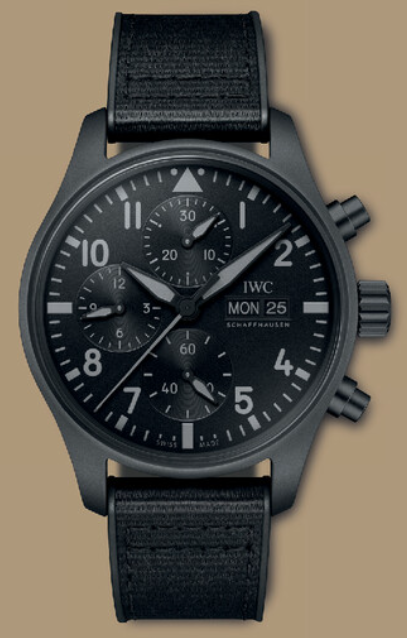
Ceratanium debuted in 2017 with the Aquatimer Perpetual Calendar Digital Date-Month Edition “50 Years Aquatimer.” It later appeared in the “Tribute to 3705,” limited to 1,000 pieces and powered by an in-house manufacture movement. While materials and mechanics evolved, the spirit of innovation remained unchanged.
With its continued investment in ceramic and Ceratanium, IWC reaffirmed its position as a trailblazer in watchmaking materials—proof that some of the brand’s most enduring achievements were born from its most challenging moments.
This article was originally published in the May / June 2024 issue. To subscribe to the print edition of WatchTime Magazine, click here.