Spotlight on Independent Watchmaker Christiaan van der Klaauw
Photos by Reinout Nieuwenhuizen Segaar.
When it comes to independent watch brands, Christiaan van der Klaauw is one that wrote the book about them. Born in 1944 in Leiden, The Netherlands, he trained as an instrument maker and got involved with the Leidse Sterrewacht, the oldest existing observatory in the world, founded in 1633. Those two aspects together would profoundly influence the rest of his life. After completing his studies, he set out to become a clockmaker, and in 1974 moved to Joure, a village in Friesland, one of the northern provinces of The Netherlands.
In those days, clocks were held in much higher esteem than today and were usually the centerpiece of every living room and/or hallway. In The Netherlands, Joure was then known as ‘little Switzerland,’ where many clockmakers and people with complementary crafts established themselves. Van der Klaauw quickly built a reputation by incorporating astronomical complications in his clocks. Driven by an undeniable thirst for innovation and a passion for astronomy, his clocks became increasingly complex. In 1980, he introduced a clock with a 3D real moon-phase that also told the sun’s declination. As Van der Klaauw’s clocks opened up a new universe of astronomical complications that were previously unheard of, the popularity of clocks, in general, rapidly declined.
For Van der Klaauw, this offered a unique opportunity to meet a whole new set of challenges. He started by taking a picture of the dial of one of his clocks and shrinking it until it was the size of a watch. Convinced that it would work, he set out to create his first wristwatch, which he launched in 1996. As a toolmaker by trade, Van der Klaauw was not taught to make specific tools but to develop them. This sense of creativity and critical thinking served him well, allowing him to invent complications on a much smaller scale than the world had ever seen before. Just before the turn of the millennium, he introduced what would become a landmark watch. Rightfully named the “Planetarium,” it housed the world’s smallest mechanical planetarium in the world.
Aligning the Stars for Succession
The year 1999 was also, for another reason, an important year for Van der Klaauw, as he found two worthy successors to his legacy without either of them knowing it yet. Daniël and Maria Reintjes are the embodiment of a power couple: two independent, passionate individuals bound together by mutual dreams and outlook on life. As successful designers and marketers, they seemingly lived in a different world than Van der Klaauw. However, nothing proved to be further from the truth. They came in contact with one another as the Reintjes wanted to create their own watch and were introduced to Van der Klaauw as someone who could help. This was the start of a unique alliance, where Van der Klaauw and the Reintjes benefitted from each other’s skill sets and also learned that they shared a common vision. In 2009, a decade after the introduction of the Planetarium, and 13 years after Van der Klaauw made his first wristwatch, he had proved its staying power. His name had turned into a brand with a strong portfolio of astronomical watches, many unique in the world. Ready for retirement and with several offers on the table from interested parties to take over his company, he turned to Daniël and Maria Reintjes instead to continue his legacy. This says a lot about the relationship built between them in the decade they had been working together. The Reintjes accepted and took over the reins while Van der Klaauw slowly eased into full retirement.
A Star-studded Galaxy
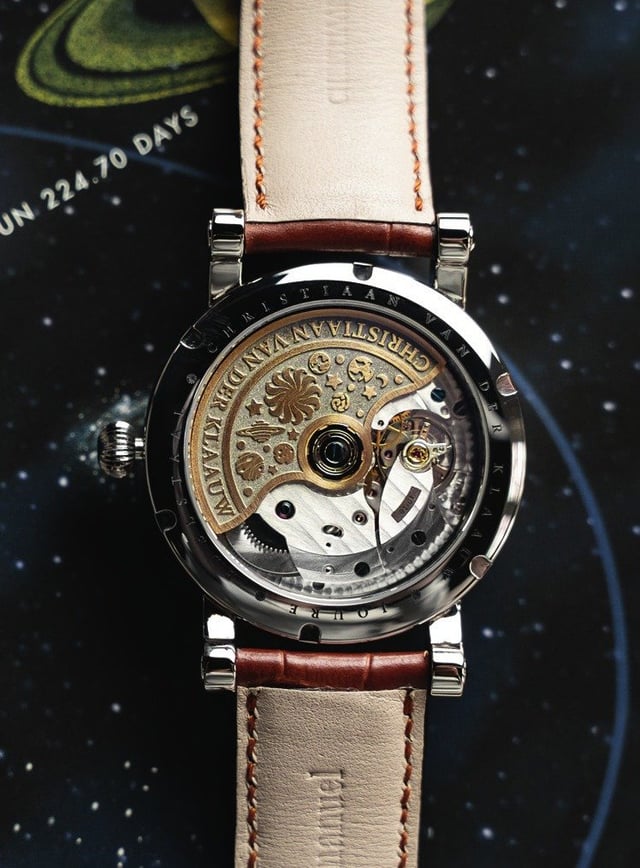
While Van der Klaauw built a solid foundation for the brand, the Reintjes had the perfect background to take it above and beyond. Their strategy was clear and clever, with a full focus on astronomical complications and a unified design, resulting in a star-studded galaxy of enticing watches. At Christiaan van der Klaauw, there are no flings with fashion, as they define their own. The way that they do this is very consistent
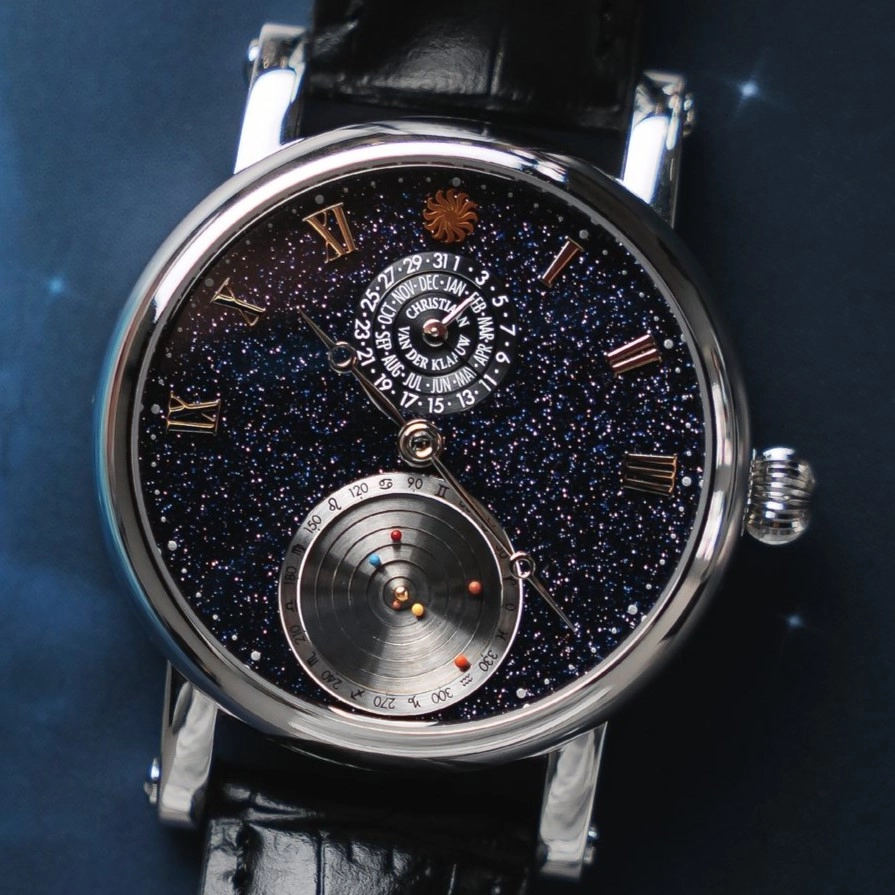
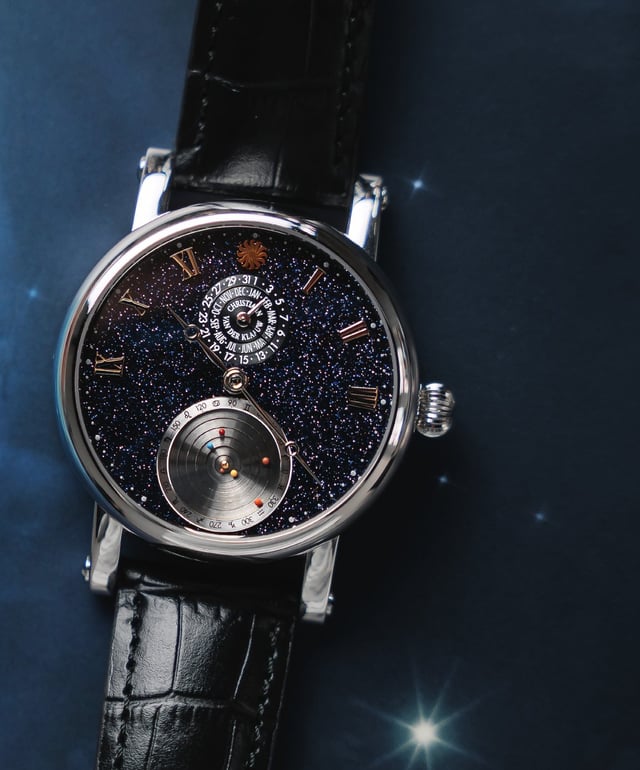
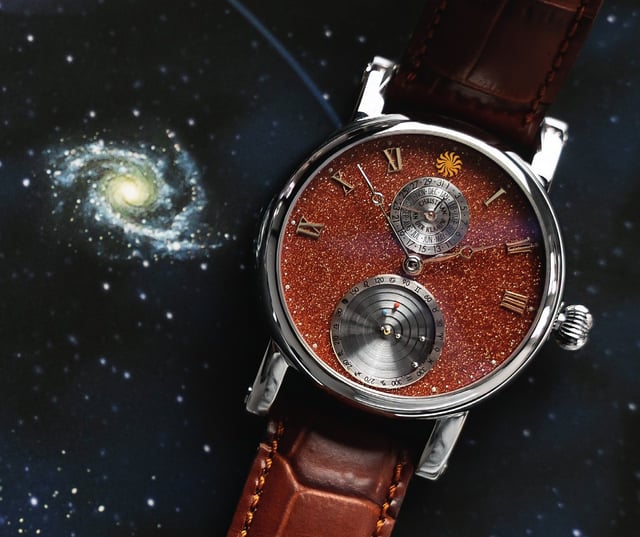
and always in a way that results in a contemporary classic. This sounds like a contradiction, but it all boils down to giving strong details room to breathe. The Planetarium is still the perfect example of this. The case is 40 mm, yet it looks much larger because, at Christiaan van der Klaauw, they are not afraid of space. Only the top half of the watch has numerals with, at the 12 o’clock position, a sun with 12 claws: the Christiaan van der Klaauw logo. Visually, this creates a horizon with the sun at its highest point. It also leaves space at the lower part of the dial for a complication to take center stage, such as the planetarium.
As the text on the dial of a Christiaan van der Klaauw is limited to the bare minimum, there are few distractions, or it must be the dial itself. Thanks to the open spaces on the dial, the brand has the advantage of being able to highlight some extraordinary dial materials they like to work with. They are one of the pioneers in using aventurine glass. The production of this material is a closely guarded secret, but the result is mesmerizing, as the glittering inclusions in the aventurine glass make it look like you are staring into deep space. While a blue base color is the most common for aventurine glass, Christiaan van der Klaauw recently also paid tribute to Mars by using a red variety of this material. Here the inclusions make it seem like the dial is made from the sandy surface of the Red Planet.
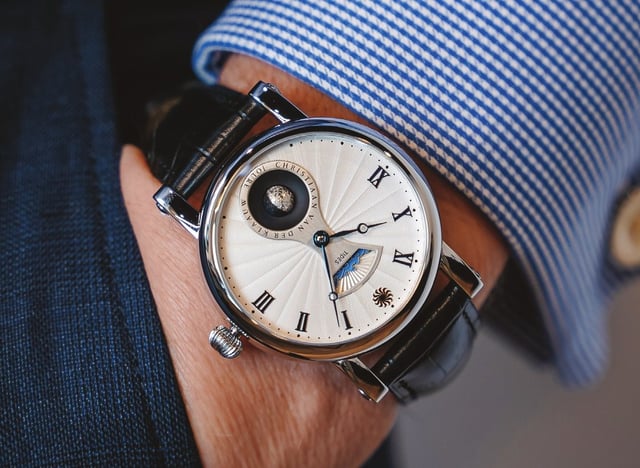
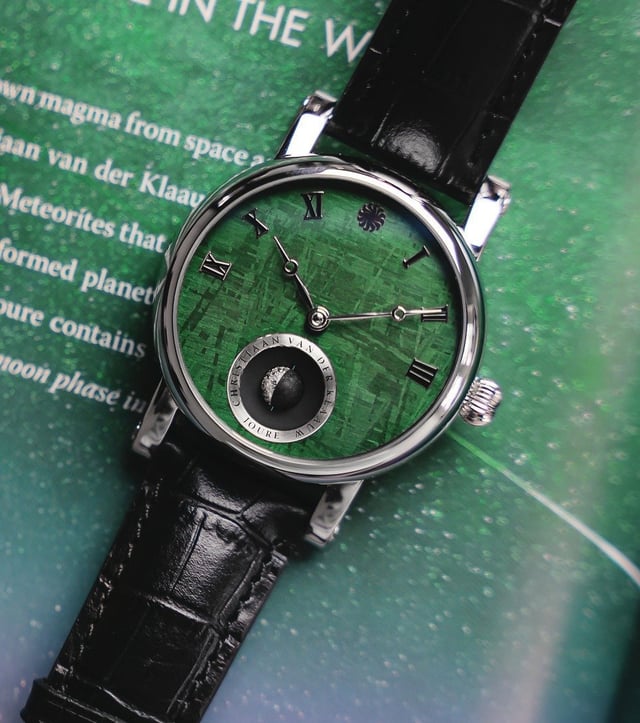
Another unique material, this one actually coming from deep space, was used for the Christiaan van der Klaauw Real Moon Joure. Here Daniël Reintjes opted to tint the meteorite dial on this model in a green hue, creating a spectacular effect in combination with the 'Widmanstätten pattern.' These lines are named after the Viennese scientist who discovered they appear in meteorites after they are etched with a weak acid. The meteorite also forms the backdrop of the astronomical complication of this watch, the most accurate 3D moon-phase in the world.
Lines also play an essential role in another version of the Planetarium, this one dedicated to the Royal Eise Eisinga Planetarium in Franeker, The Netherlands. Eise Eisinga was a wool comber who was fascinated by astronomy, and between 1774 and 1781, he built what is now the oldest still-working planetarium in the ceiling of his living room. Van der Klaauw pays tribute to this still-extraordinary accomplishment by fitting their Planetarium with a hand-painted dial resembling the wooden ceiling of Eisinga’s living room. It not only resulted in a remarkable version of this watch, but also won them the prize for Best Calendar and Astronomy watch at the 2021 edition of the Grand Prix d’Horlogerie de Genève (GPHG), also known as “the Oscars of the watch world.”
A Fortified Position
The year 2023 marks the beginning of a new chapter for Christiaan van der Klaauw, as the brand moved its manufacture to “Het Arsenaal” in the historic fortified garrison city of Naarden, close to Amsterdam. Built in 1688, this monumental building was used for military purposes until it was redeveloped into a concept store for interior design, jewelry and lifestyle in 1987. This made it a natural fit for the Reintjes when they were looking for a new place to develop Christiaan van der Klaauw further into the future. With a production of around 250 watches per year, they are a small player, yet the kind and quality of watches they make have ensured that their position within the industry can be referred to as ‘fortified.’
Such a stellar reputation makes keeping up with demand a continuing challenge for Christiaan van der Klaauw, but it also caught the attention of other brands. In 2014, they collaborated with Van Cleef & Arpels, creating the Midnight Planetarium Poetic Complication, followed in 2018 by the Lady Arpels Planétarium. The latter also won the prize for Best Ladies’ Complication watch at the GPHG.
Entering the Third Chapter
While their spirit remains strong, the Reintjes know that, like Van der Klaauw himself, they also need to secure succession. On June 1, 2022, they welcomed Pim Koeslag as the new majority shareholder of Christiaan van der Klaauw. A more capable person to continue this unique legacy would be hard to find. Koeslag graduated as the best of his class at the watchmaking school in Amsterdam, which offered him the opportunity to further hone his skills at Patek Philippe. Instead of working for some of the most regarded names in watchmaking, he decided to join a young, new brand named Frederique Constant. During his 20 years at the company, he was responsible as Technical Director for developing 30 different calibers, including a minute repeater and tourbillon. At Christiaan van der Klaauw, he will take on this same position, working side by side with Daniël Reintjes as CEO/Creative Director and Maria Reintjes as Marketing Director.
This makes it so the star that is Christiaan van der Klaauw shines ever so brightly. Like a space module, they continue to explore new territories, not driven by outside forces, but on their own terms. This allows them to create exceptional astronomical complications, and as the brand celebrates its 50th anniversary next year, it wouldn’t be surprising if they added a new star to their own galaxy.
This article is from the WatchTime Archives and was originally published in the March / April 2023 Issue. To subscribe to WatchTime Magazine, click here.
To learn more, visit Christiaan van der Klaauw, here.