Sep 1, 2019
Reading time 5 min.
Vintage Eye for the Modern Guy: Zodiac Olympos
FEATURE

Zodiac has long been one of my favorite brands, and the reasoning is simple: the company produces aesthetically interesting watches, frequently in a neo-vintage style, and almost always at an accessible price point. Nonetheless, we don’t cover this Fossil Group-owned brand very often here at "Vintage Eye," with the most recent being the Astrographic. Funnily enough, that watch was just updated earlier this month with a 50th anniversary edition hearkening back to the original model in that collection.

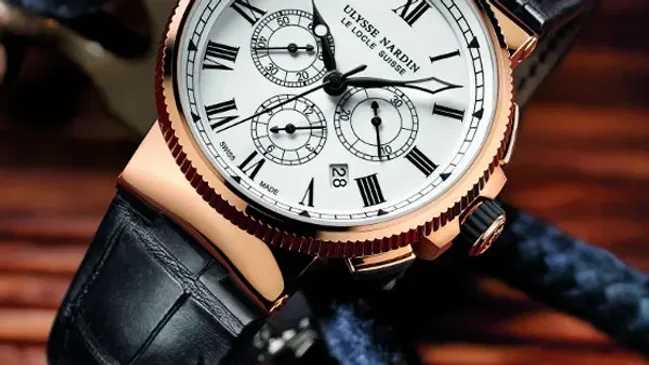
Zodiac Olympos Mystery Dial LE
PR
This week we finally pay a return visit to Zodiac, and to one of the most fascinating collections in the brand’s history, the Zodiac Olympos. The original Olympos was first released in 1961 and didn’t survive past the era. It was, like many of Zodiac’s watches during the period, a funky take on a classic watch design, in this case being an innovative iteration of a classical dress watch. That original watch presented itself with a unique “manta ray” case, a 2 o’clock crown placement, and a quadrant dial, together giving it a distinctive ‘60s look, and one very uncommon in the market today.
Last year, the Olympos made big waves in its re-release, which featured two limited-edition models (both now sold out through Zodiac): the field watch-inspired Olympos Military and the very cool ‘60-inspired “Mystery Dial” model (pictured above). The sole remaining model in the collection’s lineup (that is, until the highly likely release of more limited-edition variants) is the Olympos Automatic, available in three colorways.
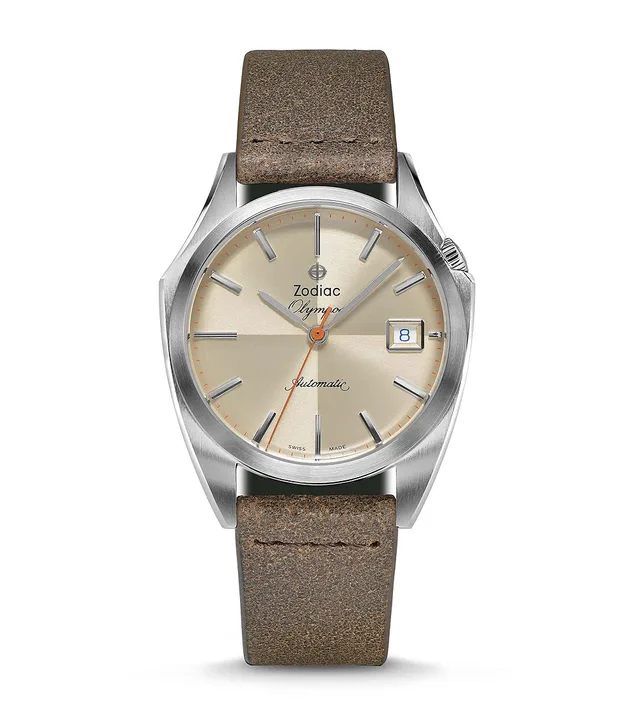
Zodiac Olympos - Cream Dial - front
PR
Like the vintage model, the modern Automatic uses a 37.5-mm manta ray case, available in either steel or gold-tone, attached to a worn-looking leather strap secured with a Zodiac-signed buckle. The case features the collection’s signature 2 o’clock crown, and also opts for a solid caseback. The dial of the watch matches those of the vintage editions, opting for elongated, applied hour markers, with small printed markers in between to signify minutes, a 3 o’clock date window, and, of course, the quadrant dial further adding to the uncommon style of the watch as a whole. Some other details are the cursive writing for “Olympos” and “Automatic” towards the top and bottom of the dial, respectively, as well as the applied Zodiac logo towards the 12 o’clock position.
Inside the Olympos Automatic is the Swiss-made STP 3-13 automatic movement (STP, or Swiss Technology Production, is Fossil’s Swiss-based movement production firm), featuring a 44-hour power reserve. In all its different colorways, the current Zodiac production model is available through the the brand’s website or via a dealer for just below eight hundred dollars ($795).

Zodiac Olympos - Gold Dial - front
PR
Like many of Zodiac’s modern production models, the contemporary Olympos is largely a faithful reissue of the original 1960s editions, albeit with some slight differences in sizing, colorways, finishing, and movement. Of the primary nuances of the original vintage design, we continue to see the unique case shape, the incredibly uncommon 2 o’clock crown position to match that case shape, and the finishing note of the quadrant dial, all contributing to the overall oddity that is the Olympos.
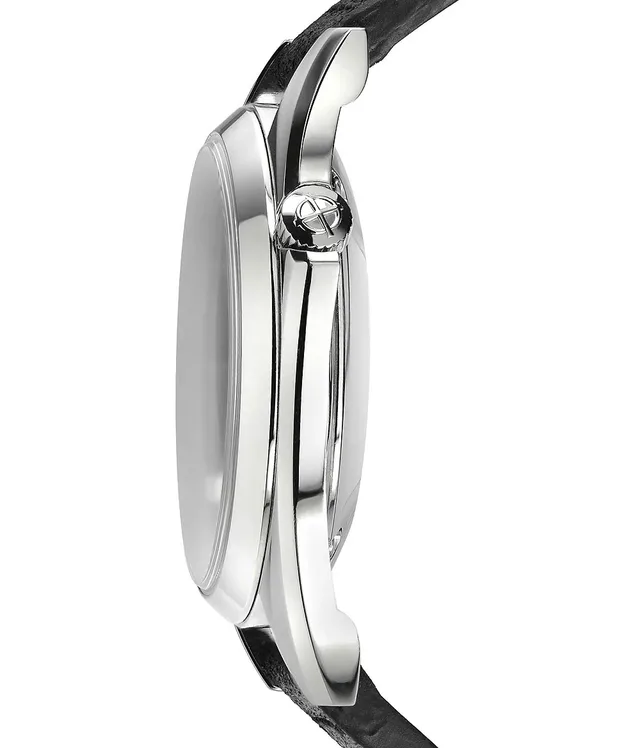
Zodiac Olympos - side
PR
The case is slightly larger — at 37.5-mm x 45-mm compared to the vintage 36 mm x 41 mm — but the primary difference between the vintage and modern edition is in colorways and finishing. Vintage colorways were more on par with other mid-price dress watches such as the Longines Conquest, and for that reason typically didn’t vary too much from a classic silver style. In contrast, the modern edition uses a cream rather than a silver color (with orange accents, no less), as well as an all-gold version — which, while it did exist in some form during the course of the vintage series' run is the “Mystery Dial” models, did not exist in the form presented today. The finishing between the vintage and modern editions is also quite different (as is to be expected), with sharper edges on the case and a higher-quality sunburst finish on the dial; the movement is also a modern Fossil mechanism, rather than a vintage, 17-jewel Zodiac-produced model.
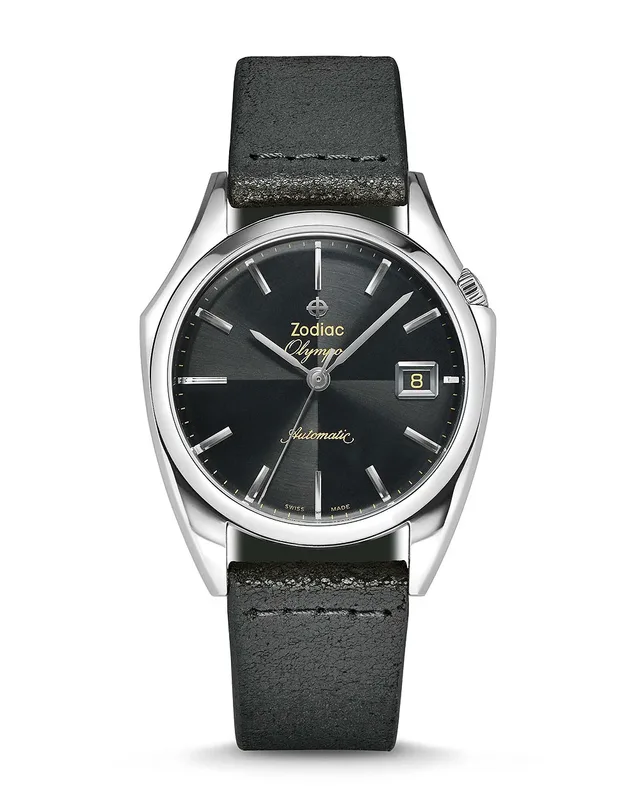
Zodiac Olympos - Black Dial - front
PR
I think what can be drawn from the modern trio of Olympos Automatics is a level of uniformity not seen in the original vintage run of the series. Together they offer an excellent neo-vintage base design for the series, and allow the brand to riff off of this style into interesting limited-edition runs moving forward like those seen in 2018. Personally, I really like the cream colored version with its orange accents, as well as the gold-tone version, which is certainly an uncommon look at this price point, but overall I recognize the unique quality of this series and its singular style in the marketplace. Will it become Zodiac’s number one hit? Likely not. But it does add another fascinating dimension to this brand as it continues growing in the years to come.
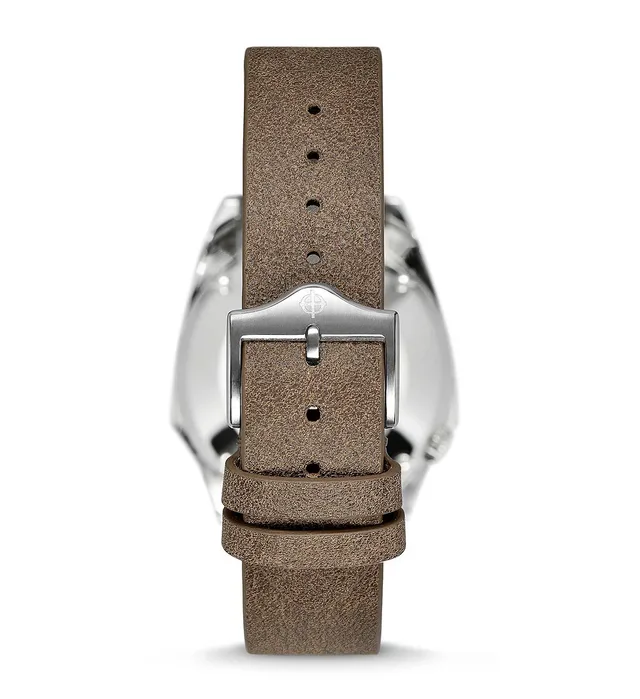
Zodiac Olympos - buckle
PR
For the most recent article in the “Vintage Eye” series, in which we take a look at the MAEN Skymaster 38 and discuss its inspirations, click here.
Caleb Anderson is a freelance writer with a primary focus on vintage watches. Since first discovering horology, he has garnered extensive knowledge in the field and spends much of his time sharing his opinions among other writers, collectors, and dealers. Currently located near New York City, he is a persistent student in all things historical, a writer on many topics, and a casual runner.