Super-LumiNova Explained: Why Watches Glow in the Dark
The science behind the glow
For any watch enthusiast, being able to read the time in complete darkness is essential. To make that possible, hands, indexes, or even entire dials must be capable of emitting light. This article examines the materials used to achieve that effect.
What Types of Luminous Materials Are Used in Watchmaking?
Any material can be made to emit light if heated sufficiently. Only certain substances, however, produce what is known as “cold” light: they absorb energy and convert it into visible light without reaching a high temperature. This phenomenon is called luminescence. When the light is emitted almost immediately, the effect is known as fluorescence.
When the material returns to its ground state more gradually, it is called phosphorescence. This delayed emission is made possible by excited electrons being stored in so-called traps. Foreign atoms embedded in a crystal lattice act as centers for excitation, energy storage, and light emission. It is this phosphorescence — the release of light over an extended period — that is particularly useful in watchmaking. Luminosity can be achieved in two basic ways: with self-luminous hands and markers, or with photoluminescent materials that glow after being exposed to an external light source.
Zinc Sulfide and Radioactive Luminous Substances
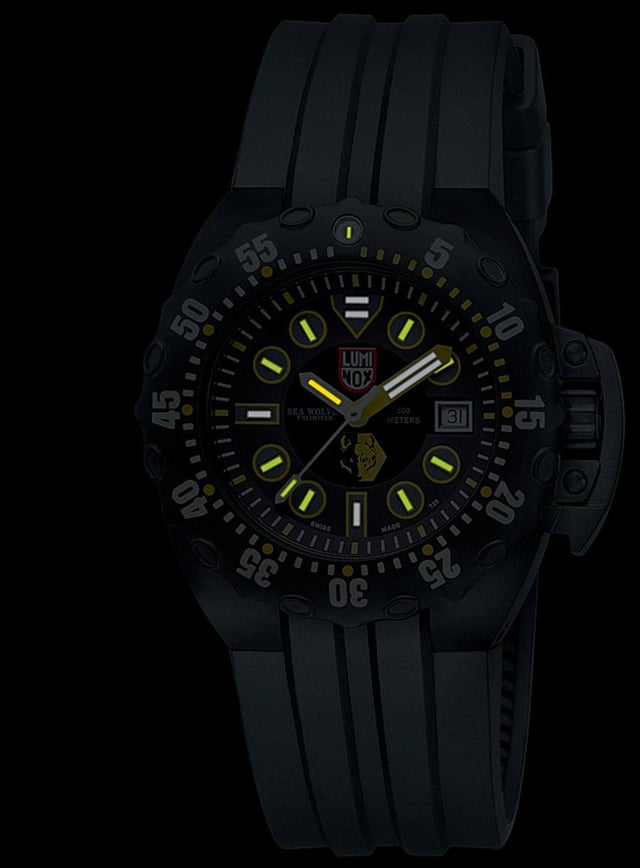
Zinc sulfide remains a widely used luminescent material that can be activated by visible or ultraviolet light. Its luminosity, however, fades relatively quickly. A far stronger effect can be achieved by incorporating small quantities of mildly radioactive substances, which make the zinc sulfide self-luminous without first being charged by an external light source.
Following the discovery of radium in 1898, self-luminous coatings began to appear on watch hands and dials. Until the mid-1960s, military watches in particular were treated with significant quantities of radium. These watches continue to emit radiation today because radium has a half-life of 1,622 years. By the late 1950s, radium was increasingly replaced by less radioactive isotopes such as tritium. Tritium is a radioactive isotope that emits only weak beta radiation, which cannot penetrate a metal watch case or glass. It decays into helium with a half-life of 12.3 years. Modern wristwatches with continuously luminous tritium markers do not emit radiation beyond the case.
Trigalight – Tritium in Glass Tubes
The excitation of zinc sulfide by tritium occurs in tritium gas light sources, the so-called “GTLS” (Gaseous Tritium Light Sources). The Swiss company mb-microtec AG, based in Niederwangen near Bern, markets this technology under the name Trigalight. The luminous elements consist of hermetically sealed mineral-glass tubes, coated inside with a phosphorescent material and filled with gaseous tritium. Luminosity is guaranteed for 10 years, although experience has shown that the tubes may continue glowing for more than 20 years. GTLS elements can shine almost 100 times more brightly than conventional tritium-based luminous paint.
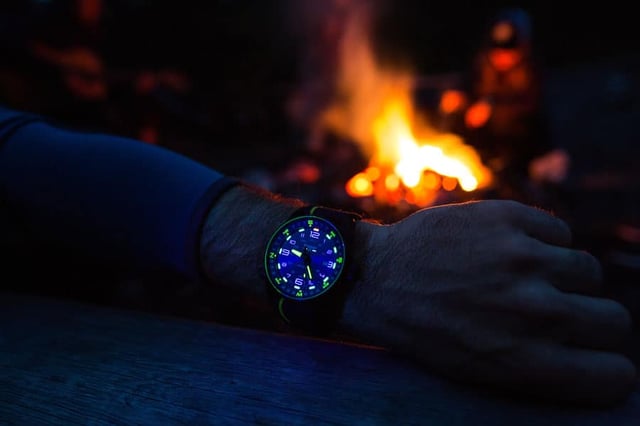
At Baselworld 2019, Traser presented the T1000 concept watch, an exceptionally bright self-luminous model fitted with 318 tritium gas tubes. According to the brand, it glows 50 times more brightly than conventional Traser watches.
Super-LumiNova — The Most Popular Watch Lume
Most watch manufacturers today rely on nonradioactive photoluminescent materials. The best known is Super-LumiNova. Thanks to its improved light-storage capacity, it can be applied effectively to dials, hour markers, and hands.
The patent for these afterglow pigments has been held by the Japanese company Nemoto & Co. Ltd. since 1994. Because the Swiss company RC Tritec Ltd. had already manufactured the material under the name SuperLite before the patent was filed, the two companies established the joint venture LumiNova AG Switzerland in 1998. Since 2007, the Super-LumiNova used by European watch manufacturers has been produced entirely in accordance with Swiss-made requirements.
How Super-LumiNova Works
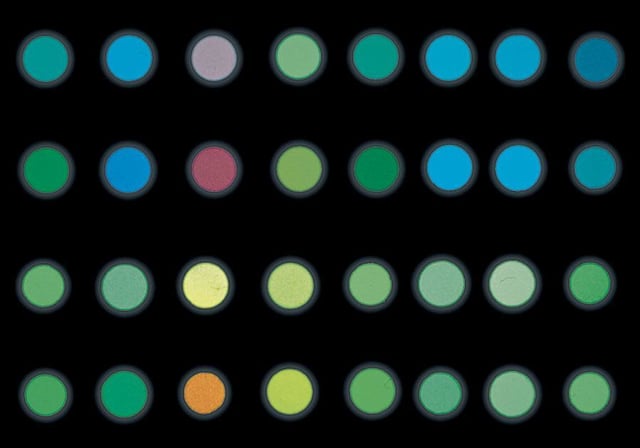
Super-LumiNova is a purely phosphorescent material based on alkaline-earth aluminate and contains no radioactive additives. Compared with earlier nonradioactive afterglow pigments, it offers approximately 100 times greater luminous intensity. Its operating principle is similar to that of a rechargeable battery. The pigments must first absorb energy from daylight or artificial light. In darkness, they gradually release that stored energy as visible light over several hours.
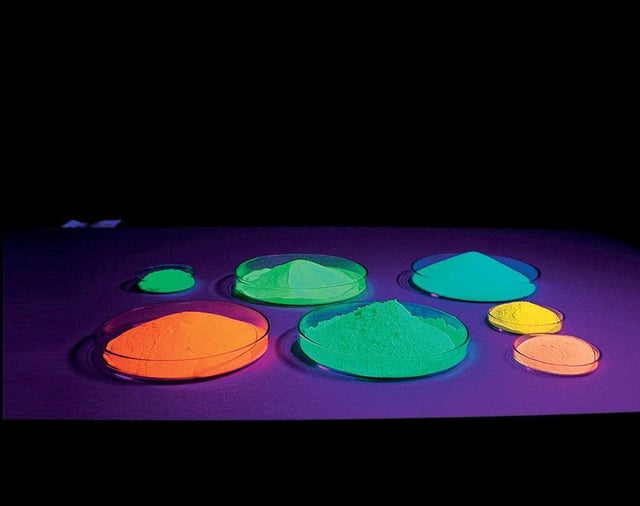
The intensity diminishes over time: it begins very brightly, then steadily fades. The charging and discharging cycle can be repeated indefinitely. Another advantage over traditional zinc-sulfide compounds is its resistance to light-induced discoloration. Even prolonged exposure to intense sunlight does not cause the pigments to turn gray. Super-LumiNova can also be produced in a wide range of colors. Green remains particularly effective because the human eye is most sensitive to that part of the visible spectrum.
Luminous Straps and Cases
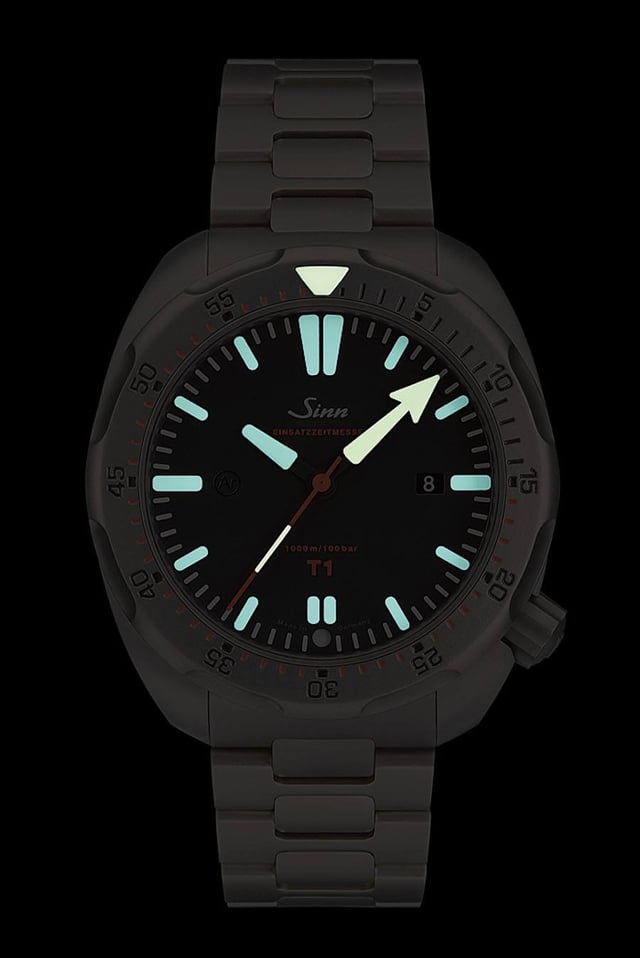
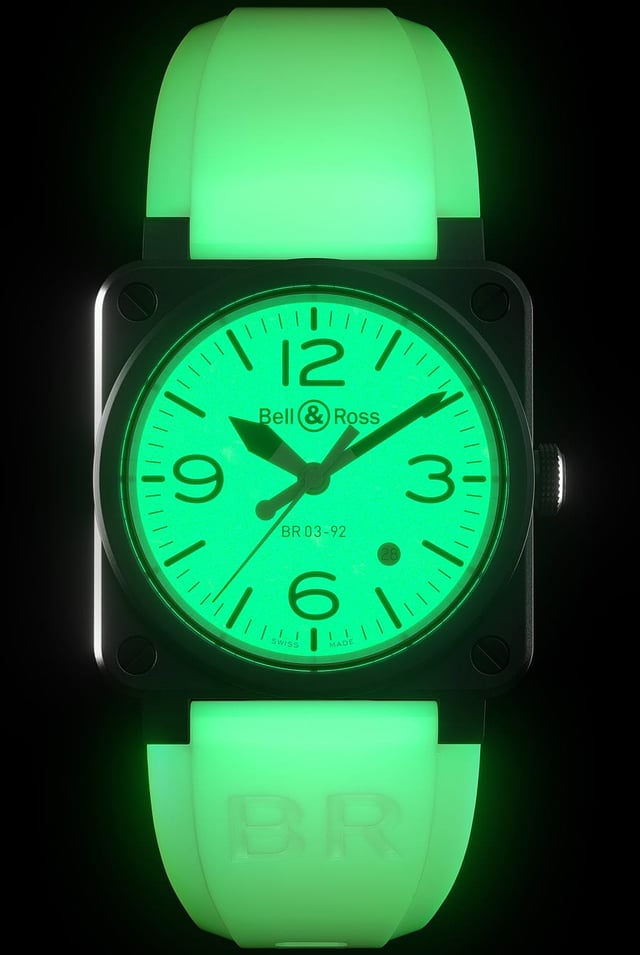
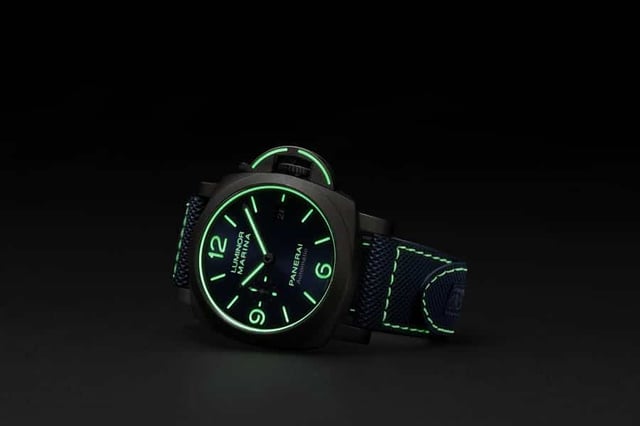
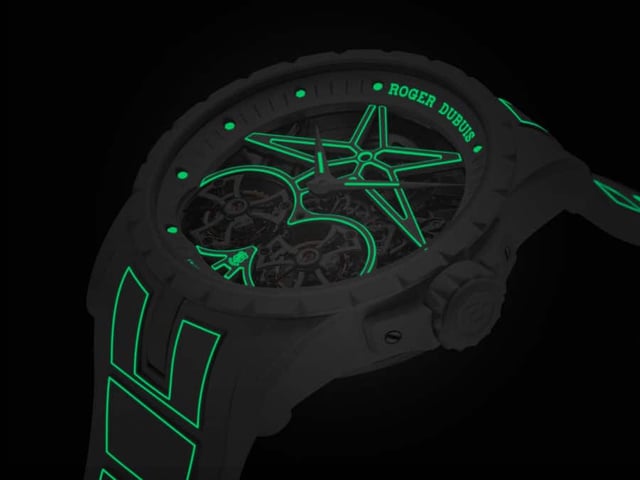
Modern watches take the use of luminous materials far beyond conventional hands and hour markers. On the Bell & Ross BR 03-92 Full Lum, the brand incorporates Super-LumiNova not only into the dial but also into the rubber strap. For the Panerai Luminor Marina PAM 01117, Panerai uses an advanced Super-LumiNova X1 compound designed to glow brighter and longer. The luminous material appears on the hands, numerals, markers, flange, case, and even the stitching of the strap. Roger Dubuis developed a proprietary compound called LumiSuperBiwiNova for the Excalibur Twofold in collaboration with Biwi AG. Rather than being applied to the surface, the material sits beneath the outermost layer of the rubber strap, allowing it to retain its luminosity even as the strap wears.
IWC achieves the remarkable glow of its Ceralume technology by adding Super-LumiNova pigments to the ceramic raw materials. The luminous compound acts like a light-storage battery, absorbing energy and releasing it again in darkness. In darkroom testing, Ceralume watch cases continued to emit a bright bluish glow for more than 24 hours.
With the Luminor Marina 44mm PAM 01117, Panerai also pays tribute to the historic importance of luminous materials for the brand. Seventy years earlier, Panerai had first introduced its tritium-based Luminor compound. On the modern watch, luminous material appears not only on the hands, numerals, and hour markers, but also on the rehaut, case, and strap stitching. Panerai uses the more advanced Super-LumiNova X1, which is intended to glow more brightly and for longer than conventional Super-LumiNova.


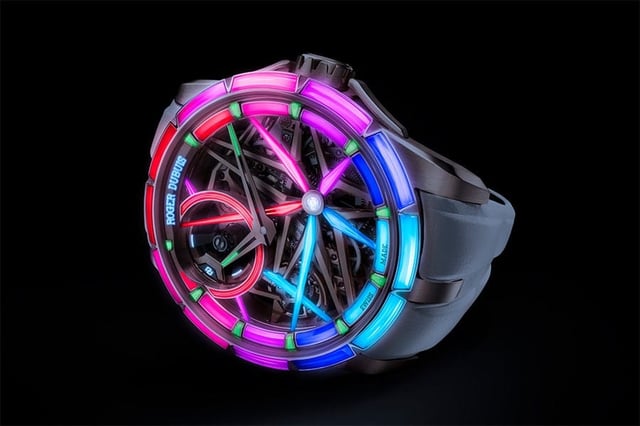
Roger Dubuis also extends luminosity beyond the dial on the Excalibur Twofold. Its LumiSuperBiwiNova compound, developed with Biwi AG in Glovelier, Switzerland, is embedded beneath the outer layer of the rubber strap rather than applied to its surface. This allows it to remain luminous even after prolonged wear. Movement components, including the star-shaped bridge and the outline of the double tourbillon, as well as the hour markers and brand signature, also glow at night.
Zenith made similarly extensive use of lume on the Defy 21 Carl Cox. On this 200-piece limited edition, Super-LumiNova is integrated into the carbon bezel. The strap stitching also glows in the dark, as does the small-seconds display, which is designed to resemble a vinyl record.

At Watches and Wonders 2021, Roger Dubuis introduced the Excalibur Single Flying Tourbillon Glow Me Up. The rose-gold watch features a bezel set with 60 baguette-cut diamonds.
Its defining feature becomes apparent only in darkness: the diamond settings are filled with Super-LumiNova in different colors, causing the diamonds to glow. Additional luminous material highlights the star-shaped bridges and edges of the movement. The highly luminous model is already sold out.
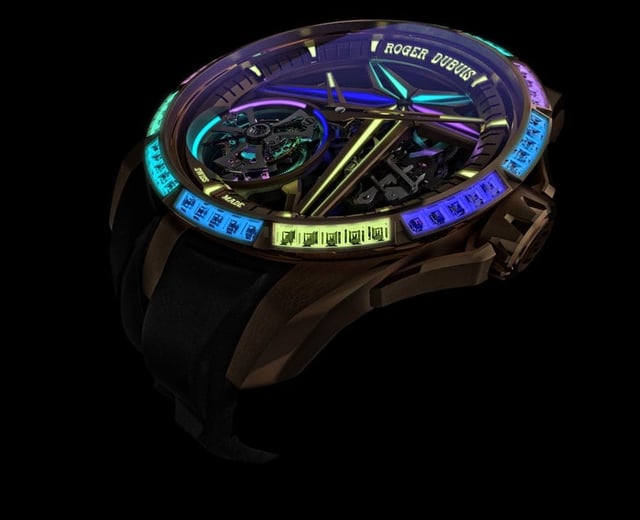
Roger Dubuis continued the concept in 2023 with the 42mm Excalibur Blacklight Spin-Stone Monobalancier in EON Gold. The watch features gemstones that glow in a vivid spectrum of colors extending from the bezel to the flange. The red and blue tones are created by a Super-LumiNova coating that fluoresces during the day, at night, and under ultraviolet light. To achieve the precise colors, uniformity, and desired luminosity, the so-called Spin-Stones are grown synthetically using a specialized process patented by the manufacture.
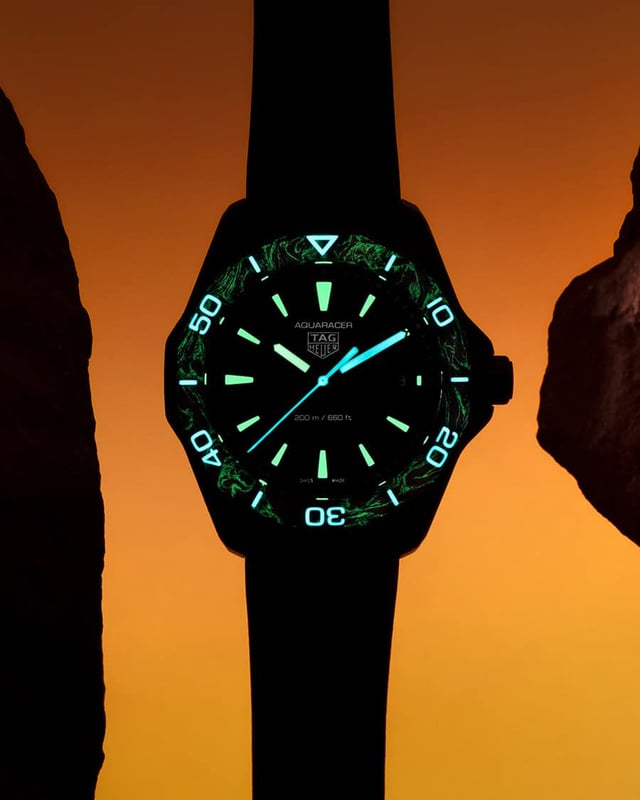
At Watches and Wonders 2022, TAG Heuer presented the Aquaracer Professional 200 Solargraph. It draws energy from sunlight passing through a translucent dial to a solar cell beneath. The sun also charges the luminous material on the dial and bezel. As a distinctive design feature, the rotating bezel is made from a carbon-and-Super-LumiNova composite similar to that used by Zenith. In darkness, the material reveals glowing greenish structures.
Night Vision for the Wrist
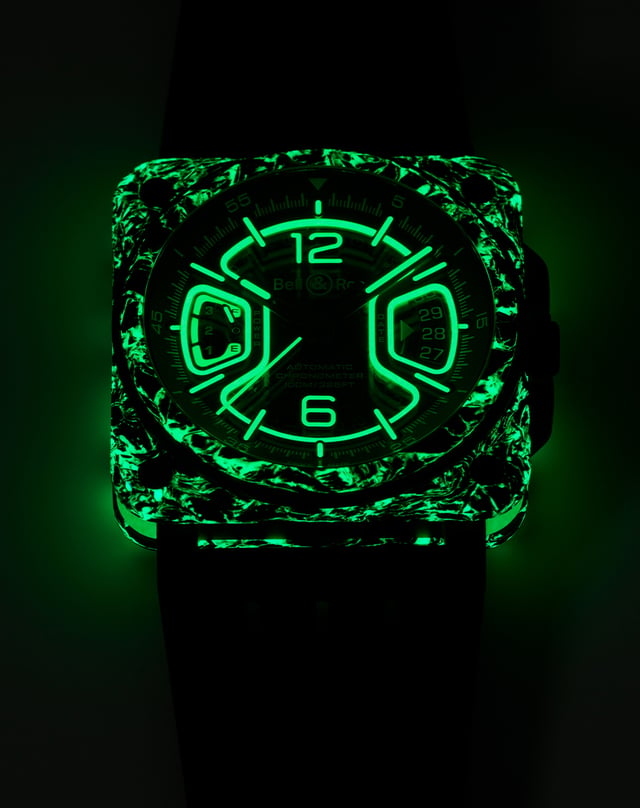
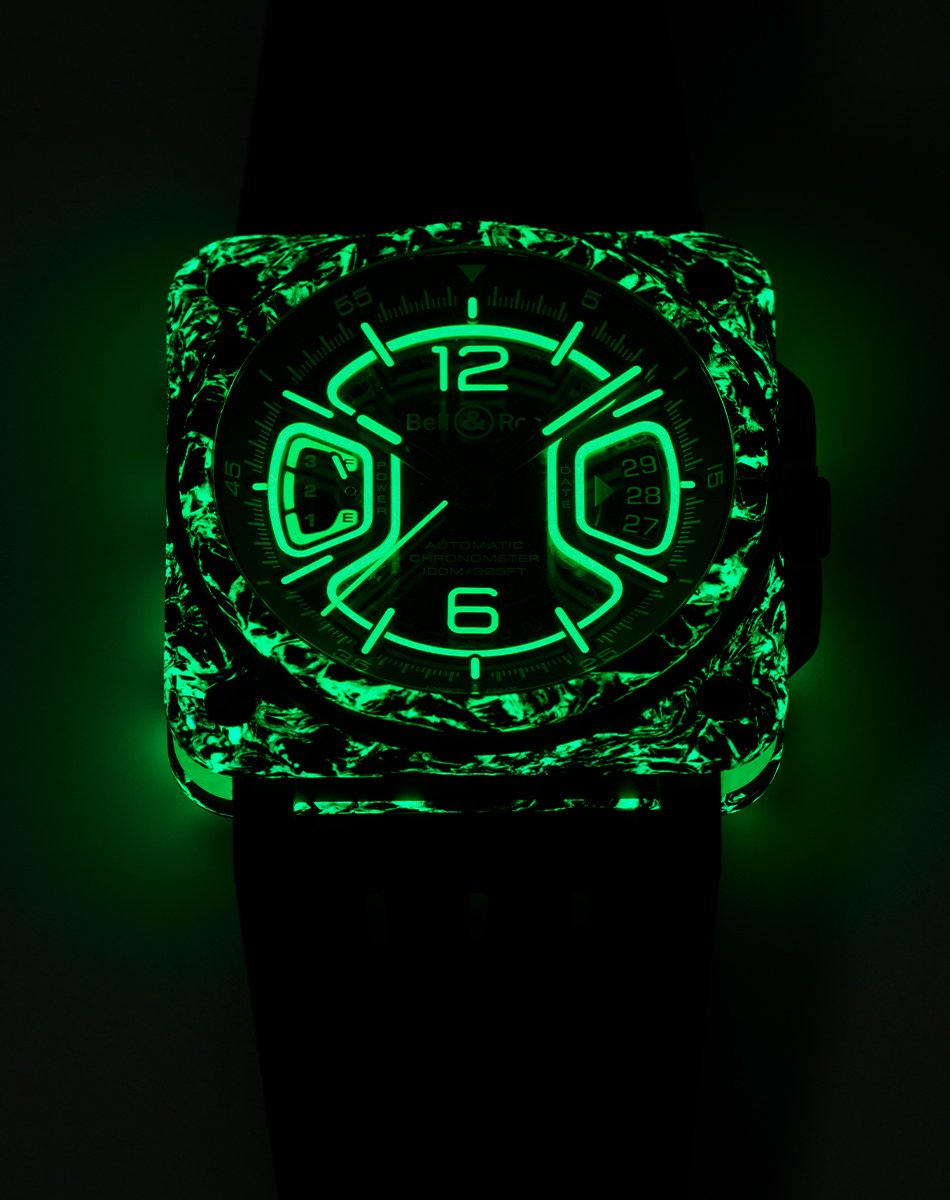
With the Bell & Ross BR-X3 Night Vision, the brand draws on its expertise in instrument watches to transform the model into a precise tool for use in darkness, while giving it a boldly graphic appearance. The color scheme takes its cues from aviation. Green is the dominant luminous color in modern cockpit head-up displays because the human eye perceives it with particularly strong contrast and relatively little fatigue. Bell & Ross transfers that effect directly to the wrist.
The applied hour markers are black and glass-bead blasted, then filled with white Super-LumiNova, which glows intensely green in the dark. The same material appears in the skeletonized hour and minute hands, creating a cohesive display. A large date window is positioned at 3 o’clock, while a 70-hour power-reserve indicator appears at 9. The result combines maximum legibility with a clearly defined visual identity, uniting functional instrument design with a distinctly futuristic aesthetic.
Quick facts – what you may not know about Superluminova
- Super-LumiNova can be charged and discharged an unlimited number of times.
- It is available in a broad spectrum of colors, including white, yellow, green, and blue.
- Super-LumiNova must be charged by exposure to light.
- Its brightness gradually diminishes in darkness. The strength and duration of the glow depend on how much light energy was absorbed beforehand.
This article was first published by WatchTime Germany.
- What Types of Luminous Materials Are Used in Watchmaking?
- Zinc Sulfide and Radioactive Luminous Substances
- Trigalight – Tritium in Glass Tubes
- Super-LumiNova — The Most Popular Watch Lume
- How Super-LumiNova Works
- Luminous Straps and Cases
- Night Vision for the Wrist
- Quick facts – what you may not know about Superluminova