Oct 11, 2015
Reading time 5 min.
Vintage Eye for the Modern Guy, Part 9: Panerai Radiomir
This week we shall be exploring the first of Panerai’s two trademark watches: the Panerai Radiomir. Not available to the global market until the 1990s due to Italian naval contracts and the previous direction of the brand, the Radiomir has earned its place in the modern horological conversation.
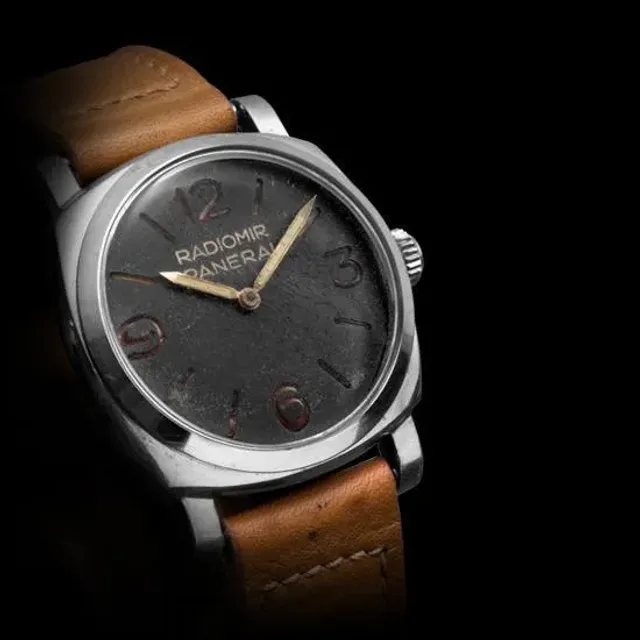
This week we shall be exploring the first of Panerai’s two trademark watches: the Panerai Radiomir. With the original prototype developed in 1936, and then available to the Italian Royal Navy in 1940, vintage Radiomirs are incredibly sought-after pieces that have inspired generations of aquatic-oriented watches. Sometimes thought of as precursors to modern dive watches, the vintage variations of the series were innovative in their own right outside of traditional Swiss watchmaking. Not available to the global market until the 1990s due to Italian naval contracts and the previous direction of the brand, the Radiomir quickly earned its place in the modern horological conversation.
In the current line, there are two variations, each of which has developed into an independent series: the Radiomir 1940, and the Radiomir. The first watch we’ll look at is a piece from the 1940 series, the Radiomir 1940 Acciaio (Ref. PAM00512, below) in the 42-mm case. Housed in a polished steel, cushion-shaped case, this watch looks to have set out to respect its vintage forebears. The dial is black with dark, gold-toned luminous accents for the hours and hands. The hour markers use oversized numerals at the 12, 3, and 6 o’clock positions, and a small seconds subdial at 9 o’clock. The whole thing is powered by Panerai’s in-house, hand-wound movement, Caliber P.999/1, which is visible via a clear sapphire caseback. The listed price is $7,200, though you may be able to find it for less at a dealer.
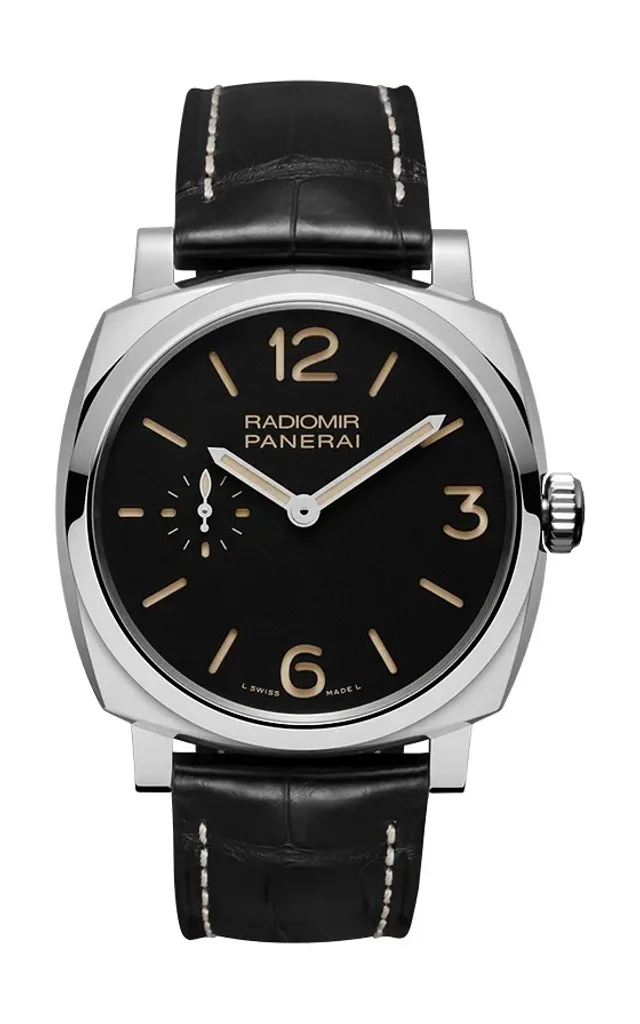
Panerai Radiomir 1940 - Modern - front
PR
Without a doubt, this watch has vintage Panerai aesthetics. From the dial and its accents, to the case shape and its sturdy-looking lugs, it seems to take direct inspiration from the Radiomirs of the 1940s. And even the slight changes in the reference seem to honor vintage models: the seconds counter is understated and maintains the gold tone, the clear caseback shows off the movement (below) that Panerai has taken great pride in producing, and the black alligator strap (instead of a brown leather) goes better with the overall look of the watch. I am certainly not a “Panerai guy,” but this watch has a definite cool factor.
My only concern would be with the price: the watch doesn't stand out technically compared to those from other brands in its range, and there are certainly many other "historical re-creation" watches available at a more bargain-oriented price. While it is absolutely a handsome piece, this specific model is simple in more of an underdeveloped way than in an ode-to-minimalism way, which, at a $7,000-plus price range, could drive some potential consumers away.
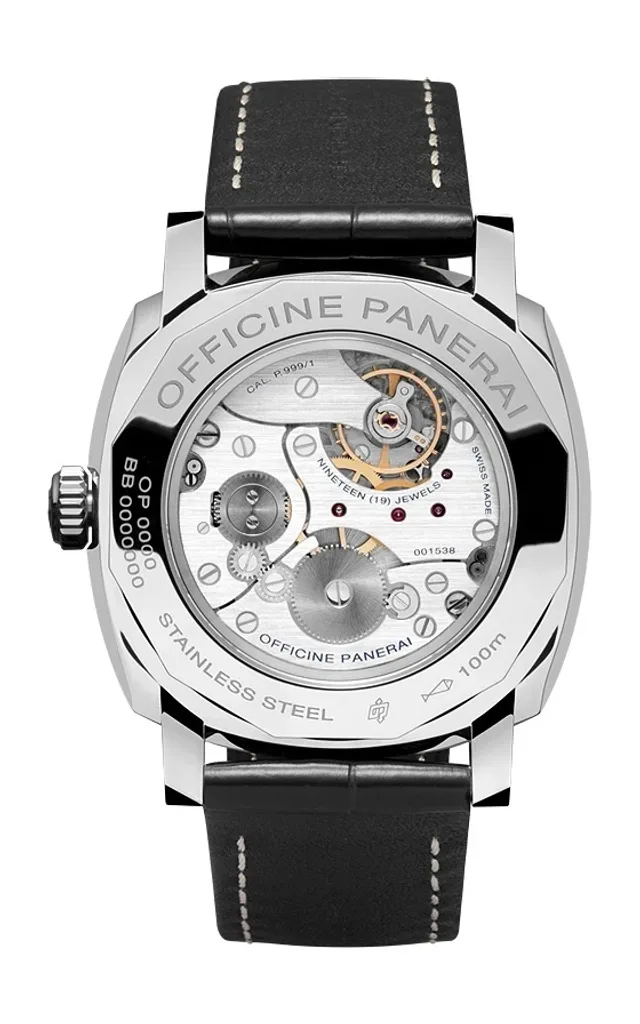
Panerai Radiomir 1940 - Modern - back
PR
Now let's look at a watch from the modern Panerai Radiomir collection, the Radiomir California 3 Days Acciaio (below). This watch, like the previous one, displays some serious history in its design. Sporting a black dial with dark-gold-toned accents on the hands and hour markers, this model also includes a similarly colored minute-ring outline. Panerai chose an alternative corporate logo above the 6’clock position in place of the standard “Radiomir/Panerai” print below the 12 o'clock mark, and went with alternating Arabic and Roman numerals, along with tick marks and a single triangle, to identify the hours. The piece is cased in steel (47 mm) with incredibly unique wire lugs and a vintage-inspired crown; the movement is the hand-wound Panerai Caliber P.3000, again, visible through a clear sapphire caseback. This watch is currently sold at retail for $7,700 – a price I believe more justifiable than its 1940 counterpart's.
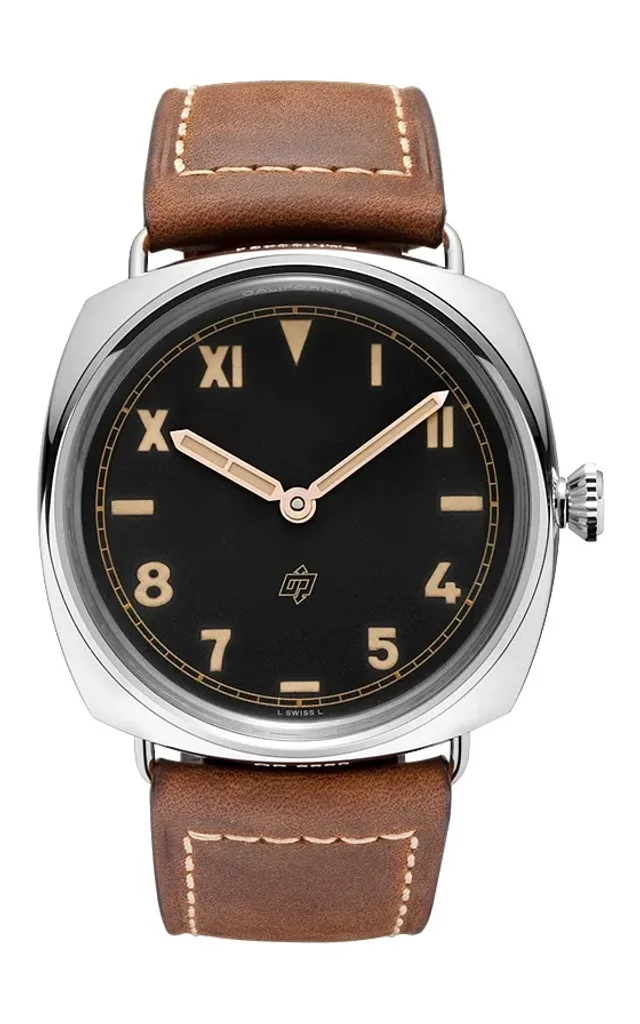
Panerai Radiomir California - front
PR
What some of you may know is that this piece is based almost exactly off of the first Radiomir prototype from 1936 — and that is a serious feat. In 1936, a 47-mm case was almost unheard of for a wristwatch; moreover, the dial’s luminescence was a novelty at the least, and a market-changing innovation at the most. Today, while the size is by no means unheard of, the funky design of the dial, the wire lugs, and the case and crown certainly are. I can certainly see a knowledgeable aficionado wearing this watch with pride. The only change I would make is from the gold tone of the hands back to the 1930s- and '40s-era aquatic blue. The piece (back view below) is already emanating vintage influence; why not one more hat-tip to the past?
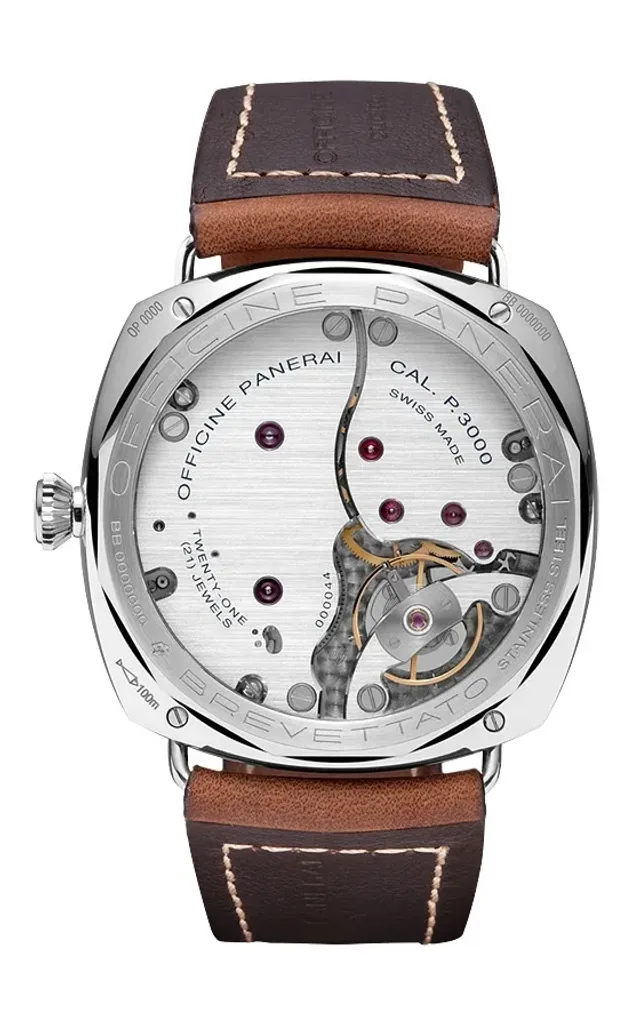
Panerai Radiomir California - back
PR
Overall, from my vintage-slanted perspective, the Panerai Radiomir collections are pretty neat. Both the Radiomir 1940 and Radiomir series respect what made the watches so distinct to begin with, while still growing the collection for the modern era. The sapphire casebacks, in my opinion, are always an interesting touch in historically-inspired modern watches, and contemporary finishing practices help give these pieces an extra something to reach that state of luxury. Personally, I would probably never wear a Radiomir — small wrists and 47-mm cases are not the most ideal couple — but I understand why people love Panerai’s watches. The great thing about the brand is it still has room to grow; its watches have only been widely available to the public for about 20 years, so they can still ride on the novelty of their vintage looks for at least another 10. I suppose by that time, I’ll be writing how much I can’t stand the inevitable changes, but let's wait and see.
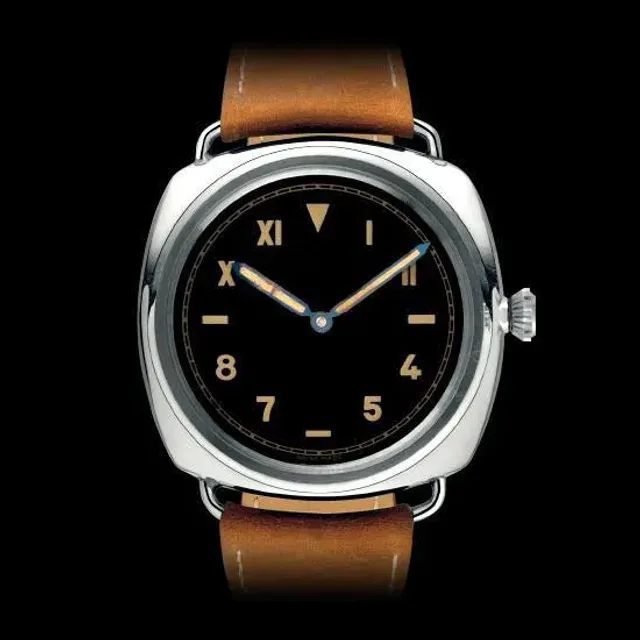
Panerai Radiomir California - vintage
PR
For Part 8 of this series, in which I compare the vintage and modern Zenith El Primero, click here.
Caleb Anderson is the Director of Outreach at the online vintage and antique watch boutique theoandharris.com. Since starting at Theo & Harris, he has garnered extensive knowledge on vintage watches, and spends much of his time sharing his opinions within the field. Currently located near New York City, he is a persistent student in all things historical, a writer on watches, and a casual runner.