Jun 6, 2015
Reading time 3 min.
Who Needs Constant Force? An Insider's Look at F.P. Journe (Part 2)
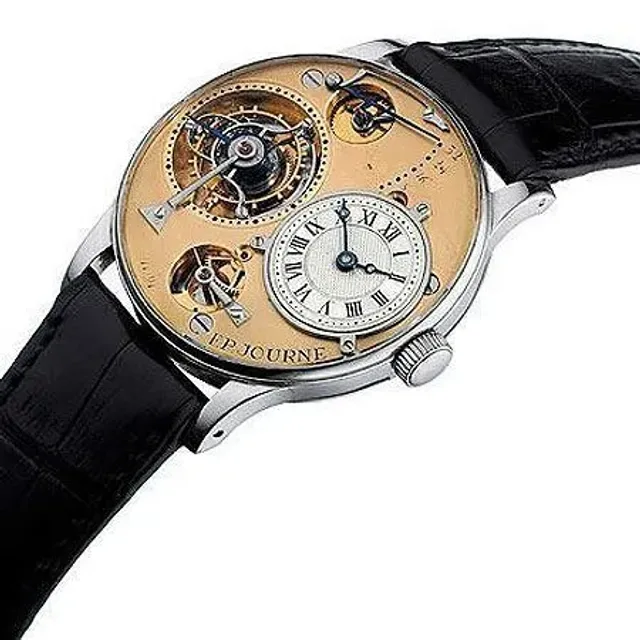
1977. Paris. A young watchmaker of 20 embarks on an odd quest - to make his own tourbillon. Not to sell, not to show, but simply to prove that he can do it. Passionate and determined, equipped only with George Daniels' book, "the Art of Breguet," Francois-Paul Journe sets to work.
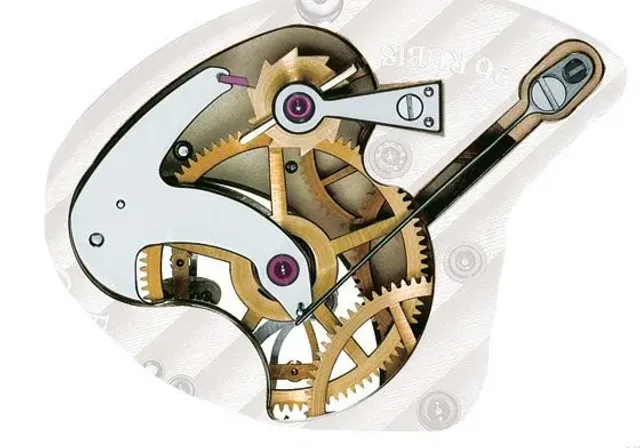
Remontoir d’Egalité
PR
1983. Paris. Francois-Paul Journe completes his first watch:
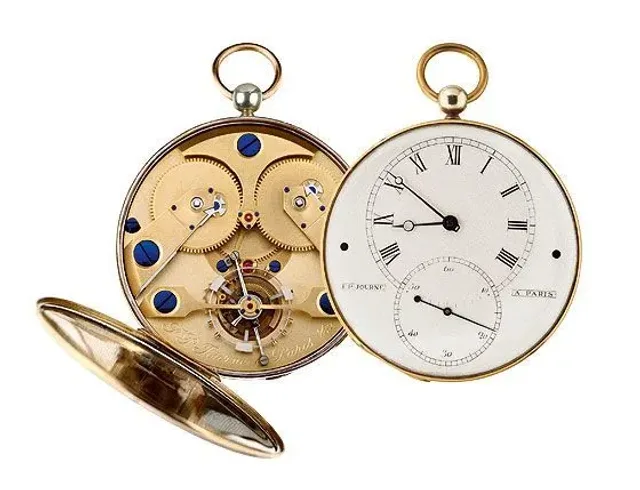
Francois-Paul Journe’s first ever watch. Started in 1977, finished in 1983. Now part of the F.P. Journe museum collection.
PR
It took more than five years to conceive and create a pocketwatch that was never meant to be sold - and not just a simple watch, but a tourbillon. In the '70's and '80s tourbillons were not the craze they are now. Only George Daniels (and then Journe) created a new, modern tourbillon.
Forward to 1984. Still trying to master the tourbillon (and especially the pernicious effects it has on accuracy); François-Paul makes his first Remontoir d'Egalité in his second and fourth (pocket)watch. It caught the attention of a major collector, Eugen Gschwind (Google the name or visit his collection at the Historiches Museum Basel).
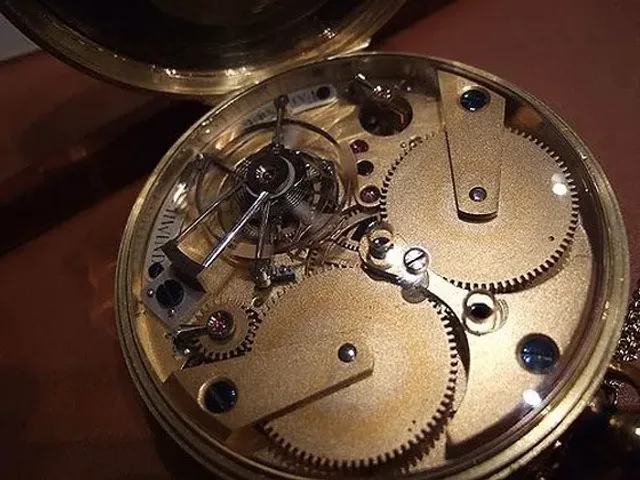
Francois Paul Journe 4th watch (1984).
PR
Fast-forward now to 1991. Francois-Paul Journe creates his first wristwatch - a tourbillon, of course, but also fitted with a remontoir d'égalité, or constant force. This sort of device became popular a few years ago (thanks in part to great articles such as Alan Downing's, followed by David Chokron's in-depth writings in Watch Around No.15, Spring-Summer 2013, pp 44-53). As one may recall in"Power or precision? An Insider's Look at F.P. Journe - Part 1"), due to the nature of the spring, any mechanical object will have more power when the spring is fully loaded, and inversely less as it unwinds. A constant force system is "simply" a system that allows regulating the delivery of energy to the balance wheel. It is not a new issue. Watch masters such as Breguet, Lepine, Berthoud, etc. already had that issue in mind. But in 1991, very few people understood it, or cared.
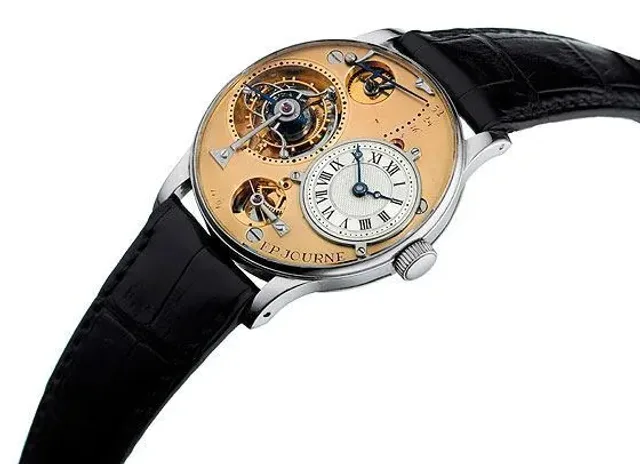
Francois Paul Journe’s first ever wristwatch (1991). Now part of the F.P. Journe museum collection.
PR
What makes F.P. Journe's patented device superior to its new competitors' is the simplicity and the lightness of his device. The heavier the device, the more power needed to move it and the more friction it creates (like a "fusée à chaine," which was a good idea in the 18th century but too heavy to be efficient today). The solution becomes counterproductive to the outcome.
Because the remontoir d'égalité delivers the same packet of energy to each and every second, the seconds hand actually moves and dies every second. Thus it is called a dead second. Like a quartz movement, the second hand does not sweep. Note (and this is important to Mr. Journe) that it is a natural dead second, meaning that unlike some of his competitors, his goal is not to make a dead second mechanism (what would be the point?). It is simply a natural by-product of the remontoir.
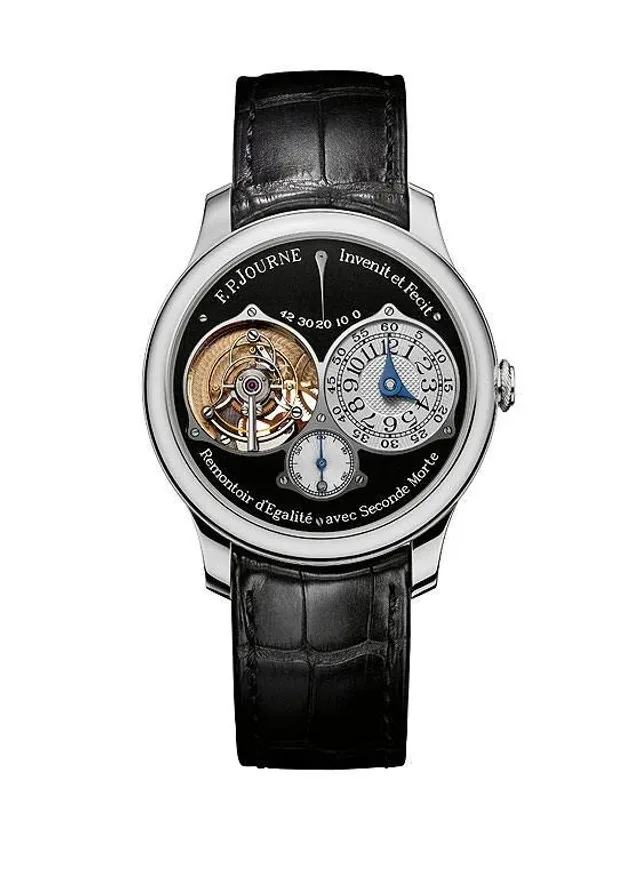
Tourbillon Souverain with Remontoir D’Egalité avec Seconde Morte (Dead Second).
PR
Read also our previous insider’s look:
Power or Precision” An Insider’s look at F.P. Journe-Part 1
For more information, www.fpjourne.com
Or visit or contact one of our F.P. Journe Boutiques:
Bal Harbour shops Mall at +1 305 993 4747; [email protected]
Los Angeles: +1 310 294 8585; [email protected]
New York: +1 212 644 5918; [email protected]