Mar 18, 2013
Reading time 4 min.
Omega Unveils Seamaster 15,000 Gauss, the World's Most Antimagnetic Watch
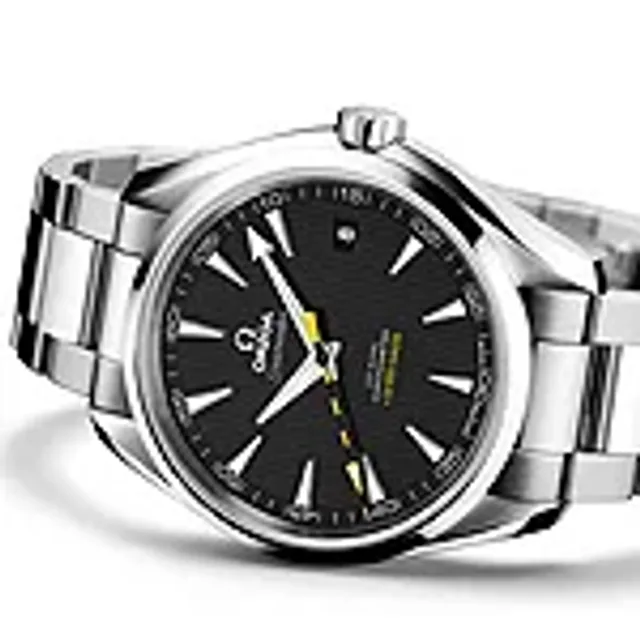
Omega, which pioneered the use of innovative new materials and technologies in watchmaking, has introduced perhaps its most impressive technological accomplishment in recent years, the development of a wristwatch that is resistant to magnetic fields greater than 15,000 gauss, a level far exceeding that of any other watch.
The announcement of the prototype watch, a Seamaster Aqua Terra model called the Omega Seamaster >15,000 Gauss, took place at a press conference in the penthouse of New York City's Setai building. The presentation, which included videos and a practical test involving real magnets, was conducted by Omega's Stephen Urquhart and its vice-president and head of product development, Jean-Claude Monachon, along with Michel Willemin, CEO of the research-and-development lab ASULAB, and Thierry Conus, director of research and development at the movement-maker ETA. (Omega, ASULAB, and ETA are all owned by the Swatch Group.)
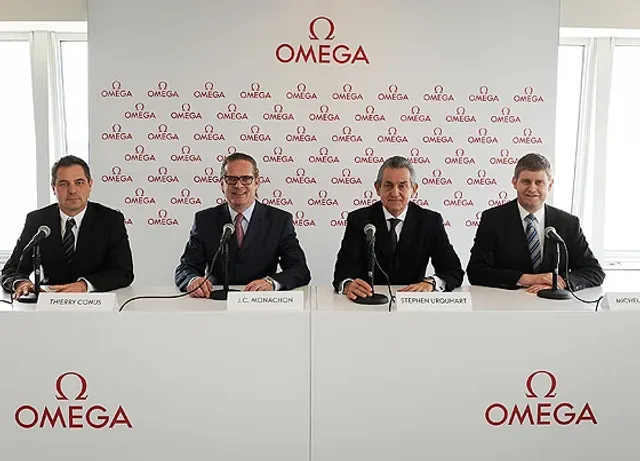
Left to right: Thierry Conus, ETA director of R&D; Jean-Claude Monachon, Omega VP and head of product development; Stephen Urquhart, Omega president; Michel Willemin, CEO of ASULAB
PR
In his opening remarks, Urquhart explained that Swatch Group CEO Nicolas G. Hayek had assigned Omega the task of creating what he called "a totally non-magnetic watch." Magnetism, as most watch lovers are aware, is a longstanding issue in watchmaking. Magnetic fields can easily disrupt a watch's movement, and hence its timekeeping accuracy, and magnetic fields are now more omnipresent in our daily lives than ever before, from smartphone cases to handbag closures to items as seemingly innocuous as refrigerator magnets. Omega's watchmakers collaborated with the researchers, metallurgists and engineers in its sister companies to produce the unprecedented technology, which is embodied in a new movement, called Omega Co-axial Caliber 8508. The result, said Urquhart, is "not only a big breakthrough for the brand, but a big breakthrough for the watch industry."
Monachon reminded the audience of Omega's history of technical innovation, which includes such recent developments as the first co-axial escapement, developed with the late watchmaking legend Dr. George Daniels, which debuted in 1999; the first use of "Liquidmetal" technology in a watch in 2009; and recent inventions such as so-called Ceragold and Sedna gold. He also pointed out Omega's history in the development of antimagnetic timepieces, which began as far back as 1957, with the Omega Railmaster. The Railmaster, Monachon revealed, was the first watch to achieve a resistance of 900 gauss, whereas most watches today are rated to only 60 to 80 gauss. Even notable exceptions, such as Rolex's popular Milgauss model, which is rated to 1,000 gauss, do not approach this new watch's level of magnetic resistance.
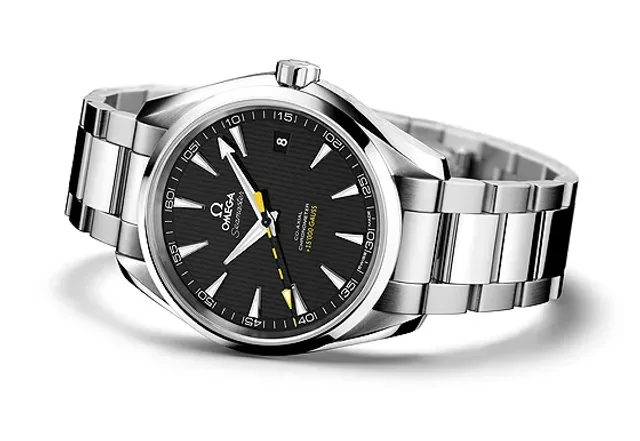
The Omega Seamaster >15,000 Gauss
PR
Other watches, such as IWC's Big Pilot, have addressed the issue of magnetism in the past by enclosing their movements inside protective inner cases that are designed to limit the effects of magnetism on the watch's internal components. According to Monachon, however, this solution has always been an imperfect one, because such cases cannot block magnetism past the range of 1,000 gauss. Also, from an aesthetic point of view, these cases block the view of the movement. Monachon said that some of his colleagues, perhaps believing that creating an extra-thick inner case was Omega's strategy, told him, "Forget it. It's impossible. The watch will look like a cobblestone."
However, the strategy was a very different one: Rather than try to improve upon the classical but flawed system of the inner protective case, Omega's team, which had the expert input of Willemin at ASULAB and Conus at ETA, devised a different solution: building a movement that uses various, selected non-ferrous components so that the movement itself is resistant to magnetic fields. As the technical team pointed out, Omega already had the basis for such an invention in place: Omega's in-house movements already include several important non-ferrous parts, including silicon balance springs and nickel phosphorous escapement wheels. The other non-magnetic parts developed for Caliber 8508 have yet to be revealed; it is expected that Omega will provide additional information for the watch's official launch at Baselworld 2013 in April.
Omega did announce at the press conference that it not only expects the first commercial models of the Seamaster >15,000 Gauss to be on the market in late 2013, but that it plans to eventually to include the new antimagnetic technology in all Omega movements produced in-house.
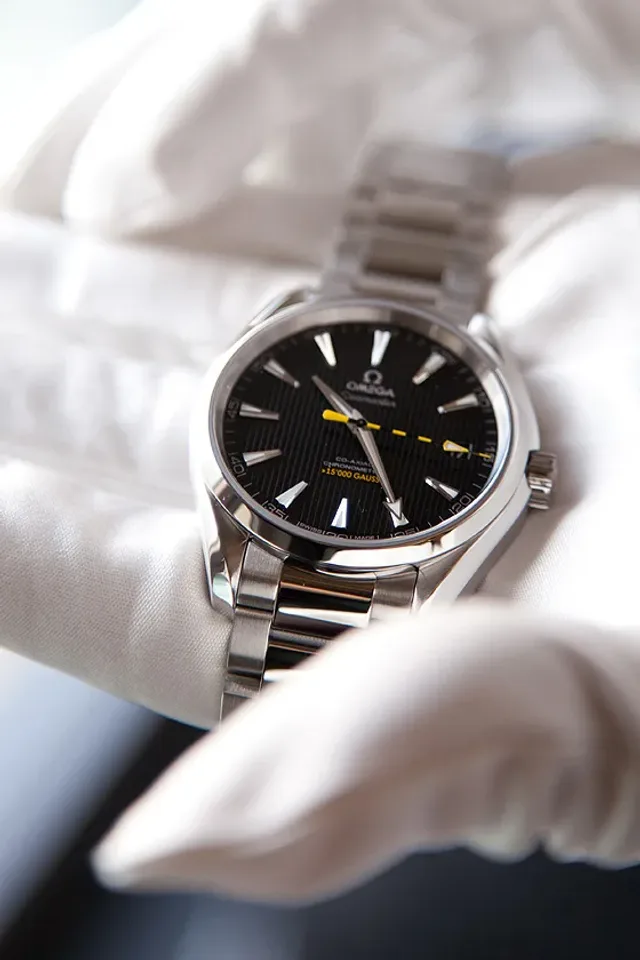
Omega says the watch (prototype version pictured above) will be on the market later this year.
PR